How to Actually Improve Your Sleep Score (Not Just Chase the Number)

If your sleep tracker's score has been stuck in the 60s or 70s, the instinct is to try to "beat" the number directly. That's the wrong target. A sleep score is just a readout of a handful of underlying habits — fix those, and the score follows on its own. Chase the number itself, and you can end up anxious about sleep in a way that makes it worse.
The short answer
To improve your sleep score, focus on the actual inputs it measures: get consistent bed and wake times, protect total sleep time (most adults need 7+ hours), shorten how long it takes you to fall asleep with a real wind-down routine, and reduce overnight disruptions from light, noise, caffeine, alcohol and screens. Improve those four things consistently over a few weeks, and your score will move — don't chase the number night to night.
Start with what the score is actually built from
Every sleep score is a formula that weighs a handful of measurable inputs. See what a sleep score actually measures for the full breakdown, but the core levers are almost always:
| What it measures | What moves it |
|---|---|
| Total sleep time | Going to bed earlier, protecting your wake time |
| Sleep efficiency | Falling asleep faster, fewer long awakenings |
| Time to fall asleep | A real wind-down routine, less pre-bed stimulation |
| Restlessness / wake events | A cooler, darker, quieter room; less alcohol |
| Consistency | Same bed and wake time, even on weekends |
1. Fix your consistency first
Irregular bed and wake times are one of the biggest, most fixable drags on sleep scores — and on sleep quality generally. Going to bed at 10:30pm on weekdays and 2am on weekends confuses your body clock the same way jet lag does. See why sleep consistency matters and social jet lag for why weekend schedule swings specifically tank scores.
Practical fix: Pick a wake time you can hit every day, including weekends, within about an hour. Anchor everything else around it.
2. Protect total sleep time
This sounds obvious, but it's the input most people underestimate. If you're consistently getting 6 hours when your body needs 7.5, no wind-down routine or fancy mattress will fully offset that gap. See how much sleep do I actually need to check your real target rather than assuming 7 hours flat is universal.
Practical fix: Work backward from your fixed wake time to set a bedtime that gives you enough hours, and treat that bedtime as seriously as you'd treat a morning meeting.
OwlRoutine helps you wind down at night and actually get up in the morning — with a guided wind-down, dismiss missions, and sleep scores. Available on iPhone and Android.


3. Shorten the time it takes to fall asleep
Trackers measure sleep latency — how long you lie there before actually falling asleep — and a long latency drags scores down even if your total hours look fine. A rushed, screen-lit last hour before bed is the most common cause.
Practical fix: Build a real wind-down: dim lights, put screens away, and use a calming routine — breathing exercises, light stretching or journaling all help signal to your body that sleep is coming. See the perfect wind-down routine, journaling before bed and phone before bed for specifics.
4. Reduce overnight disruptions
Waking up multiple times, even briefly, fragments sleep and lowers efficiency scores. Common culprits:
- A too-warm room — see best bedroom temperature for sleep.
- Alcohol — it can help you fall asleep faster but fragments sleep later in the night, often showing up as a lower score despite feeling like it "helped."
- Late caffeine — see caffeine cutoff before bed for realistic timing.
- Light and noise — blackout curtains and white noise can meaningfully reduce brief awakenings.
Practical fix: Pick one disruptor at a time — caffeine timing is often the easiest win — and change it for two weeks before judging the result.
5. Don't obsess over the daily number
This is the part most guides skip: fixating on your score every single morning, adjusting your mood around it, or feeling like a failure after one low night is a well-documented trap sometimes called orthosomnia — anxiety about sleep caused by the tracking itself. See do sleep trackers actually work for more on this.
Practical fix: Check your score weekly, not daily. Look at the trend line, not the single data point. If checking it first thing every morning is stressing you out, consider checking it less often, or turning off notifications for it entirely.
A realistic two-week plan
| Week | Focus |
|---|---|
| Week 1 | Fix your wake time — same time every day, including weekends |
| Week 1 | Set a caffeine cutoff (roughly 8+ hours before bed) |
| Week 2 | Build a 15-20 minute wind-down before your target bedtime |
| Week 2 | Cool and darken your bedroom |
| Ongoing | Check your score's weekly trend, not the daily number |
When a low score isn't about habits
If you're doing everything right and your score stays consistently low — or you're excessively sleepy during the day despite adequate time in bed — that can be a sign of an underlying issue like sleep apnea or insomnia rather than a habit problem. Trackers aren't diagnostic tools; a doctor is the right next step if this describes you.
The bottom line
A sleep score improves when the real inputs behind it improve: consistency, total sleep time, how fast you fall asleep, and how disrupted your night is. Chase those habits over a couple of weeks rather than the nightly number itself, and don't let a tracker turn sleep into a source of daily anxiety.
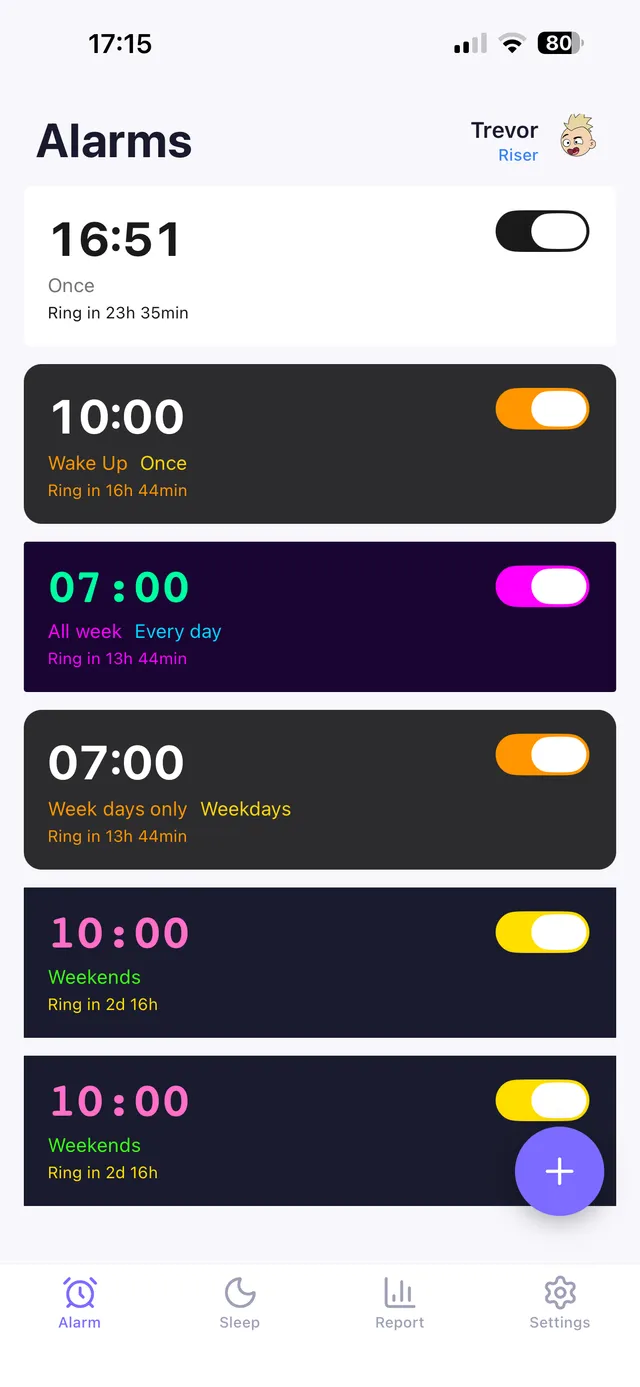
OwlRoutine is built around exactly the two levers that move a sleep score the most: a guided wind-down that shortens the time it takes you to actually fall asleep, and a consistent, mission-based alarm that anchors your wake time every single day — the single biggest lever for sleep consistency there is.
This article is general information, not medical advice.
Frequently asked questions
What is the fastest way to improve my sleep score?
Fixing your wake-up time consistency and setting an earlier caffeine cutoff tend to produce the fastest visible changes, since both directly affect the inputs most sleep scores weigh heavily.
Why is my sleep score low even though I slept 8 hours?
Scores also weigh sleep efficiency, restlessness and time to fall asleep, so a long time in bed with a slow sleep onset or frequent brief awakenings can still produce a lower score.
Should I check my sleep score every day?
It's better to check it weekly and focus on the trend rather than daily, since obsessing over single-night numbers can create sleep-related anxiety that makes sleep worse, a pattern sometimes called orthosomnia.
Can alcohol lower my sleep score?
Yes, generally. Alcohol can help you fall asleep faster but tends to fragment sleep later in the night, which often shows up as a lower score despite feeling like it helped initially.
Wake up for real. Wind down for good.
OwlRoutine is a sleep-cycle alarm that makes mornings actually stick — with a guided wind-down, dismiss missions, sleep scores and rewards. Available on iPhone and Android.