Signs of Sleep Apnea: What to Watch For (and Why It Needs a Doctor)
Snoring gets treated as a punchline, but loud, disruptive snoring — especially with pauses in breathing — can be a sign of sleep apnea, a common and under-diagnosed condition where breathing repeatedly stops and starts during sleep. It's not something to self-treat with a gadget or a lifestyle tweak. It's a medical condition with real health consequences, and it's diagnosable and treatable once identified.
The short answer
Common signs of sleep apnea include loud, chronic snoring, witnessed pauses in breathing or gasping/choking during sleep, waking with a dry mouth or headache, and significant daytime sleepiness despite spending enough time in bed. Risk is higher with obesity, a thicker neck circumference, being male, older age, and family history, though anyone can have it. Sleep apnea requires a proper sleep study to diagnose — it isn't something to guess at or manage with home remedies alone.
What sleep apnea actually is
The most common form, obstructive sleep apnea (OSA), happens when the muscles in the throat relax during sleep and the airway partially or fully collapses, briefly cutting off airflow. The brain senses the drop in oxygen and briefly rouses you — often without you fully waking or remembering it — to reopen the airway. This can happen dozens or even hundreds of times a night in moderate-to-severe cases, fragmenting sleep even though the person may have no memory of waking up at all.
A less common form, central sleep apnea, involves the brain temporarily failing to signal the breathing muscles at all, rather than a physical blockage. Both types need medical evaluation to distinguish and treat properly.
Signs and symptoms
Nighttime signs (often noticed by a partner)
- Loud, chronic snoring — not every snorer has apnea, but loud, habitual snoring is one of the most common associated signs.
- Witnessed pauses in breathing, sometimes followed by a gasp, snort, or choking sound.
- Restless sleep, frequent tossing and turning, or waking up abruptly for no clear reason.
- Night sweats in some cases.
This is one of the more common reasons partners bring up sleep problems with each other in the first place — see sleep divorce for how disruptive snoring often factors into couples sleeping apart, and why treating the underlying apnea can help both partners far more than separate rooms alone.
Daytime signs
- Excessive daytime sleepiness, even after what seems like a full night in bed.
- Morning headaches, often from overnight drops in oxygen.
- Dry mouth or sore throat on waking, especially if you sleep with your mouth open.
- Difficulty concentrating, memory issues, or irritability.
- Falling asleep in passive situations — during meetings, TV, or worst of all, while driving.
Who's at higher risk
| Risk factor | Why it matters |
|---|---|
| Excess weight, especially around the neck | Extra tissue can narrow the airway |
| Neck circumference (17+ in men, 16+ in women, roughly) | Correlated with airway narrowing |
| Male sex | Higher prevalence, though risk rises for women after menopause |
| Age 40+ | Muscle tone in the airway tends to decrease with age |
| Family history | Genetics can influence airway structure |
| Smoking and alcohol use | Both increase airway inflammation or relaxation |
| Nasal congestion or structural issues | Deviated septum, enlarged tonsils |
Importantly, sleep apnea isn't limited to any one body type — smaller, younger, and female patients are frequently under-diagnosed because they don't match the "classic" profile, which is part of why symptoms matter more than assumptions.
OwlRoutine helps you wind down at night and actually get up in the morning — with a guided wind-down, dismiss missions, and sleep scores. Available on iPhone and Android.


Why you shouldn't try to self-treat it
There's no shortage of home remedies marketed for snoring and apnea-like symptoms — positional pillows, sprays, and trending fixes like mouth taping. The problem is that sleep apnea is a diagnosis, not a symptom you can accurately self-assess, and the consequences of leaving it untreated are serious: it's linked with high blood pressure, increased cardiovascular risk, type 2 diabetes, and significantly increased risk of drowsy-driving accidents. If you suspect apnea, the right first step is a conversation with a doctor, not a product. For more on why trending fixes like mouth taping aren't a substitute for diagnosis, that's worth a read before trying anything on your own.
How sleep apnea is actually diagnosed
A doctor will usually start with a symptom review and risk assessment, then may refer you for a sleep study (polysomnography), either in a sleep lab or increasingly via validated at-home testing devices. This measures things a phone or wearable simply can't — airflow, oxygen saturation, and breathing effort — to determine whether apnea is present and how severe it is.
What treatment looks like
Treatment depends on severity and cause, and is entirely something to work out with a doctor, but common options include:
- CPAP (continuous positive airway pressure) — the most common and well-established treatment, using gentle air pressure to keep the airway open.
- Oral appliances that reposition the jaw, for milder cases.
- Weight management, where relevant, which can significantly reduce severity.
- Positional therapy, if apnea is worse when sleeping on your back.
- Surgery, in select cases with a clear anatomical cause.
A quick self-check (not a diagnosis)
Ask yourself or a partner:
- Do I snore loudly and regularly?
- Has anyone ever heard me stop breathing or gasp during sleep?
- Do I wake up with headaches or a dry mouth most mornings?
- Am I sleepy during the day despite spending 7-8+ hours in bed?
- Do I have any of the risk factors above?
If you answered yes to two or more, it's worth raising with a doctor — this isn't a diagnostic tool, just a reason to have the conversation sooner rather than later.
The bottom line
Loud snoring, witnessed breathing pauses, morning headaches and persistent daytime sleepiness are the core warning signs of sleep apnea — a common, serious, and very treatable condition once properly diagnosed. It isn't something to guess at or manage with home remedies; it needs a sleep study and a doctor's guidance.
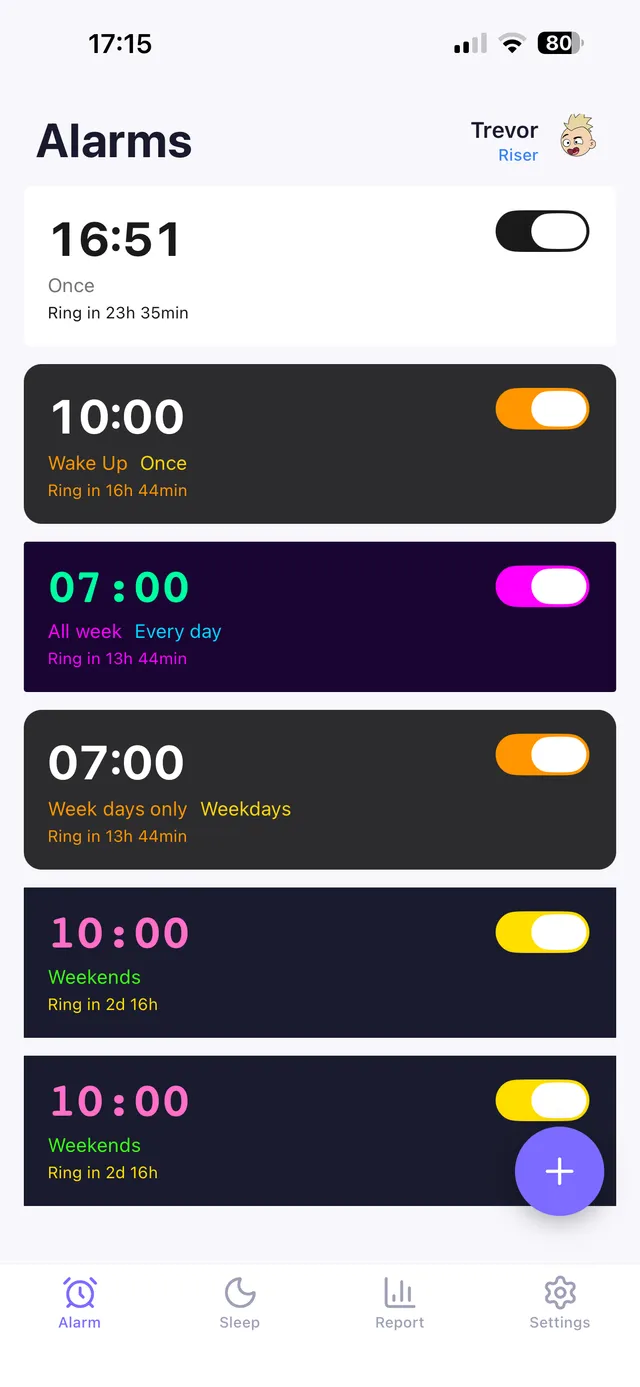
While OwlRoutine can't diagnose or treat sleep apnea, its mission alarm can help on the practical side if apnea is leaving you exhausted and prone to sleeping through alarms while you pursue diagnosis and treatment — and the wind-down routine supports the broader sleep habits that make any treatment plan more effective.
This article is general information, not medical advice. If you suspect sleep apnea, talk to a doctor — untreated sleep apnea has serious health risks and effective treatments exist.
Frequently asked questions
What are the main signs of sleep apnea?
Loud, chronic snoring, witnessed pauses in breathing or gasping during sleep, morning headaches, dry mouth, and significant daytime sleepiness despite adequate time in bed are the core signs.
Can you have sleep apnea without snoring?
Yes, though snoring is one of the more common signs, some people with sleep apnea, particularly central sleep apnea, don't snore loudly. Daytime symptoms and witnessed breathing pauses still matter even without loud snoring.
How is sleep apnea diagnosed?
Through a sleep study (polysomnography), either in a sleep lab or via a validated at-home testing device, which measures airflow, oxygen levels, and breathing effort overnight.
Is sleep apnea dangerous if left untreated?
Yes. Untreated sleep apnea is linked with high blood pressure, increased cardiovascular risk, type 2 diabetes, and a significantly higher risk of drowsy-driving accidents. It's treatable, which makes diagnosis important.
Wake up for real. Wind down for good.
OwlRoutine is a sleep-cycle alarm that makes mornings actually stick — with a guided wind-down, dismiss missions, sleep scores and rewards. Available on iPhone and Android.