Journaling Before Bed: How a 5-Minute Habit Can Quiet Your Mind and Help You Sleep

If your head hits the pillow and your brain immediately starts replaying the day and rehearsing tomorrow, journaling before bed might be the simplest fix you haven't tried. A few minutes with a pen and paper can move those loops out of your head and onto the page — and there's research suggesting it can help you fall asleep faster.
The short answer
Journaling before bed helps sleep by reducing pre-sleep worry and mental arousal. The most researched version is surprisingly specific: writing a to-do list for the next few days for five minutes before bed. Gratitude journaling and a quick "brain dump" can also help. Keep it short, on paper, and finish at least a few minutes before lights out.
What the research says
A 2018 study from Baylor University, published in the Journal of Experimental Psychology: General, compared two groups who wrote for five minutes before bed in a sleep lab. One group wrote a to-do list for the coming days; the other wrote about tasks they had already completed. The to-do list group fell asleep faster — and the more specific their lists, the faster they fell asleep.
The likely reason: unfinished tasks keep your mind "on alert". Writing them down offloads them, so your brain doesn't feel it needs to keep rehearsing them.
Other studies have linked gratitude journaling to better subjective sleep quality, likely because it shifts pre-sleep thoughts toward calmer, positive topics. And expressive writing about worries has been studied as a way to reduce rumination, though results are more mixed.
Types of bedtime journaling
| Type | What you write | Best for | Time |
|---|---|---|---|
| To-do list | Specific tasks for the next few days | Busy minds, work worries | 5 min |
| Brain dump | Everything on your mind, unfiltered | Racing thoughts | 5–10 min |
| Gratitude | 3 good things from today | Low mood, negative loops | 3–5 min |
| Reflection | What went well, what to adjust | Building habits | 5 min |
| Worry list + next step | Worry → one small action | Anxiety about specific problems | 5–10 min |
How to journal before bed (so it actually helps)
- Use paper, not your phone. Opening a notes app is one tap away from email and social media. What phones do to your sleep.
- Keep it short. Five minutes is enough. The goal is offloading, not writing an essay.
- Be specific. "Email Sam about the invoice by 10am Tuesday" works better than "work stuff".
- End on something neutral or positive. Finish with one good thing from the day or a simple plan for tomorrow morning.
- Do it in your wind-down, not in bed at the last second. Journaling fits naturally into a 20–30 minute wind-down routine.
- Close the notebook. Physically closing it is a small signal that the day's thinking is done.
OwlRoutine helps you wind down at night and actually get up in the morning — with a guided wind-down, dismiss missions, and sleep scores. Available on iPhone and Android.


15 journal prompts for sleep
To-do and planning
- What are the three most important things I need to do tomorrow?
- What's one task I've been avoiding, and what's the first tiny step?
- What do I need to remember that's currently living in my head?
Brain dump
- What's on my mind right now?
- What's bothering me that I haven't said out loud?
Gratitude
- What are three good things that happened today, however small?
- Who made my day a little better?
- What am I looking forward to this week?
Reflection
- What went well today, and why?
- What would I do differently tomorrow?
- When did I feel most calm today?
Worry to action
- What am I worried about?
- Is it within my control?
- If yes: what's one small next step, and when will I do it?
- If no: what can I let go of for tonight?
When journaling isn't helping
For some people, writing about worries at night stirs them up rather than settling them. If that happens:
- Switch to a to-do list or gratitude only.
- Move deeper reflection to earlier in the evening.
- Pair journaling with a relaxation technique like the military sleep method or slow breathing.
If worry regularly keeps you awake, or you're dealing with anxiety that affects daily life, talk to a doctor or therapist. CBT for insomnia includes structured techniques for exactly this.
The bottom line
Journaling before bed is a small, free habit with real evidence behind it. Five minutes writing a specific to-do list for the next few days — or a quick brain dump and three good things — gets the day's loops out of your head so your mind can switch off. Use paper, keep it short and make it part of a consistent wind-down.
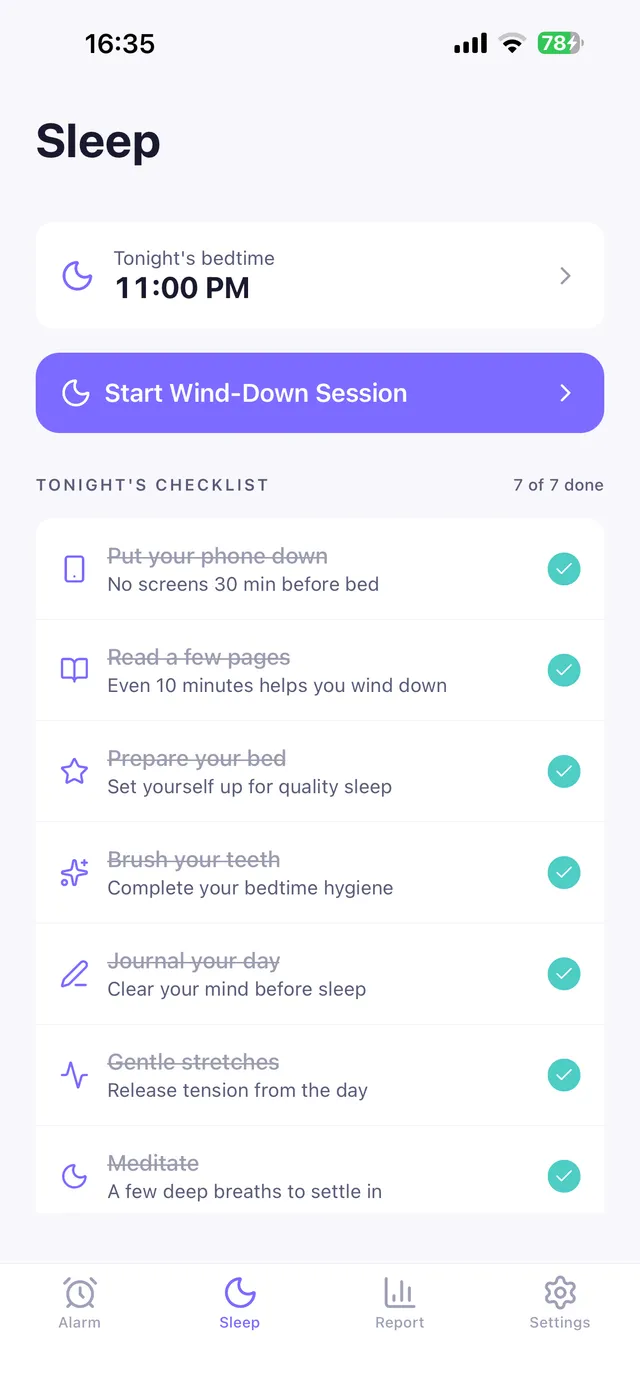
OwlRoutine includes Journal as one of the evening activities in its guided wind-down session, alongside reading, stretching, meditation and more. The session keeps your phone face-down while you write, and completing it earns you an easier mission on tomorrow's alarm.
This article is general information, not medical advice.
Frequently asked questions
Does journaling before bed help you sleep?
It can. A 2018 study found that writing a specific to-do list for five minutes before bed helped people fall asleep faster, likely by offloading unfinished tasks from the mind.
What should I write in a bedtime journal?
Try a specific to-do list for the next few days, a quick brain dump of what's on your mind, or three good things from your day.
How long should I journal before bed?
Around five minutes is enough. The goal is to offload thoughts, not write at length.
Should I journal on paper or on my phone?
Paper is better. Using your phone makes it easy to drift into email or social media, which can keep you awake.
Wake up for real. Wind down for good.
OwlRoutine is a sleep-cycle alarm that makes mornings actually stick — with a guided wind-down, dismiss missions, sleep scores and rewards. Available on iPhone and Android.