Insomnia vs Sleep Deprivation: What's the Difference (and Why It Matters)
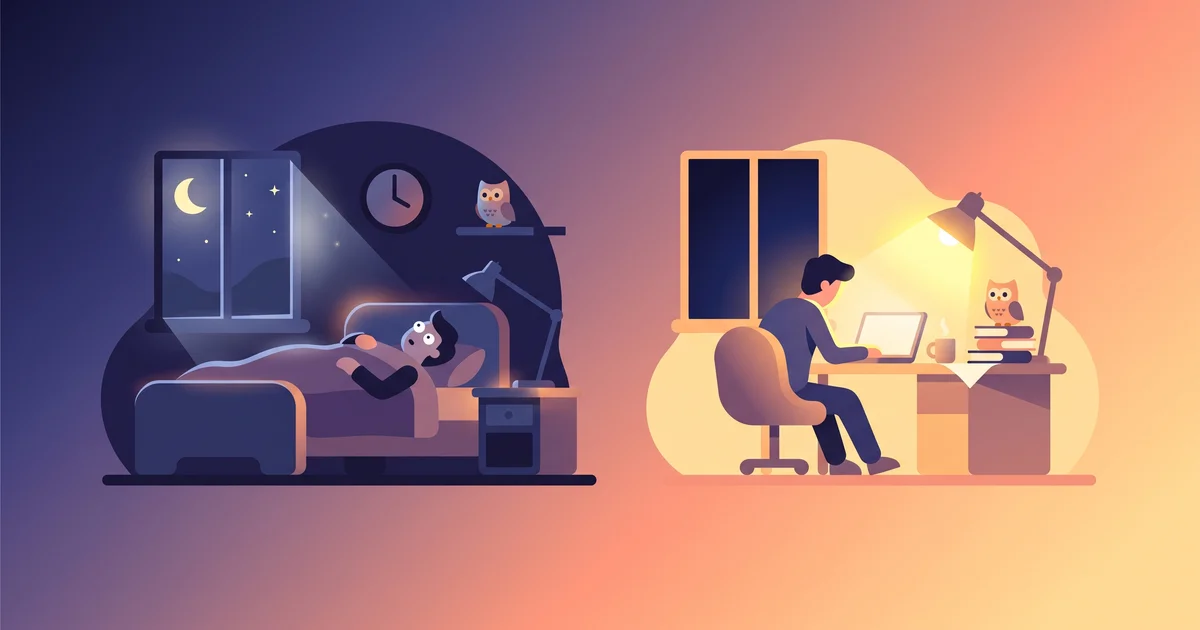
You're exhausted, foggy, and running on fumes — but is that insomnia or plain old sleep deprivation? The two get used interchangeably, and the exhaustion can look identical from the outside, but they come from opposite problems. One is about not having the chance to sleep enough. The other is about not being able to sleep even when you do. Mixing them up means reaching for the wrong fix.
The short answer
Sleep deprivation means you're not getting enough sleep, usually because of your schedule, workload, a new baby, or choice — the opportunity to sleep more exists, you're just not taking it. Insomnia means you have trouble falling or staying asleep despite having enough time and opportunity to sleep. Sleep deprivation is usually fixed by protecting more time for sleep; insomnia often needs behavioral or medical treatment because the problem isn't time, it's the sleep itself.
The core distinction
| Sleep deprivation | Insomnia | |
|---|---|---|
| Root cause | Not enough time/opportunity for sleep | Can't sleep despite adequate opportunity |
| Typical trigger | Work, school, newborn, choice, jet lag | Stress, anxiety, racing thoughts, chronic conditions, sometimes no clear cause |
| What happens in bed | You'd sleep fine if you had more time | You lie awake, or wake and can't return to sleep |
| Fix | Go to bed earlier, protect more sleep time | Behavioral therapy (CBT-I), addressing anxiety, sleep hygiene, sometimes medical treatment |
| Weekend/day off | Sleep improves, you may "catch up" | Often still struggles to sleep even when there's time |
The simplest gut-check: if you were given eight uninterrupted hours in a dark, quiet room tonight, would you sleep through most of it? If yes, you're probably dealing with sleep deprivation — a time problem. If you'd likely still lie awake, stare at the ceiling, or wake at 3am unable to drift back off, that's closer to insomnia — a sleep-mechanism problem.
What sleep deprivation looks like
Sleep deprivation is arithmetic: you need roughly 7-9 hours (for most adults) and you're consistently getting less. Common causes:
- Early work or school start times combined with late nights.
- A demanding job, side hustle, or caregiving responsibilities.
- Choosing to stay up for TV, scrolling, or socializing (see revenge bedtime procrastination).
- Travel and jet lag.
- A new baby or shift work.
Left unaddressed, it accumulates into sleep debt — and the fix is usually straightforward, if not always easy: go to bed earlier, protect the time, and let your body pay the debt back gradually.
What insomnia looks like
Insomnia is a sleep disorder, not a scheduling problem. It's typically defined as:
- Trouble falling asleep, staying asleep, or waking too early, at least three nights a week.
- Happening despite adequate opportunity to sleep.
- Causing daytime impairment — fatigue, mood changes, trouble concentrating.
- Chronic insomnia: this pattern persisting for three months or longer. Acute (short-term) insomnia often follows a stressful event and resolves on its own.
Insomnia frequently comes with a racing mind, physical tension, clock-watching anxiety, and a paradoxical effect where trying harder to sleep makes it worse. It can exist on its own or alongside another condition like anxiety, depression, or chronic pain.
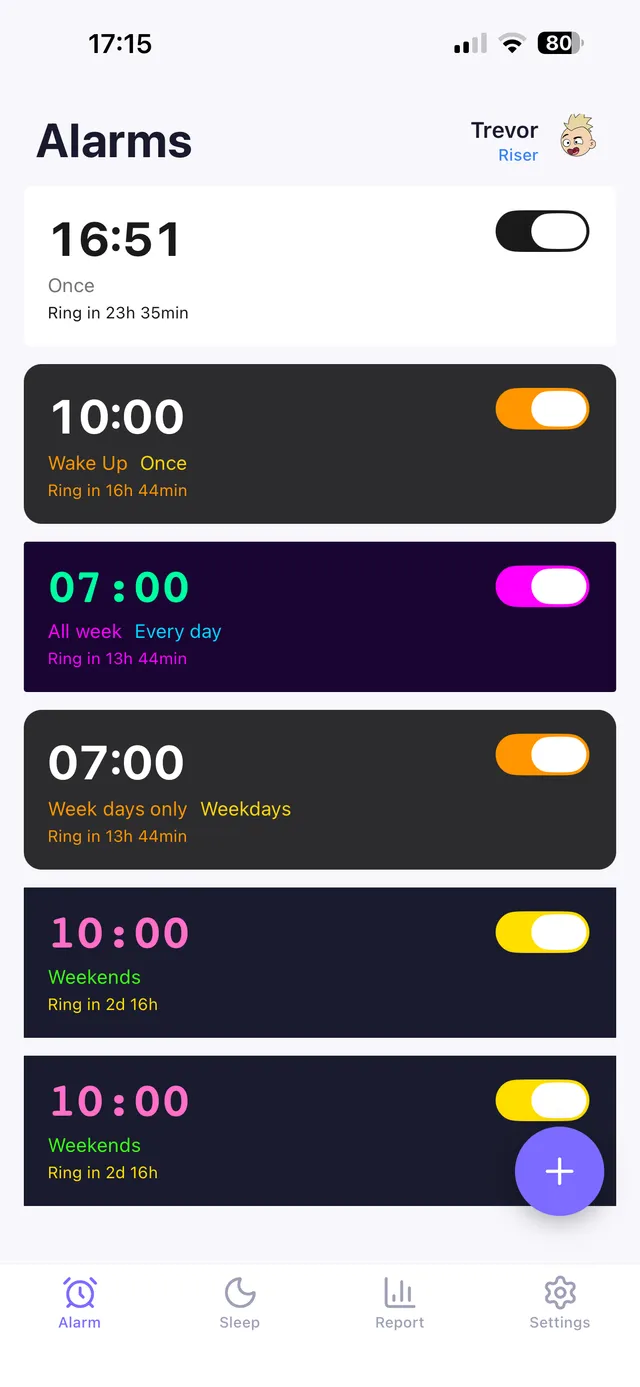
OwlRoutine helps you wind down at night and actually get up in the morning — with a guided wind-down, dismiss missions, and sleep scores. Available on iPhone and Android.


Why the distinction actually matters
Treating insomnia like sleep deprivation — just "go to bed earlier" — usually backfires. If you already can't fall asleep, adding more time in bed just means more time lying awake, which can train your brain to associate bed with frustration rather than sleep. That's the opposite of what you want.
Conversely, treating sleep deprivation like insomnia — reaching for sleep aids or elaborate wind-down rituals when the real problem is you're simply not budgeting enough hours — treats a symptom instead of the cause.
Getting the diagnosis right (even a rough self-diagnosis) points you toward the right fix:
- Sleep deprivation → protect more time, move your bedtime earlier, reduce evening obligations, build a consistent sleep hygiene routine.
- Insomnia → look into cognitive behavioral therapy for insomnia (CBT-I, the first-line treatment), manage stress and racing thoughts at night, and talk to a doctor if it persists.
Can you have both?
Yes, and it's common. Someone who's chronically sleep-deprived from an early job and late nights can also develop insomnia — the stress of exhaustion and the pressure to "sleep well tonight" can itself trigger anxious, wakeful nights. In that case, both the schedule and the sleep mechanism need attention.
Practical self-check
Ask yourself over a week or two:
- Am I actually in bed for 7-9 hours, or am I cutting it short? If short, that's a scheduling issue first.
- When I am in bed with enough time, do I fall asleep within 20-30 minutes and stay asleep? If not, that points toward insomnia.
- Does a relaxed weekend or vacation fix it? Deprivation usually bounces back; insomnia often doesn't.
- Is there a racing, anxious quality to lying awake? That's a hallmark of insomnia rather than simple tiredness.
If the pattern points to insomnia and it's lasted more than a few weeks, it's worth talking to a doctor — persistent insomnia is treatable, and CBT-I in particular has strong evidence behind it.
The bottom line
Sleep deprivation is a time problem — not enough hours budgeted for sleep. Insomnia is a sleep-mechanism problem — trouble sleeping even when the time is there. They can look the same from the outside (tired, foggy, short-tempered) but need different fixes: more protected time for one, behavioral or medical treatment for the other. Figuring out which one you're dealing with is the first real step toward fixing it.
Whichever one you're up against, mornings are where it shows. OwlRoutine's mission alarm makes sure exhaustion doesn't turn into oversleeping and a wrecked schedule, and the guided wind-down routine — breathing exercises and journaling prompts — is built specifically to quiet a racing mind for people whose problem isn't time, it's actually settling down to sleep.
This article is general information, not medical advice. If sleep problems persist for more than a few weeks, talk to a doctor.
Frequently asked questions
What is the main difference between insomnia and sleep deprivation?
Sleep deprivation means not getting enough sleep, usually due to schedule or lifestyle, even though you could sleep more if you had the time. Insomnia means struggling to fall or stay asleep even when you have adequate time and opportunity to sleep.
Can sleep deprivation turn into insomnia?
Yes. Chronic sleep deprivation and the stress of trying to catch up can trigger anxious, wakeful nights that develop into insomnia, especially when pressure to 'sleep well' builds up.
How do I know if I have insomnia or I'm just sleep-deprived?
Ask whether you'd sleep well given a full 7-9 hours with no interruptions. If yes, it's likely sleep deprivation. If you'd still struggle to fall or stay asleep, it's more likely insomnia.
Is insomnia a sleep disorder?
Yes. Chronic insomnia is a recognized sleep disorder, typically defined as trouble sleeping at least three nights a week for three months or more, causing daytime impairment, despite adequate opportunity to sleep.
What helps insomnia versus sleep deprivation?
Sleep deprivation is usually fixed by protecting more time for sleep and improving sleep hygiene. Insomnia often needs behavioral treatment like CBT-I, stress management, and sometimes medical care.
Wake up for real. Wind down for good.
OwlRoutine is a sleep-cycle alarm that makes mornings actually stick — with a guided wind-down, dismiss missions, sleep scores and rewards. Available on iPhone and Android.