The Best Temperature for Sleep: How Cool Should Your Bedroom Be?
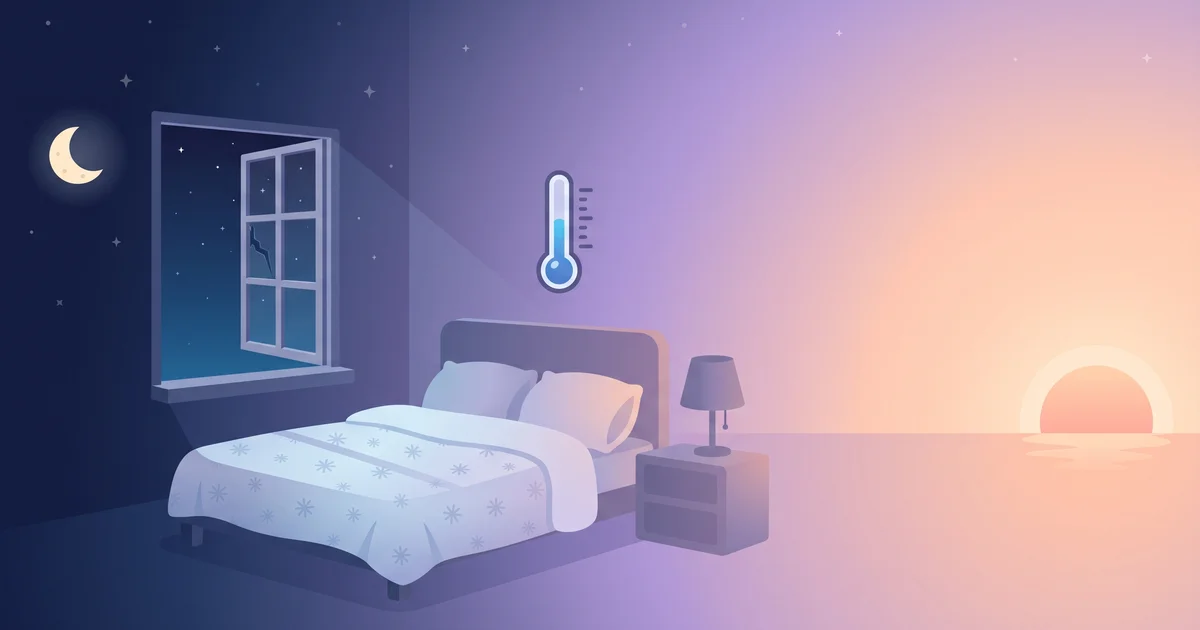
If you've ever lain awake on a hot summer night, you already know temperature matters for sleep. But most people never think about it the rest of the year — even though a bedroom that's a little too warm is one of the most common and easily fixed sleep disruptors. Here's the best temperature for sleep, why it matters and how to get there.
The short answer
A commonly recommended bedroom temperature for most adults is around 16–19°C (60–67°F), with about 18°C (65°F) often cited as a good target. Individual comfort varies, so treat it as a starting range: the aim is a room that feels slightly cool, with bedding that lets you stay comfortably warm without overheating.
Why your body needs to cool down to sleep
Your core body temperature follows a daily rhythm. In the evening, it begins to drop, and that drop is part of the process that helps you fall asleep. It reaches its lowest point in the early morning hours, then rises again before you wake.
A cool room makes that natural drop easier. A warm room fights it: you may take longer to fall asleep, wake more often and get less deep and REM sleep. That's why a hot night leaves you tossing, turning and waking at 3am.
Temperature guide
| Room temperature | How it tends to feel for sleep |
|---|---|
| Below 15°C (59°F) | Cold for many; need warmer bedding |
| 16–19°C (60–67°F) | Commonly recommended range |
| 19–21°C (67–70°F) | Comfortable for some, warm for others |
| 22–24°C (72–75°F) | Often too warm; more restless sleep |
| Above 24°C (75°F) | Hard to sleep for most people |
Babies and older adults may need slightly warmer rooms — follow guidance from your health visitor or doctor for infants.
Tips for keeping cool at night
- Lower the thermostat in the evening, or open a window if it's cooler outside.
- Use breathable bedding — cotton or linen sheets, a lighter duvet in summer.
- Take a warm shower or bath 1–2 hours before bed. It sounds backwards, but warming your skin helps your body shed heat afterwards, supporting the natural temperature drop.
- Keep curtains closed during hot days to stop the room heating up.
- Use a fan for airflow; some people also like the steady white noise.
- Wear light, breathable sleepwear, or less.
- Avoid heavy meals and alcohol late in the evening, which can raise body temperature and disrupt sleep.
OwlRoutine helps you wind down at night and actually get up in the morning — with a guided wind-down, dismiss missions, and sleep scores. Available on iPhone and Android.


Tips for cold nights
Too cold isn't great either. If you're shivering, you won't sleep well.
- Warm the bed, not the whole room — a hot-water bottle or an extra blanket.
- Warm feet help. Socks can help some people fall asleep faster by aiding heat loss through dilated blood vessels.
- Layer bedding so you can adjust during the night.
- Keep the heating low but on in very cold climates, rather than off.
And for the morning: getting out of a warm bed into a cold room is a big reason waking up in winter is so hard. Setting the heating to come on 20–30 minutes before your alarm helps.
Signs your room is too warm
- You wake up hot, sweaty or with the covers kicked off.
- You fall asleep fine but wake repeatedly in the second half of the night.
- You feel restless and can't get comfortable.
- You sleep better on cooler nights or when you travel.
If that sounds familiar, try dropping the temperature by a degree or two for a week and notice the difference. Small changes can be surprisingly effective.
Temperature is one part of the environment
The ideal sleep environment is cool, dark and quiet. Once you've fixed temperature, check the rest:
- Dark: blackout curtains or an eye mask.
- Quiet: earplugs, white noise or a fan.
- Screen-free: phone charging away from the bed. What phones do to sleep.
The full list is in our sleep hygiene checklist.
Couples with different preferences
If one of you runs hot and the other cold, try separate duvets of different weights, layered blankets on one side, or a fan pointed at one person. Some couples go further — sleeping in separate beds is more common than you might think.
The bottom line
For most adults, a slightly cool bedroom — around 16–19°C (60–67°F) — supports better sleep by helping your body's natural temperature drop. Use breathable bedding, a warm shower an hour or two before bed, and airflow on hot nights; layer up on cold ones. Then make sure the room is dark and quiet too.
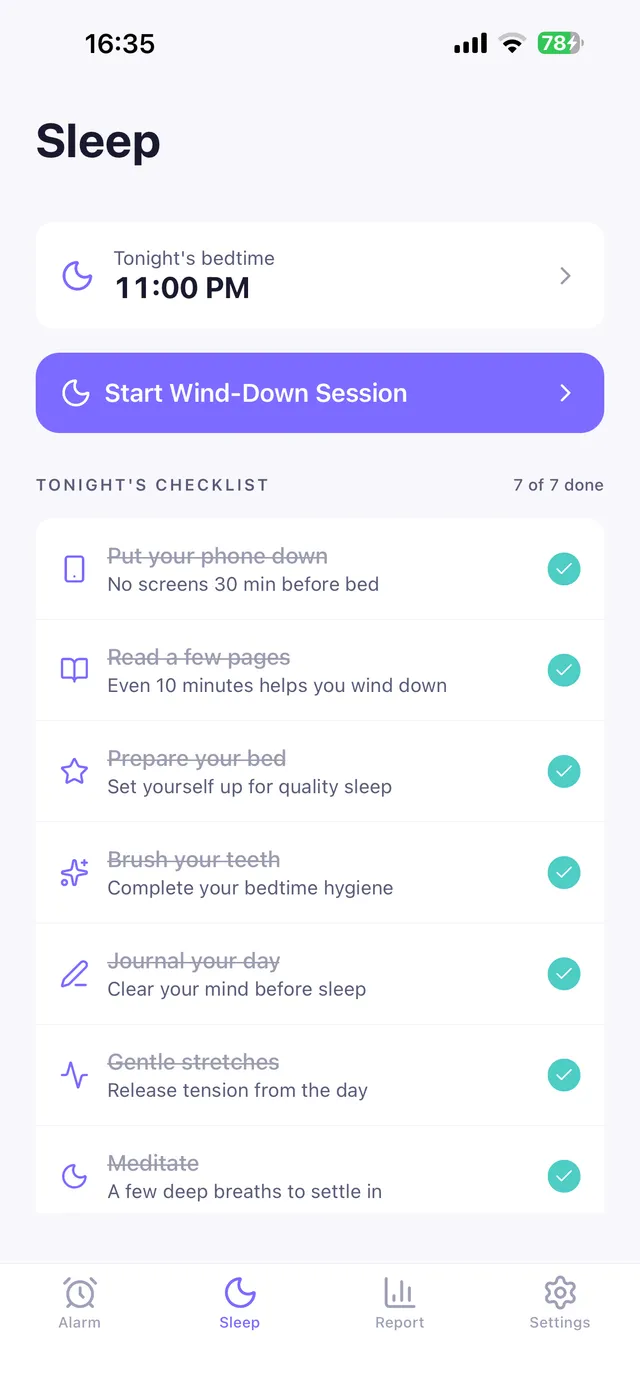
OwlRoutine's evening checklist includes "Prepare your bed" as part of Tonight's checklist, alongside putting your phone down and brushing your teeth — small, repeatable steps that turn your bedroom into a place your body associates with sleep.
This article is general information, not medical advice.
Frequently asked questions
What is the best temperature for sleep?
A commonly recommended range for adults is about 16–19°C (60–67°F), with around 18°C (65°F) often cited. Comfort varies, so aim for a room that feels slightly cool.
Why is it hard to sleep when it's hot?
Your core body temperature needs to drop to help you fall asleep and stay asleep. A warm room makes that harder, leading to more restless sleep and waking.
Does a warm shower before bed help you sleep?
Yes, for many people. A warm shower or bath 1–2 hours before bed can help your body shed heat afterwards, supporting the natural temperature drop before sleep.
Is it bad to sleep in a cold room?
A slightly cool room is good, but being so cold that you're uncomfortable or shivering will disrupt sleep. Use layers and warm bedding to stay comfortable.
Wake up for real. Wind down for good.
OwlRoutine is a sleep-cycle alarm that makes mornings actually stick — with a guided wind-down, dismiss missions, sleep scores and rewards. Available on iPhone and Android.