The Perfect Wind-Down Routine: 30 Minutes to Better Sleep

You expect your brain to go from doomscrolling to deep sleep in thirty seconds, then wonder why you lie awake. Sleep doesn't have an off switch — it has a dimmer. A wind-down routine is how you turn it down. Here's a simple, science-backed 30-minute version.
Why a wind-down works
Falling asleep requires two things to line up: your body clock signaling night (driven by light and routine) and your arousal level dropping (less stress, less stimulation). A wind-down routine deliberately lowers both. Done consistently, it also becomes a cue — your brain learns "this sequence means sleep is coming" and starts the process before your head hits the pillow.
The 30-minute wind-down
Minutes 0–5: Dim the lights, kill the bright screens
Light is the master signal for your body clock. Switch off overhead lights, use warm lamps, and put down the phone — or at least drop the brightness and warm the color. Bright light at night suppresses melatonin, the hormone that makes you sleepy.
Minutes 5–10: Set tomorrow down
A racing mind is often just unprocessed to-dos. Spend a few minutes writing tomorrow's top tasks or a quick brain-dump. Getting it out of your head and onto paper stops the 1am mental rehearsal.
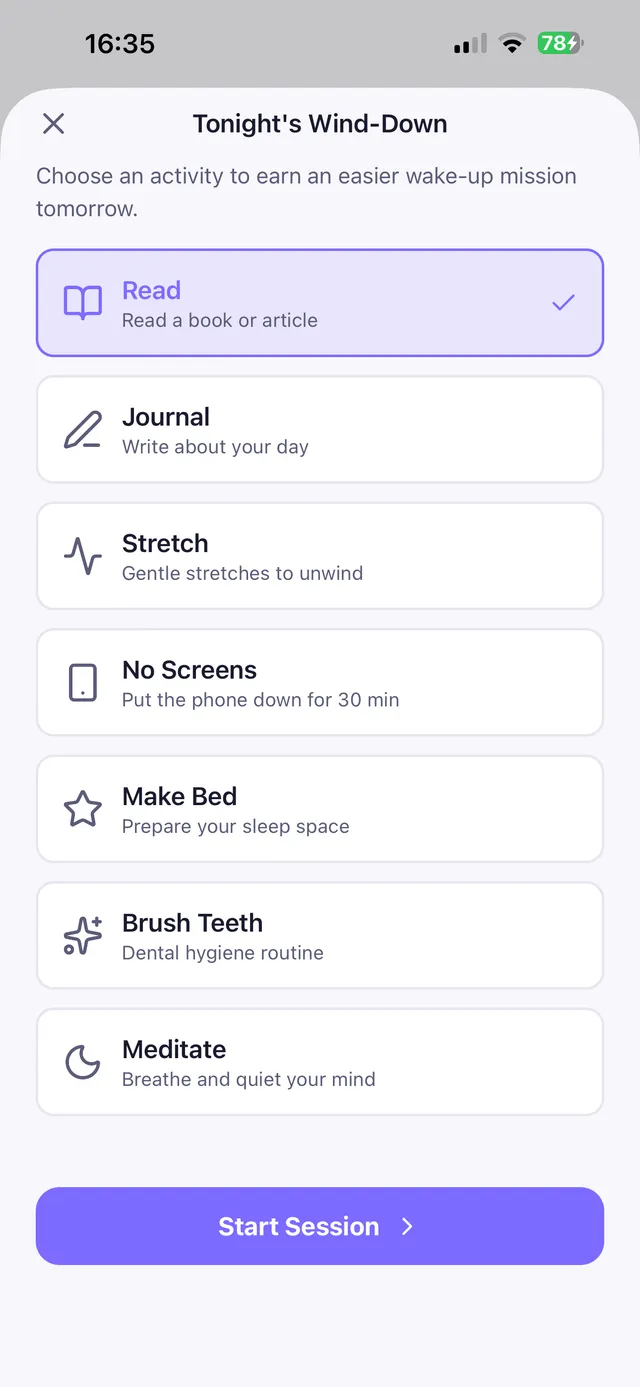
OwlRoutine helps you wind down at night and actually get up in the morning — with a guided wind-down, dismiss missions, and sleep scores. Launching soon.
See how OwlRoutine worksMinutes 10–20: Do something calm and analog
Pick one: read a few pages (physical book or e-ink), stretch gently, take a warm shower, or do a short breathing exercise. The warm-shower trick works because the post-shower drop in body temperature mimics the natural cooling that precedes sleep.
Minutes 20–30: Lower arousal deliberately
Slow breathing or a brief meditation drops your heart rate and shifts you toward "rest" mode. Box breathing (inhale 4, hold 4, exhale 4, hold 4) for a few minutes is enough for most people.
The rules that make it stick
- Same time every night. Consistency turns the routine into a cue and stabilizes your body clock. (It's also the single biggest sleep lever — see why consistency beats sleeping longer.)
- No screens as the last thing. If you must use a screen, don't let it be the final step before lights-out.
- Keep it realistic. A 10-minute version you actually do beats a 60-minute ideal you skip.
- Pair it with cycle-aware timing. Wind down so you're asleep in time to wake at a sleep-cycle boundary.
The takeaway
You fall asleep faster and wake up easier when you give sleep a runway. Dim the lights, offload tomorrow, do something calm, and slow your breathing — same time, every night. The routine matters more than any single trick, because consistency is what trains your brain to power down on cue.
OwlRoutine guides exactly this: a nightly wind-down checklist and timer — phone down, read, stretch, breathe — so the calm pre-sleep ritual happens automatically, and your morning wake-up has a fighting chance.
Frequently asked questions
How long should a wind-down routine be?
About 30 minutes is ideal, but a consistent 10-minute routine you actually follow beats a long one you skip. Consistency matters more than length.
What should I do to wind down before bed?
Dim the lights, put screens away, write down tomorrow's tasks, do something calm (read, stretch, warm shower), and finish with slow breathing or a brief meditation to lower arousal.
Why does a warm shower help you sleep?
The drop in body temperature after a warm shower mimics the natural cooling that precedes sleep, helping signal to your body that it's time to rest.
Do screens really affect sleep?
Yes. Bright screen light at night suppresses melatonin and keeps your brain alert. Dimming, warming the color, or avoiding screens in the final wind-down step helps you fall asleep faster.
Wake up for real. Wind down for good.
OwlRoutine is a sleep-cycle alarm that makes mornings actually stick — with a guided wind-down, dismiss missions, sleep scores and rewards. Launching soon.
Discover OwlRoutine