How to Wake Up at 5am (Without Feeling Awful): A 3-Week Plan

Most people who try to wake up at 5am do it the same way: set the alarm two hours earlier than usual, feel heroic on Monday, feel wrecked by Wednesday and quit by Friday. Waking up at 5am is absolutely doable — but only if you treat it as a schedule shift, not a willpower challenge. This 3-week plan gets you there without the crash.
The short answer
To wake up at 5am: move your wake time earlier by 15–20 minutes every two or three days, go to bed around 21:00–21:30 so you still get 7+ hours, get bright light immediately after waking, keep weekends within an hour of 5am, and use an alarm with no snooze and a mission that forces you fully awake.
First: do the sleep math
A 5am wake-up only works if bedtime moves too. Most adults need at least 7 hours (here's how much you need).
| Sleep target | Time to fall asleep | Lights out | Start wind-down |
|---|---|---|---|
| 7 h | 15 min | 21:45 | 21:15 |
| 7.5 h (5 cycles) | 15 min | 21:15 | 20:45 |
| 8 h | 15 min | 20:45 | 20:15 |
If a 21:15 bedtime is impossible in your life, 5am isn't the right goal right now — and that's fine. A consistent 6:00 or 6:30 gives you most of the same benefits. The 5AM Club article covers who early rising suits.
The 3-week plan
Assuming you currently wake at 7:00:
| Days | Wake time | Bedtime (7.5 h + 15 min) |
|---|---|---|
| 1–3 | 06:40 | 22:55 |
| 4–6 | 06:20 | 22:35 |
| 7–9 | 06:00 | 22:15 |
| 10–12 | 05:40 | 21:55 |
| 13–15 | 05:20 | 21:35 |
| 16–21 | 05:00 | 21:15 |
Each step is small enough for your body clock to follow. If a step feels rough, stay on it for a few more days before moving on.
Step 1: Set up the alarm so it wins
At 5am, your judgement is at its worst — you'll be in sleep inertia, and snoozing will feel completely rational. So remove the decision:
- Turn snooze off. Why snoozing backfires.
- Use a mission. A math problem, typing a phrase or a photo mission makes it impossible to dismiss half-asleep.
- Make sure it rings on silent. Test it with your phone on silent and your sleep Focus on.
Step 2: Light, immediately
At 5am it will often be dark, especially from autumn to spring. Turn on bright lights as soon as you're up. If you can, get outside once it's light. Light is what tells your body clock that 5am is now "morning" — without it, you'll feel jet-lagged for weeks. Why winter mornings are harder.
Step 3: Make the first 10 minutes automatic
Prepare the night before: clothes out, water by the bed, kettle ready. Have a fixed first action — drink water, make the bed, wash your face — so there's no moment where you're deciding what to do.
OwlRoutine helps you wind down at night and actually get up in the morning — with a guided wind-down, dismiss missions, and sleep scores. Available on iPhone and Android.


Step 4: Protect the evening
This is where most 5am attempts fail. A 21:15 bedtime means:
- Last caffeine around 11:00–12:00. See the 10-3-2-1-0 rule.
- Dinner finished by about 18:30.
- Screens down around 20:15 and a calm wind-down routine.
- Social plans — occasional late nights are fine, but get up at 5am the next day anyway and go to bed early that night rather than sleeping in.
Step 5: Don't blow it on weekends
Sleeping until 9 on Saturday is the fastest way to undo the whole shift — you'll wake on Monday with social jet lag. Keep weekend wake-ups within about an hour of 5am. A 6am weekend wake-up still feels like a lie-in once you're adapted.
Step 6: Give 5am a purpose
Waking at 5am to scroll your phone won't last. Decide in advance what the time is for: a workout, focused work, reading, a quiet coffee before the kids wake up. A simple productive morning routine is a good template.
What to expect
- Days 1–5: noticeably harder mornings; sleepy earlier in the evening.
- Week 2: mornings start to feel normal; evenings are the challenge.
- Week 3+: waking at or just before 5am starts to feel natural, especially if your wake time stays consistent.
If after a month you still feel exhausted, you may need more sleep than you're getting, or 5am may simply not suit your chronotype. Chronotypes explained.
The bottom line
To wake up at 5am without feeling awful, shift gradually, move your bedtime with your wake time, get light immediately, remove snooze, keep weekends close and give the early hour a purpose. Treat it as a three-week project, not a Monday resolution.
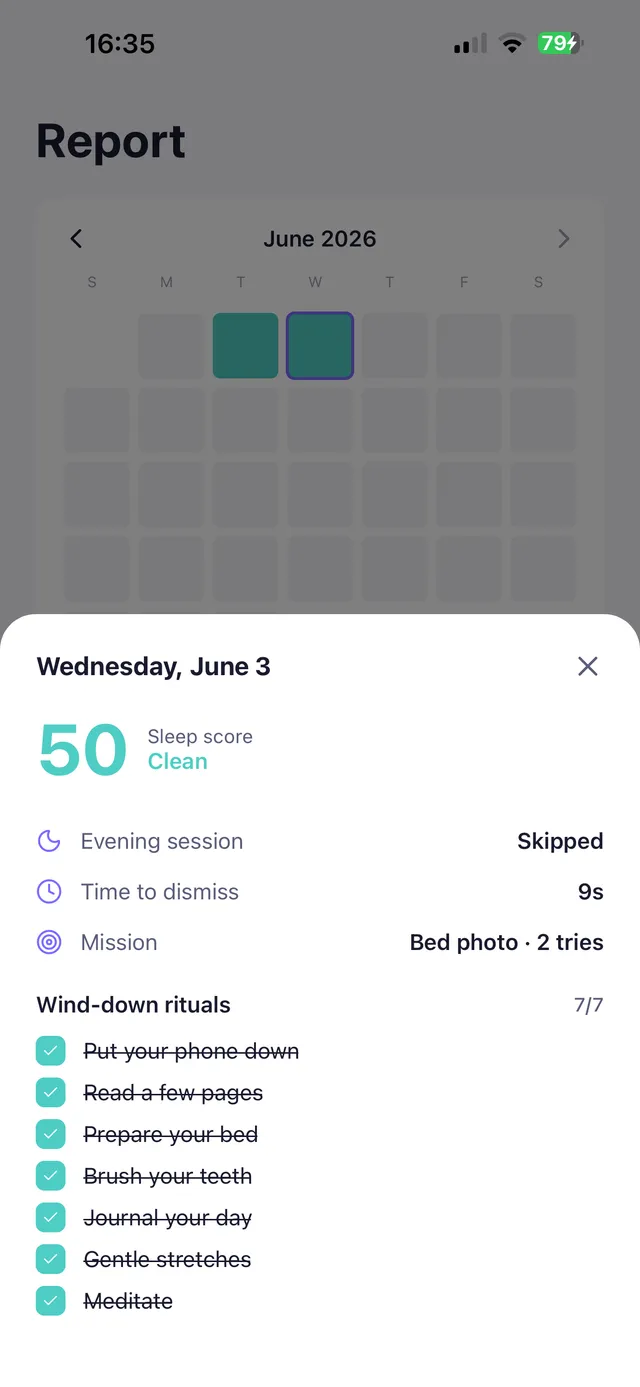
OwlRoutine is well suited to this kind of shift: bedtime reminders and a guided wind-down to make the earlier bedtime realistic, a mission alarm that rings on silent and won't stop until you're awake, and streaks and a heatmap so you can see your new wake time settling in.
Frequently asked questions
How do I train myself to wake up at 5am?
Shift your wake time 15–20 minutes earlier every two or three days, move your bedtime earlier at the same pace, get bright light immediately after waking, turn off snooze and keep weekends within an hour of 5am.
What time should I go to bed to wake up at 5am?
For about 7.5 hours of sleep and 15 minutes to fall asleep, aim for lights out around 21:15. For 7 hours, around 21:45.
How long does it take to get used to waking up at 5am?
Typically two to three weeks with a gradual shift and consistent wake times, including weekends.
Is waking up at 5am healthy?
It can be, as long as you still get enough sleep. Waking at 5am on 5–6 hours of sleep leads to sleep debt.
Wake up for real. Wind down for good.
OwlRoutine is a sleep-cycle alarm that makes mornings actually stick — with a guided wind-down, dismiss missions, sleep scores and rewards. Available on iPhone and Android.