How to Stop Hitting Snooze (and Why Snoozing Makes You More Tired)
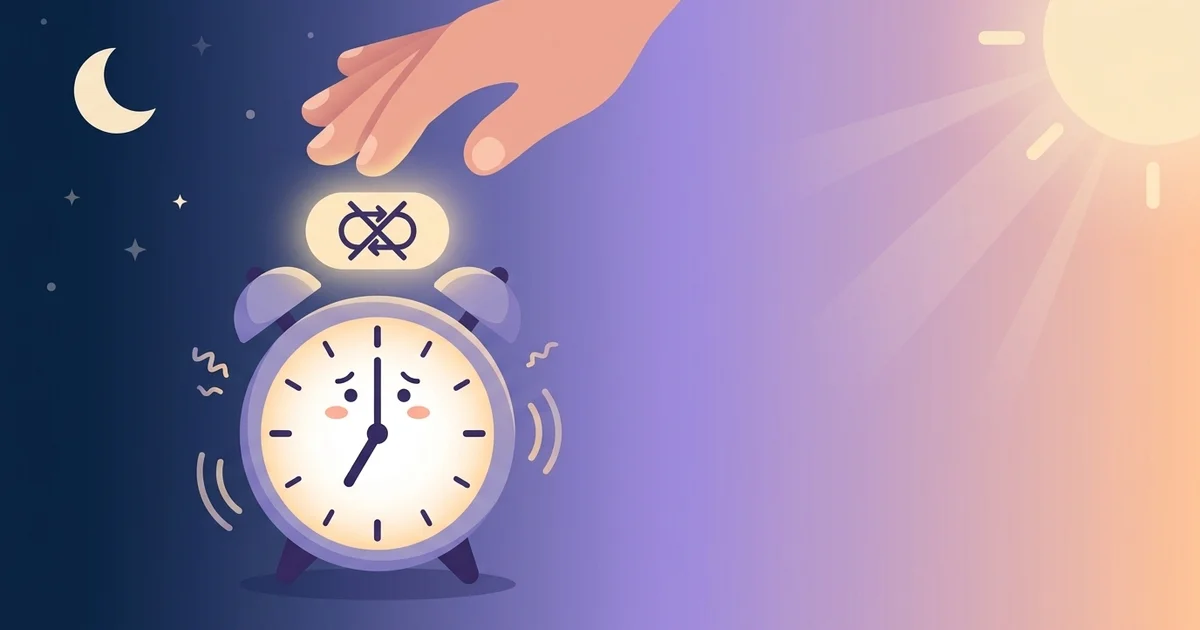
Nine extra minutes feels like a gift at 6:30am. It isn't. The snooze button is one of the most counterproductive habits in your day — it makes you more tired, not less. Here's why, and how to actually quit it.
Why snoozing backfires
When your alarm first goes off, there's a decent chance you were in light sleep, ready to wake. Hit snooze, and you drift back down — your brain starts a new sleep cycle it has no time to finish.
Nine minutes later the alarm fires again, but now you may be heading into deeper sleep. Being yanked out of that triggers sleep inertia — the groggy, foggy state that can linger for up to 30 minutes. Repeat it three times and you've trained your body through a series of false starts that leave you worse off than one clean wake-up. (More on sleep inertia and waking up tired.)
You're not buying rest. You're buying fragmented, low-quality sleep plus a groggier brain.
The real reason you snooze
It's rarely that you need more sleep in that moment — it's that getting up is unpleasant and snoozing is the path of least resistance. The fix isn't more willpower at your weakest moment (half-asleep). It's removing the easy escape and engineering a wake-up you can't sleep through.
A system to stop snoozing
1. Make the alarm require an action
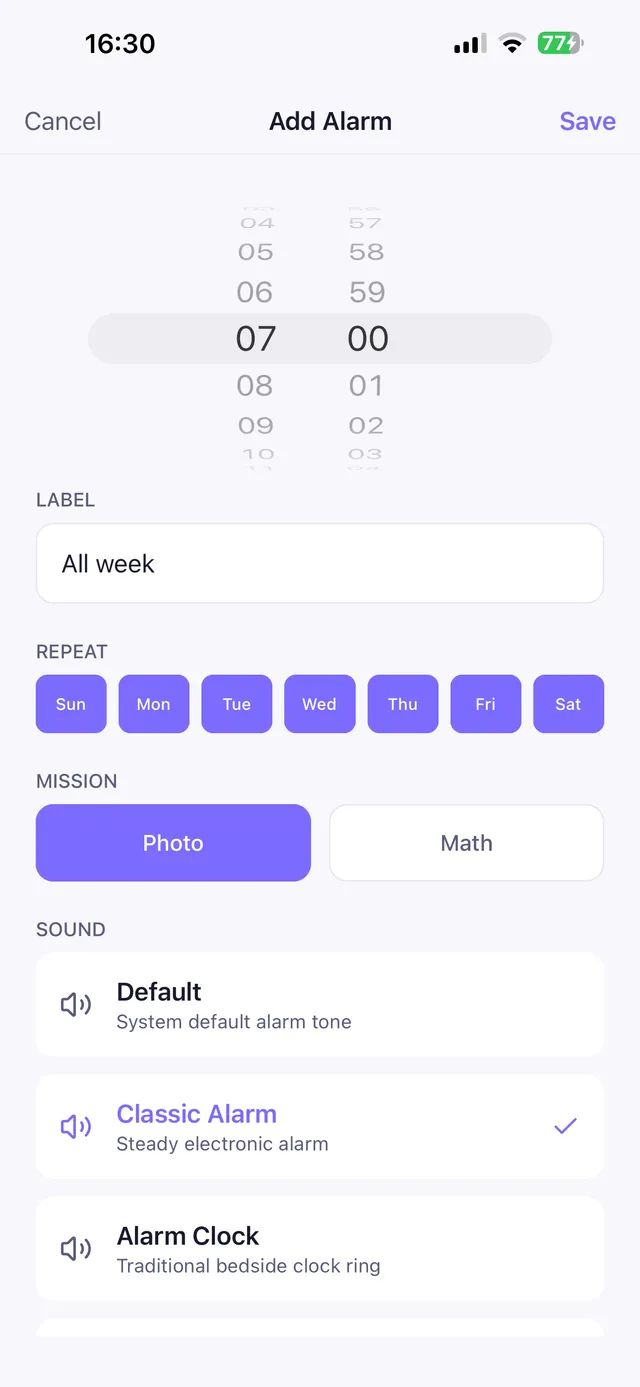
A single tap to dismiss is too easy when you're 90% asleep. An alarm that makes you do something — solve a quick math problem, scan a specific object, match a photo — forces just enough brain activation to cross from "asleep" to "awake." By the time you've done it, the urge to flop back down has passed.
2. Put the alarm across the room
If you have to stand up to silence it, you've won half the battle. Standing triggers wakefulness and breaks the snooze reflex.
OwlRoutine helps you wind down at night and actually get up in the morning — with a guided wind-down, dismiss missions, and sleep scores. Launching soon.
See how OwlRoutine works3. Get light immediately
Light is the master switch for your body clock. Open the curtains or turn on a bright light the second you're up — it suppresses melatonin and tells your brain it's morning.
4. Time the wake-up to a cycle boundary
Half the battle is when the alarm fires. Waking at the end of a 90-minute cycle (in light sleep) is dramatically easier than mid-deep-sleep. (Here's how sleep cycles work.)
5. Fix the night before
You snooze hardest when you're under-slept. A consistent bedtime and a real wind-down routine mean you wake closer to rested — and the snooze button loses its pull.
The takeaway
Snoozing doesn't give you rest; it gives you fragmented sleep and sleep inertia. Make the alarm demand an action, put it out of reach, get light fast, wake on a cycle boundary, and sleep enough the night before. That's the whole system.
This is exactly why OwlRoutine uses dismiss missions — photo proof and math you complete before the alarm stops — so "just five more minutes" isn't an option, and you're awake before you can talk yourself back to sleep.
Frequently asked questions
Why does hitting snooze make me more tired?
Snoozing sends you back into a new sleep cycle you can't finish, often into deeper sleep. The next alarm pulls you out mid-cycle, triggering sleep inertia — grogginess that can last up to 30 minutes.
Is it better to snooze or just get up?
Just get up. One clean wake-up leaves you sharper than several fragmented snooze cycles, which provide no meaningful rest and worsen grogginess.
How do I stop hitting the snooze button?
Use an alarm that requires an action to dismiss, put it across the room, get bright light immediately, time your wake-up to a sleep-cycle boundary, and get enough sleep the night before.
How long does snooze grogginess last?
Sleep inertia from being woken during deep sleep can last anywhere from a few minutes up to about 30 minutes, which repeated snoozing tends to prolong.
Wake up for real. Wind down for good.
OwlRoutine is a sleep-cycle alarm that makes mornings actually stick — with a guided wind-down, dismiss missions, sleep scores and rewards. Launching soon.
Discover OwlRoutine