Sleep Inertia: Why You Feel Groggy After Waking Up (and How to Shake It Off Faster)
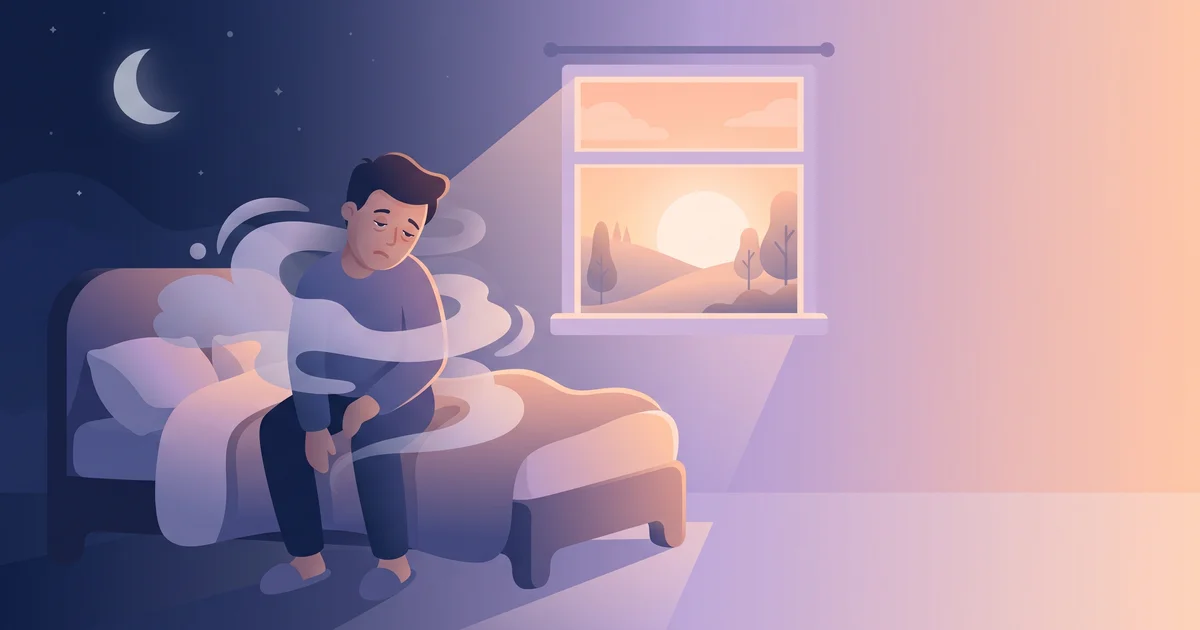
That thick, heavy, "my brain is still loading" feeling in the first minutes after waking has a name: sleep inertia. Everyone gets it to some degree. For some people it passes before they reach the bathroom; for others it lasts well into the commute and makes every morning feel like a hangover. Understanding sleep inertia — what causes it and what makes it worse — is the fastest route to mornings that don't start in a fog.
The short answer
Sleep inertia is the temporary drop in alertness, reaction time and mood right after waking. It usually fades within 15–30 minutes, though it can last longer, especially after waking from deep sleep or after short nights. You can shorten it by waking at a consistent time, avoiding snooze, getting bright light and moving immediately, and not waking from the deepest part of a sleep cycle.
What sleep inertia actually is
When you wake, your brain doesn't switch on all at once. Research using brain imaging shows that regions involved in basic arousal come online quickly, while the prefrontal cortex — responsible for decision-making, focus and self-control — lags behind. For a short window you're technically awake but not yet fully functional.
In that window, studies consistently find:
- Slower reaction times and poorer short-term memory.
- Worse decision-making (which is exactly why snoozing feels so reasonable at 6:45am).
- Lower mood and a strong urge to go back to sleep.
In extreme cases — often linked to sleep deprivation or certain sleep disorders — people experience "sleep drunkenness" (confusional arousal), with genuine disorientation after waking.
Why some mornings are much worse
| Factor | Effect on grogginess | Why |
|---|---|---|
| Waking from deep (N3) sleep | Much worse | Deep sleep has the highest arousal threshold |
| Short or broken night | Worse | Sleep pressure is still high when you wake |
| Irregular wake time | Worse | Your body hasn't prepared for waking |
| Snoozing | Worse | Each re-entry into sleep restarts the inertia process |
| Waking at a consistent time | Better | Your body clock starts the wake-up process early |
| Bright light after waking | Better | Suppresses melatonin, boosts alertness |
| Moving your body | Better | Raises heart rate and core temperature |
Waking from the wrong stage
Sleep runs in roughly 90-minute cycles, moving from light sleep into deep sleep and REM. Deep sleep is concentrated in the first half of the night, but if you're sleep-deprived or your alarm is badly timed, you can still be pulled out of it in the morning. Sleep cycles explained goes through how the stages fit together.
Sleep debt
If you're short on sleep, your brain holds onto sleep harder and inertia lasts longer. This is part of why you can wake up tired even after 8 hours if the nights before were short or fragmented.
Snoozing
Every time you snooze and drift off again, you reset the clock on inertia. You end up with multiple rough wake-ups instead of one, and no real extra rest. Here's why snoozing backfires.
How long does sleep inertia last?
For most people after a normal night, the worst of it is over in 15–30 minutes. Research has found measurable effects on thinking lasting up to an hour or more in some conditions, especially after sleep deprivation or when waking during the biological night. That's why people are advised not to make critical decisions or drive immediately after a short nap or a sudden wake-up.
OwlRoutine helps you wind down at night and actually get up in the morning — with a guided wind-down, dismiss missions, and sleep scores. Available on iPhone and Android.
8 ways to shorten sleep inertia
- Keep a consistent wake time. When you wake at the same time daily, your body raises cortisol and core temperature in advance. Consistency beats extra sleep for exactly this reason.
- Stop snoozing. One wake-up, not five.
- Get bright light immediately. Open curtains, turn on overhead lights or step outside. Light is the strongest wake signal your brain gets.
- Move within the first five minutes. Walking to the kitchen, a few stretches or making the bed all speed the transition.
- Use a melodic alarm. A 2020 RMIT University study found melodic alarm tones were associated with less self-reported morning grogginess than harsh beeps.
- Give your brain a small task. A short cognitive task — like a math or typing mission on your alarm — pushes the "thinking" parts of the brain online faster and prevents autopilot dismissals.
- Drink water and, if you like, coffee. Caffeine can help cut through inertia, but keep it to the morning so it doesn't wreck the next night.
- Fix the night before. Going to bed at a consistent time after a calm wind-down routine reduces sleep debt, the biggest multiplier of morning fog.
Sleep inertia after naps
Naps have their own inertia problem. Short naps (10–20 minutes) tend to keep you in light sleep, so you wake up refreshed. Naps of 30–60 minutes are more likely to end in deep sleep, which is why a "quick nap" can leave you feeling worse. If you need a longer nap, around 90 minutes lets you complete a full cycle.
When grogginess isn't just sleep inertia
If you feel foggy for hours every morning, sleep through multiple alarms, or wake unrefreshed no matter how long you sleep, it's worth talking to a doctor. Sleep apnea, idiopathic hypersomnia, depression, thyroid problems and some medications can all cause persistent morning grogginess.
The bottom line
Sleep inertia is normal, temporary and — within limits — trainable. You can't eliminate it, but a consistent wake time, no snoozing, light, movement and a quick mental task in the first minutes shrink it dramatically. The biggest lever, though, is the night before.
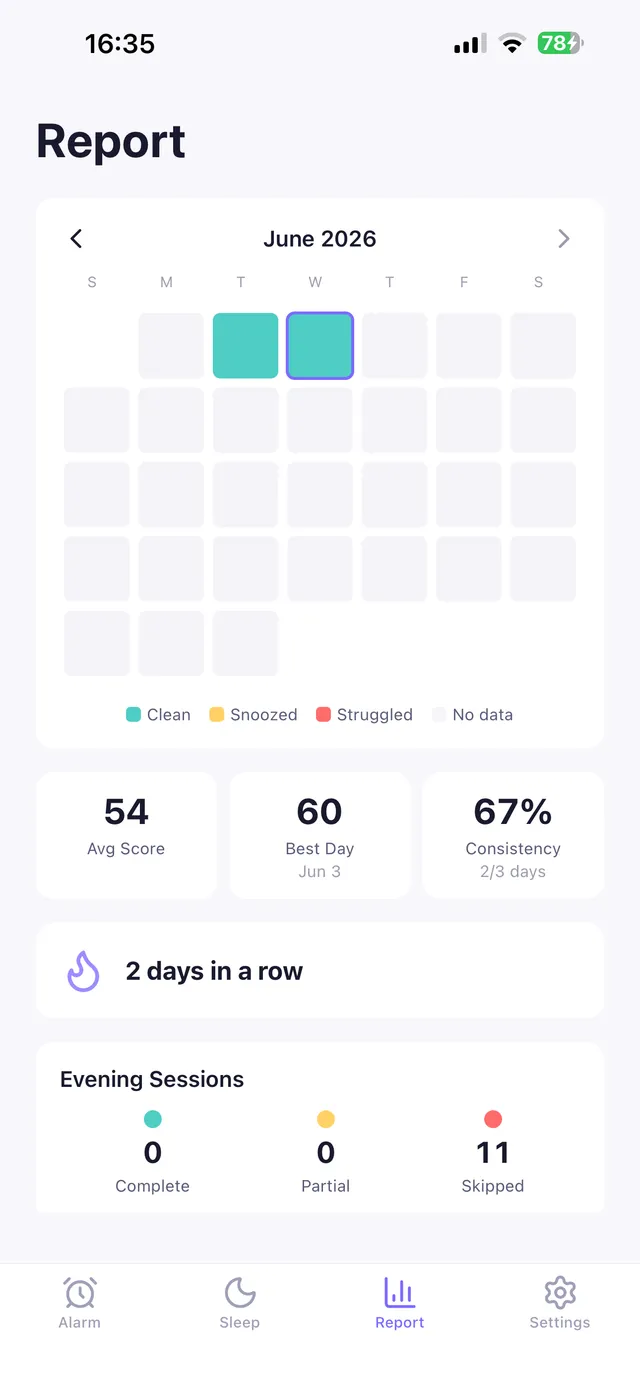
OwlRoutine is designed around that link: a guided wind-down at night, a mission alarm in the morning that forces your brain online, and a report that tracks your streaks and cycle score so you can see whether the fog is actually lifting.
This article is general information, not medical advice.
Frequently asked questions
What is sleep inertia?
Sleep inertia is the temporary grogginess, slower thinking and low mood you feel right after waking up, while parts of the brain responsible for focus and decision-making catch up.
How long does sleep inertia last?
For most people it fades within 15–30 minutes, but it can last an hour or longer after sleep deprivation or waking from deep sleep.
How do I get rid of morning grogginess fast?
Get bright light immediately, move within the first few minutes, skip the snooze button, drink water and give your brain a small task. Long term, a consistent wake time and a good wind-down routine make the biggest difference.
Why do I feel worse after a nap?
Naps of about 30–60 minutes often end in deep sleep, which causes strong sleep inertia. Keep naps to 10–20 minutes, or around 90 minutes to complete a full cycle.
Wake up for real. Wind down for good.
OwlRoutine is a sleep-cycle alarm that makes mornings actually stick — with a guided wind-down, dismiss missions, sleep scores and rewards. Available on iPhone and Android.