The 10-3-2-1-0 Sleep Rule Explained: Does the Viral Bedtime Formula Work?
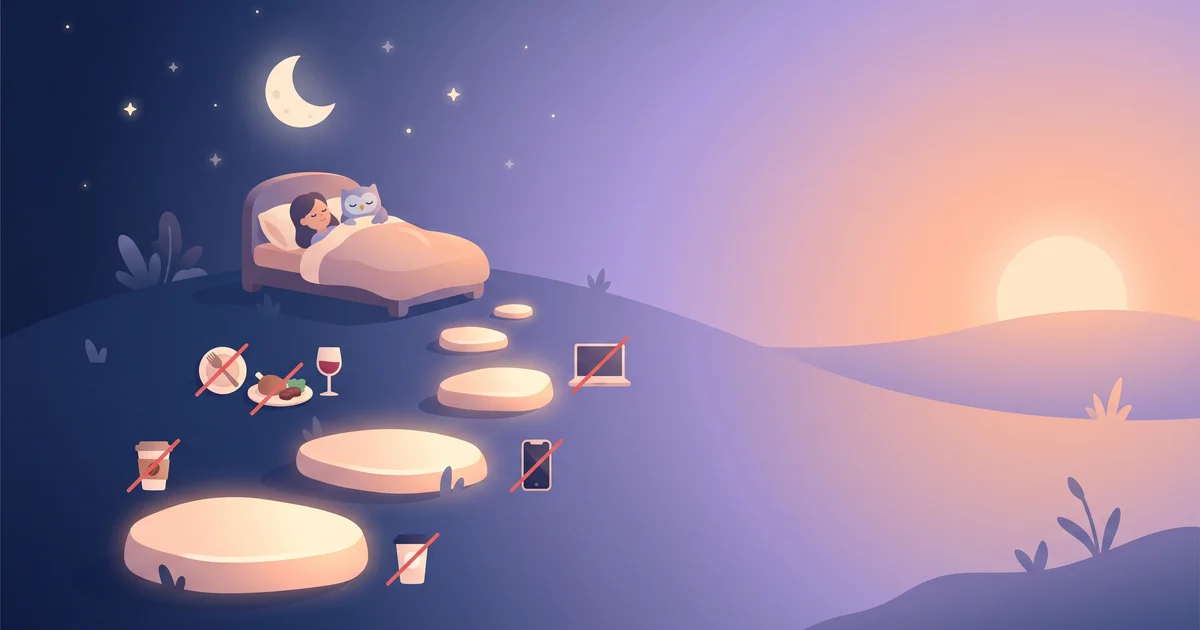
The 10-3-2-1-0 sleep rule is one of those formulas that spread because it's easy to remember: five numbers, five habits, counting down to bedtime and ending with your alarm. It's been shared by doctors, sleep coaches and millions of TikTok and Instagram viewers. But is it backed by anything, and can a normal person actually follow it? Short version: the logic is sound, the numbers are rules of thumb, and the last one — zero — is the one most people skip and most need.
The short answer
The 10-3-2-1-0 rule means: 10 hours before bed, no more caffeine; 3 hours before bed, no more big meals or alcohol; 2 hours before bed, stop working; 1 hour before bed, no screens; and 0 times hitting snooze in the morning. Each step targets a real sleep disruptor. You don't have to follow it perfectly to benefit.
The rule, step by step
| Number | Rule | What it targets | Evidence strength |
|---|---|---|---|
| 10 | No caffeine 10 hours before bed | Caffeine's long half-life | Strong |
| 3 | No big meals or alcohol 3 hours before bed | Digestion, reflux, fragmented sleep | Moderate |
| 2 | No work 2 hours before bed | Mental arousal and stress | Moderate |
| 1 | No screens 1 hour before bed | Light, stimulation, "one more" loops | Moderate |
| 0 | Zero snoozes | Fragmented final sleep, grogginess | Moderate |
10: No caffeine 10 hours before bed
Caffeine blocks adenosine, the chemical that builds sleep pressure through the day. Its half-life averages around five hours in healthy adults, but varies a lot between people. A well-known 2013 study found that caffeine taken even six hours before bed measurably reduced total sleep time. For a 23:00 bedtime, a 10-hour cutoff means finishing coffee by about 13:00. If that sounds strict, remember that sensitivity varies — some people can push it later — but if you struggle to fall asleep, this is the first number to take seriously.
3: No big meals or alcohol 3 hours before bed
Eating a large meal close to bed can cause reflux and discomfort and keeps your body busy digesting when it should be winding down. Alcohol is sneakier: it can make you drowsy, but it fragments sleep in the second half of the night and suppresses REM. A light snack is fine if you're genuinely hungry; a heavy dinner at 22:30 is not.
2: No work 2 hours before bed
Emails, planning and problem-solving keep your mind in "on" mode. Stopping two hours out gives your stress response time to settle. If you can't stop entirely, at least avoid anything that makes you anxious — the budget spreadsheet can wait.
1: No screens 1 hour before bed
Screens combine bright light (which can delay melatonin), engaging content and endless scroll with no natural stopping point. For many people the content is a bigger problem than the light: it keeps you up far past your intended bedtime, and the "just one more video" loop easily turns into revenge bedtime procrastination.
0: Zero snoozes
The final number is about the morning, not the night. Hitting snooze splits your last stretch of sleep into short, low-quality fragments and restarts sleep inertia every time you drift off. Here's why snoozing makes you more tired. "Zero" also closes the loop: a consistent wake time is what makes the evening steps easier the following night.
OwlRoutine helps you wind down at night and actually get up in the morning — with a guided wind-down, dismiss missions, and sleep scores. Available on iPhone and Android.


Does the 10-3-2-1-0 rule work?
There aren't clinical trials of "10-3-2-1-0" as a package. It's a memorable summary of standard sleep-hygiene advice. The individual components line up with what sleep researchers recommend — limit caffeine late in the day, avoid heavy meals and alcohol near bed, reduce pre-sleep arousal and screens, and keep a consistent wake time. Treat the numbers as guidelines, not medical thresholds.
The biggest benefit may be psychological: it gives your evening checkpoints. Instead of one vague goal ("sleep better"), you have five small, visible decisions.
How to make it realistic
Most people fail the rule by trying all five steps on night one. Build it up instead:
- Week 1: Start with 0. Pick one wake time and turn snooze off. This builds sleep pressure that makes the rest easier.
- Week 2: Add 1. Phone face-down and away from the bed an hour before sleep. Replace it with a book, a shower or stretching.
- Week 3: Add 10. Move your last coffee earlier.
- Week 4: Add 3 and 2. Earlier dinners and a hard stop on work.
If you're a shift worker or have a very late bedtime, shift the numbers relative to your bedtime, not the clock.
A sample 10-3-2-1-0 evening (bedtime 23:00)
- 13:00 — last coffee or caffeinated tea.
- 20:00 — last big meal; no more alcohol.
- 21:00 — close the laptop; quick plan for tomorrow on paper.
- 22:00 — phone face-down on charge; dim lights; wind-down (read, stretch, shower). Our wind-down routine guide has ideas.
- 23:00 — lights out.
- 07:00 — up at the first alarm. Zero snoozes.
The bottom line
The 10-3-2-1-0 sleep rule isn't magic, but it's a genuinely useful structure: each number targets a real sleep disruptor, and together they turn "sleep better" into five concrete choices. Start with zero snoozes and the one-hour screen cutoff — they deliver the most for the least effort.
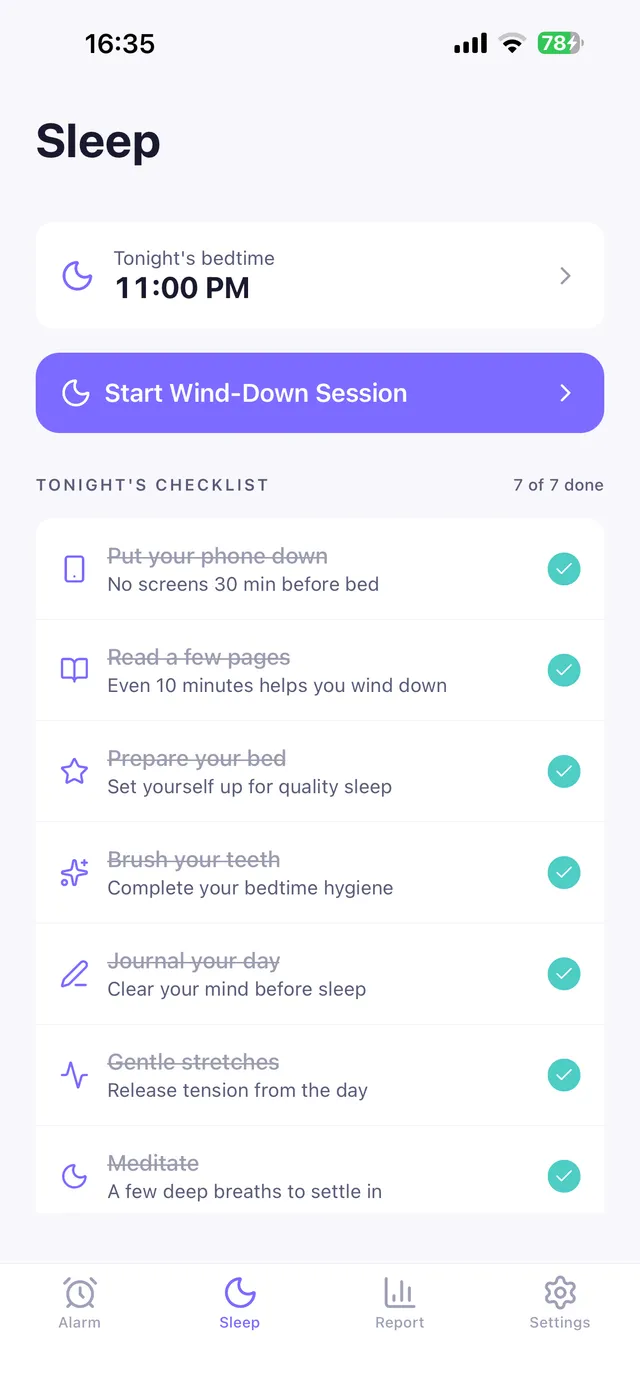
OwlRoutine is built around the "1" and the "0". The guided wind-down checks that your phone stays face-down, walks you through a nightly checklist, and grades the night; the morning alarm then uses a mission to make zero snoozes the default rather than a heroic act.
This article is general information, not medical advice.
Frequently asked questions
What is the 10-3-2-1-0 sleep rule?
It's a countdown to bedtime: no caffeine 10 hours before bed, no large meals or alcohol 3 hours before, no work 2 hours before, no screens 1 hour before, and zero snoozes in the morning.
Is the 10-3-2-1-0 rule scientifically proven?
The package hasn't been tested as a whole, but each step reflects standard, evidence-based sleep hygiene advice around caffeine, meals, alcohol, stress, screens and consistent wake times.
What if I can't avoid screens an hour before bed?
Reduce brightness, avoid endless feeds and anything stressful, and stop at a set time. Even moving from 60 minutes to 30 minutes of screen-free time is a meaningful improvement.
Which part of the 10-3-2-1-0 rule matters most?
For most people, zero snoozes (a consistent wake time) and the one-hour screen cutoff make the biggest difference, followed by the caffeine cutoff if you struggle to fall asleep.
Wake up for real. Wind down for good.
OwlRoutine is a sleep-cycle alarm that makes mornings actually stick — with a guided wind-down, dismiss missions, sleep scores and rewards. Available on iPhone and Android.