The Best Morning Routine for Productivity: A Simple 30-Minute Template That Sticks

Search "morning routine" and you'll find elaborate 5am rituals with cold plunges, journaling, meditation, workouts and green juice, all before most people's alarm goes off. Nice if you can pull it off. But the best morning routine for productivity is the one you'll still be doing in three months — and that usually means short, simple and designed around how your brain actually wakes up.
The short answer
A productive morning routine does four things in roughly 30 minutes: gets you up at a consistent time without snoozing, gets light into your eyes, gets your body moving, and points your attention at the day's most important task before your inbox does. Everything else is optional.
Why most morning routines fail
- They start at the wrong end. A morning routine can't survive a 1am bedtime. Evenings decide mornings.
- They're too long. A 90-minute routine collapses the first time you oversleep, and then the whole thing feels "broken".
- They depend on motivation. Motivation is weakest in the first minutes after waking, during sleep inertia — exactly when you need to make decisions.
- They start on the phone. Opening email or social media first hands your attention to other people's priorities.
The 30-minute productive morning template
| Time | Step | Why it works |
|---|---|---|
| 0:00 | Get up at the first alarm | One wake-up beats five fragmented ones |
| 0:02 | Water + make the bed | Two easy wins, body moving |
| 0:05 | Light: outside or at a bright window | Strongest signal to your body clock |
| 0:15 | Move for 5–10 minutes | Raises alertness and mood |
| 0:25 | Pick your one most important task | Direction before distraction |
| 0:30 | Start the day (breakfast, commute, work) |
1. Get up at the first alarm
The routine starts with not snoozing. Snoozing makes you more tired by fragmenting your last sleep cycle and restarting grogginess. If willpower isn't enough at 6:45am, make the alarm do the work: a short mission (math, typing, a photo of your bathroom sink) gets your brain online before you can negotiate.
2. Water and make the bed
A glass of water is a simple, physical first action. Making the bed is a two-minute win that also makes crawling back in less tempting. Neither is magic; both are momentum.
3. Get light — ideally outdoors
Morning light is one of the strongest cues for your circadian rhythm. It helps you feel awake now and sleepy on time tonight. Outdoor light, even on a cloudy day, is far brighter than indoor light; 10 minutes is a good start.
4. Move a little
You don't need a full workout. A walk, a few stretches, some bodyweight exercises or a short cycle raises heart rate and body temperature, which helps clear grogginess. If you do train in the morning, great — but don't make the routine depend on it.
5. Decide your most important task
Before you open email, write down the one thing that would make today a good day if it were the only thing you did. This takes two minutes and is the most "productive" part of the routine. Then, if you can, start on it before you check messages.
OwlRoutine helps you wind down at night and actually get up in the morning — with a guided wind-down, dismiss missions, and sleep scores. Available on iPhone and Android.


What to leave out (at least at first)
- Checking your phone in bed. The feed will still be there at 8:30.
- Hard decisions. Save them for when you're fully awake.
- A giant checklist. Add steps only once the core four are automatic.
Adapting the routine to your life
- If you have kids: do the light and water steps with them; move your "most important task" planning to your commute or first 10 minutes at work.
- If you work from home: add a "commute" — a short walk outside — to separate home mode from work mode.
- If you're a night owl: keep the same structure, shifted later. A routine at 8:30 that you do every day beats a 5am routine you do twice. See how to become a morning person if you want to shift earlier gradually.
- If you're short on time: water, light and your one task can be done in 10 minutes.
How to make a morning routine stick
- Anchor it to the alarm. The routine starts the moment you're up, not "when you feel ready".
- Prepare the night before. Water glass out, clothes chosen, shoes by the door. Remove every decision you can.
- Track the core, not the extras. A simple yes/no each day — did I get up at the first alarm, get light and pick my task? — is enough.
- Expect bad days. Miss one morning? Just do the next one. A streak with a gap is still a habit; quitting after one bad day isn't.
- Review weekly. If the same step keeps failing, make it smaller rather than adding willpower.
The evening half of a morning routine
Most "morning problems" are night problems. If you're consistently struggling, look at:
- Bedtime consistency — sleep consistency matters more than sleep length.
- A wind-down — a simple routine that gets you to bed on time.
- The 10-3-2-1-0 rule — an easy framework for caffeine, food, work and screens.
The bottom line
The best morning routine for productivity is short and boring: get up at the first alarm, water and bed, light, a few minutes of movement, and one clear priority before the inbox. Do those four every day for a month before adding anything else.
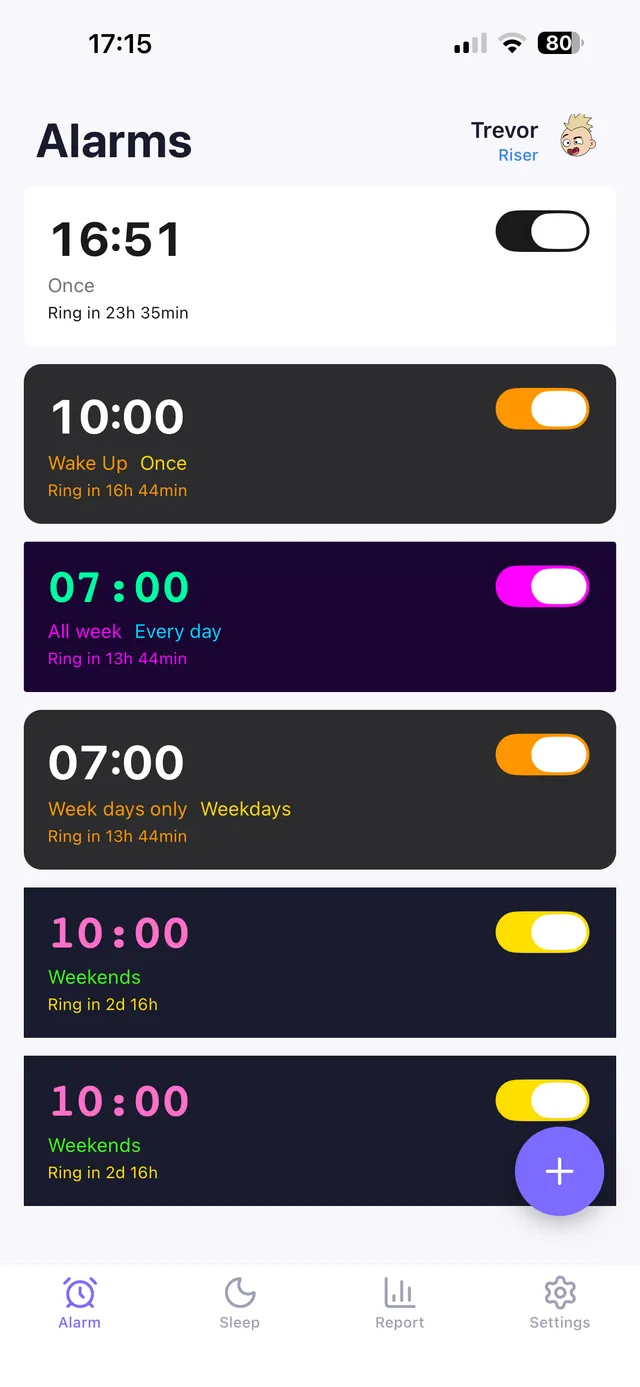
OwlRoutine is built for that shape of morning. The alarm uses a mission so getting up at the first alarm is realistic, the app suggests simple morning actions — drink water, get sunlight, move, make your bed, plan your day — and your streaks and heatmap show whether the routine is actually sticking.
Frequently asked questions
What is the best morning routine for productivity?
A short routine that gets you up without snoozing, exposes you to light, gets you moving and has you choose your most important task before checking email. Around 30 minutes is plenty.
Do I need to wake up at 5am to be productive?
No. Consistency matters more than the clock. A routine you do every day at 7:30 is more useful than a 5am routine you can't sustain.
Should I check my phone first thing in the morning?
It's better not to. Checking email or social media first hands your attention to other people's priorities before you've set your own.
How long should a morning routine be?
Start with 10–30 minutes. Short routines survive busy mornings; you can always add steps once the basics are automatic.
Wake up for real. Wind down for good.
OwlRoutine is a sleep-cycle alarm that makes mornings actually stick — with a guided wind-down, dismiss missions, sleep scores and rewards. Available on iPhone and Android.