Chronotypes Explained: Lion, Bear, Wolf or Dolphin — What Your Sleep Type Really Means
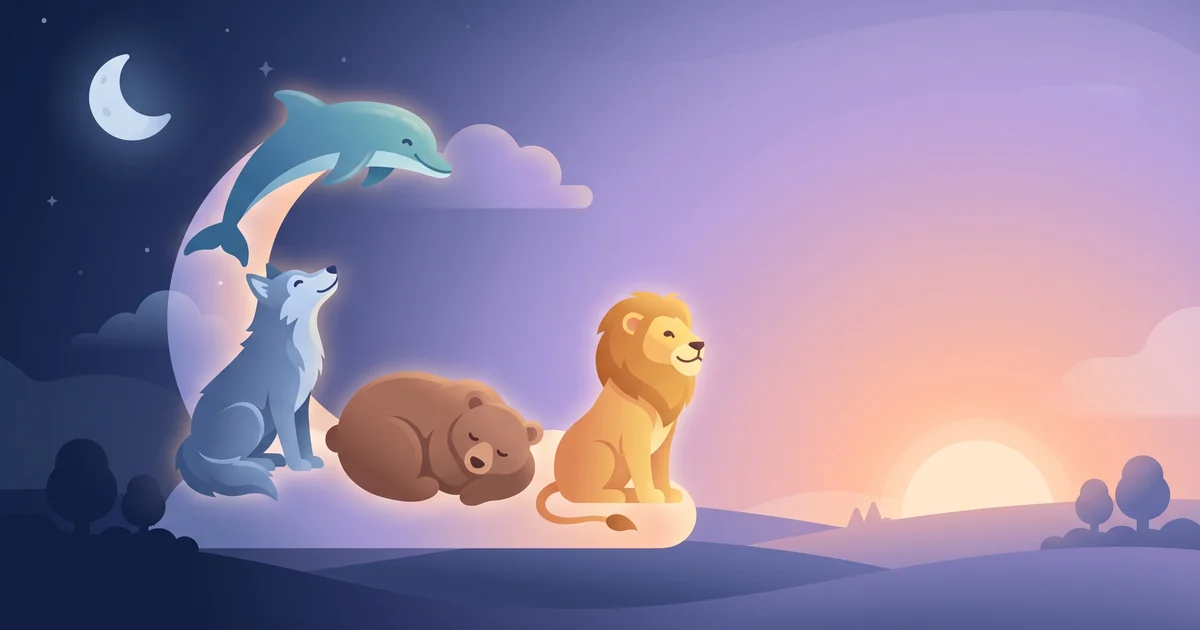
Chronotype quizzes promise to tell you whether you're a lion, a bear, a wolf or a dolphin — and then plan your entire day around it. They're fun, and there's a real idea underneath them. But the animal labels are a pop-science simplification, and understanding the real science is far more useful if you want better mornings.
The short answer
Your chronotype is your natural tendency to sleep and be alert earlier or later in the day. It's partly genetic, changes with age, and sits on a spectrum from strong "morning types" to strong "evening types", with most people in between. The lion/bear/wolf/dolphin system is a popular framework from sleep specialist Michael Breus, not a scientific classification. Your chronotype is real — but your daily habits, especially light exposure and wake time, shift where you land.
What a chronotype actually is
Everyone has a circadian rhythm — an internal clock of roughly 24 hours that controls sleepiness, alertness, body temperature and hormone release. Your chronotype describes when that clock tends to run relative to the sun and to other people.
- Morning types feel sleepy early in the evening and wake easily early.
- Evening types feel most alert later in the day and struggle with early starts.
- Intermediate types sit in the middle — this is most people.
Scientists measure chronotype with questionnaires such as the Morningness–Eveningness Questionnaire (MEQ), developed by Horne and Östberg in 1976, and the Munich Chronotype Questionnaire (MCTQ), which uses the midpoint of your sleep on free days.
The animal chronotypes
Michael Breus introduced the four animal types in his 2016 book The Power of When. They're a memorable way to describe patterns, but they aren't clinical categories.
| Type | Pattern | Typical strengths | Common struggles |
|---|---|---|---|
| Lion | Early to bed, early to rise | Mornings, focused early work | Fading in the evening |
| Bear | Follows the sun; middle of the pack | Steady mid-morning energy | Afternoon slump |
| Wolf | Late to bed, late to rise | Evenings, creative work later | Early starts, school/work hours |
| Dolphin | Light, easily disrupted sleep | Alert and detail-focused | Falling and staying asleep |
Breus suggests bears are the largest group and dolphins the smallest. The "dolphin" category overlaps with what sleep medicine would describe as insomnia symptoms — if that's you, it's worth talking to a doctor rather than just embracing a label.
What affects your chronotype
- Genetics. Studies have linked dozens of genetic variants to morningness and eveningness.
- Age. Teenagers shift strongly later, which is why early school start times are a hot topic. People usually drift earlier again from their twenties onwards, and older adults tend to be earlier types.
- Light exposure. Morning light pulls your clock earlier; evening light pushes it later. Modern life — dim days indoors, bright screens at night — pushes many people later than their biology alone would.
- Habits. Irregular sleep, late meals and phones in bed all reinforce a later rhythm.
OwlRoutine helps you wind down at night and actually get up in the morning — with a guided wind-down, dismiss missions, and sleep scores. Available on iPhone and Android.


Can you change your chronotype?
Partly. You probably can't turn a strong evening type into a 5am lion, but you can move your rhythm meaningfully with consistent cues:
- Fix your wake time — seven days a week. Sleep consistency matters more than sleep length.
- Get morning light within 30 minutes of waking.
- Dim evenings and put screens away an hour before bed.
- Shift bedtime gradually, 15 minutes every couple of days. How to fix your sleep schedule has a two-week plan.
We cover the full process in how to become a morning person.
How to use your chronotype (without making it an excuse)
- Schedule hard work at your peak. Earlier types do focused work in the morning; later types may do their best deep work late morning or afternoon.
- Protect sleep, not just preference. "I'm a wolf" doesn't make 5 hours of sleep before a 7am alarm okay. Your need for 7+ hours doesn't change with your chronotype — see how much sleep you need.
- Avoid big weekend swings. Evening types are most prone to social jet lag — sleeping in on weekends and feeling awful on Monday.
- Make mornings easier, not heroic. If you must be up early, rely on structure: a consistent alarm that requires a mission to dismiss, bright light and a simple routine.
Are chronotype quizzes accurate?
Online quizzes are a rough guide. They mix questions about preference, habits and energy. For a more reliable picture, notice when you naturally fall asleep and wake on holidays after the first few days, and when you feel most alert. That's your chronotype in practice.
The bottom line
Chronotypes are real: some people are wired for mornings, others for evenings, and most sit in between. The lion/bear/wolf/dolphin labels are a fun shorthand, not a diagnosis. Use your chronotype to schedule your day wisely — but remember that light, wake time and habits move it more than any quiz suggests.
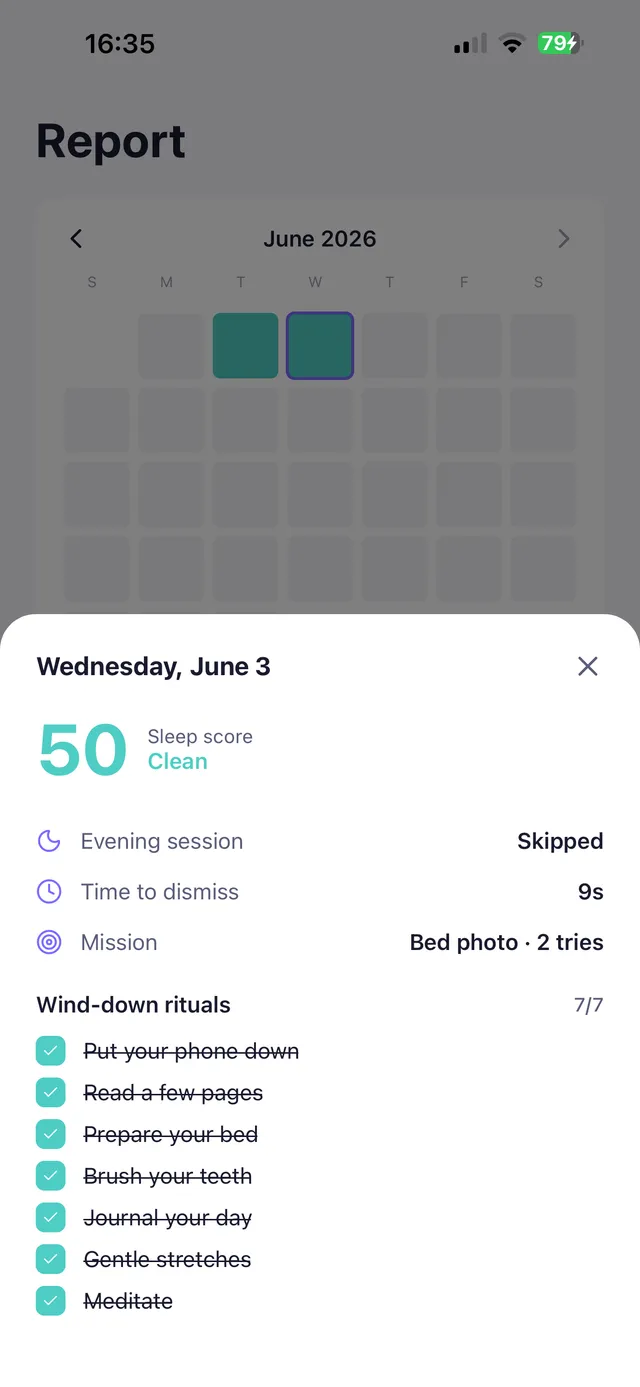
OwlRoutine works with whatever your chronotype is. Set a consistent alarm that fits your life, use the guided wind-down to protect your sleep window, and watch your streaks and heatmap to see how your rhythm responds.
Frequently asked questions
What is a chronotype?
Your chronotype is your natural tendency to sleep and be alert earlier or later in the day. It's partly genetic and changes with age.
What are the lion, bear, wolf and dolphin chronotypes?
They're a popular framework from sleep specialist Michael Breus: lions are early risers, bears follow the sun, wolves are late types, and dolphins are light, easily disrupted sleepers. They aren't clinical categories.
Can I change my chronotype?
You can shift it meaningfully with a consistent wake time, morning light, dim evenings and gradual bedtime changes, though genetics set limits.
Which chronotype is the most common?
Most people are intermediate types — neither strongly morning nor strongly evening. In Breus's framework these are called bears.
Wake up for real. Wind down for good.
OwlRoutine is a sleep-cycle alarm that makes mornings actually stick — with a guided wind-down, dismiss missions, sleep scores and rewards. Available on iPhone and Android.