The 5AM Club: Does Waking Up at 5am Actually Make You More Productive?

"Own your morning, elevate your life." Robin Sharma's The 5AM Club, published in 2018, turned a 5am alarm into a lifestyle — and years later, "5am club" is still one of the most searched self-improvement ideas online. But does waking up at 5am actually make you more productive, or does it just make you tired earlier? Here's an honest look.
The short answer
The 5AM Club works for some people because it creates quiet, uninterrupted time before the day's demands begin — not because 5am is magic. It only works if you go to bed early enough to still get 7+ hours of sleep, and it suits morning-leaning people far better than night owls. The same benefits can come from any consistent hour of protected time.
What the 5AM Club actually says
Sharma's core idea is the 20/20/20 formula for the first hour of the day, from 5:00 to 6:00:
| Time | Pillar | Idea |
|---|---|---|
| 5:00–5:20 | Move | Intense exercise to wake body and brain |
| 5:20–5:40 | Reflect | Journaling, meditation, planning |
| 5:40–6:00 | Grow | Reading, learning, a course |
The book frames 5am as the "victory hour": a window before email, family and work, when you can invest in yourself. It's a self-help fable rather than a research-based programme, so the specific timing isn't grounded in sleep science.
What the research says about early rising
- Morning types report better mood and well-being on average, and tend to be better aligned with standard school and work hours. That doesn't mean forcing yourself to wake early makes you a morning type.
- Sleep duration matters more than wake time. Adults need at least 7 hours. See how much sleep you actually need. Waking at 5am while still going to bed at midnight just produces chronic sleep debt.
- Chronotype varies. Some people's body clocks run naturally later. For a strong evening type, 5am can mean waking in the middle of their biological night. Chronotypes explained.
- Consistency matters. Waking at 5am on weekdays and 10am on weekends gives you weekly jet lag.
Who the 5AM Club suits
- People who are naturally early or intermediate types.
- People whose evenings are unavoidably busy (parents, shift-adjacent jobs) and whose best free time is early.
- Anyone who can go to bed by about 21:30–22:00 consistently.
Who it doesn't suit
- Strong night owls who can't fall asleep before midnight.
- People already short on sleep.
- Anyone whose best focus comes later in the day.
- People for whom early rising means sleeping through the alarm or snoozing for an hour.
OwlRoutine helps you wind down at night and actually get up in the morning — with a guided wind-down, dismiss missions, and sleep scores. Available on iPhone and Android.


How to try the 5AM Club safely
If you want to try it, set it up so your sleep doesn't pay the price:
- Work backwards. 5:00 wake-up with 7.5 hours of sleep and 15 minutes to fall asleep = lights out at 21:15. The bedtime calculator has other options.
- Shift gradually. Move your wake time 15 minutes earlier every two to three days, rather than jumping from 7:00 to 5:00.
- Keep weekends close. Within about an hour of your weekday time.
- Make the first minute automatic. At 5am, your willpower is minimal. Use an alarm that requires a mission to dismiss, turn off snooze, and put your clothes out the night before.
- Get light immediately. In autumn and winter, 5am is dark; bright indoor light helps.
- Protect the evening wind-down. A 21:15 bedtime means screens down around 20:15. A simple wind-down routine makes this realistic.
What a realistic 5am morning looks like
- 05:00 — up at the first alarm; water; lights on.
- 05:05 — 15–20 minutes of movement: a brisk walk, mobility work or a short workout.
- 05:25 — 10 minutes of planning or journaling: today's one most important task.
- 05:35 — 20–30 minutes of focused work, reading or learning.
- 06:00 — breakfast, family, the rest of the day.
Notice it's not the full 20/20/20 from day one. Build up to it.
The real lesson: protected time, not 5am
Strip away the branding and the 5AM Club is about three good ideas:
- Time before the day starts when nobody needs anything from you.
- Doing the important thing first, before email and messages.
- A consistent routine that combines movement, reflection and learning.
You can get all three at 6:30 or 7:00 if that's what fits your body and your life. A 30-minute productive morning routine often delivers most of the benefit without the extreme alarm.
The bottom line
The 5AM Club can work — if you go to bed early enough, shift gradually and genuinely suit early mornings. The magic isn't the hour; it's having protected, distraction-free time and a consistent routine. If 5am costs you sleep, pick a later hour and keep the rest.
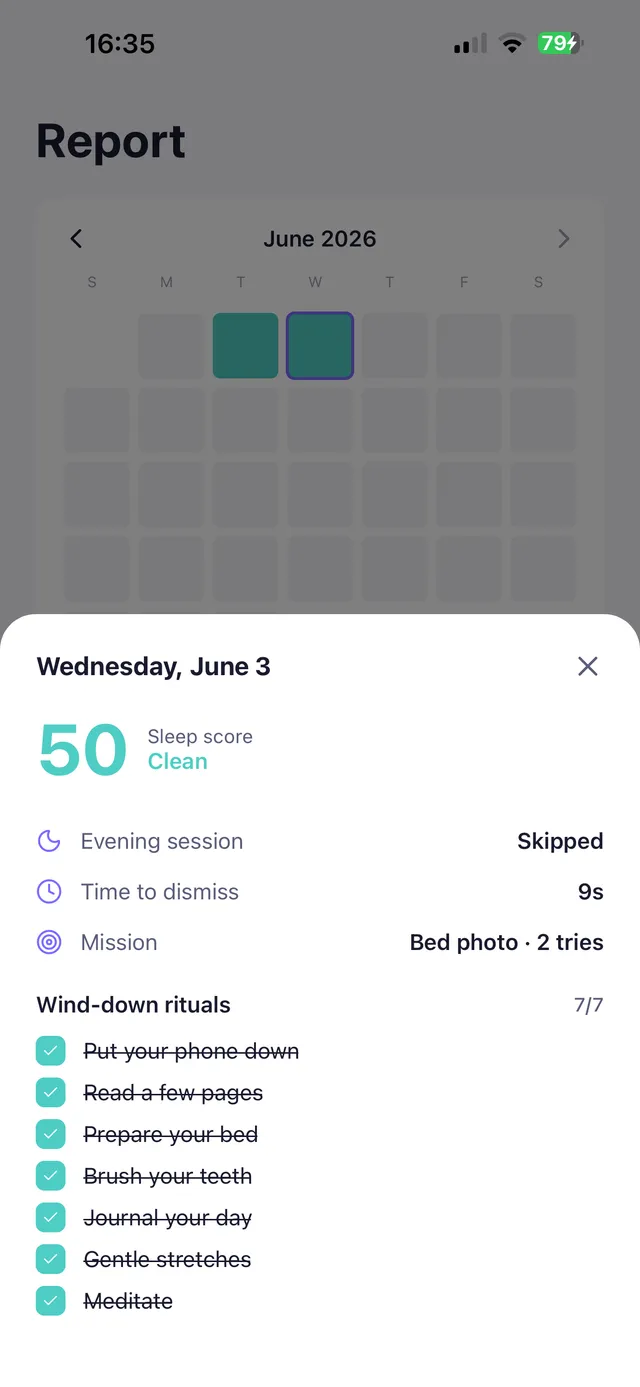
If you do try it, OwlRoutine can help with both ends: bedtime reminders and a guided wind-down to make a 21:15 bedtime real, and a mission alarm with snooze turned off so 5:00 actually means 5:00. Streaks and a heatmap show you whether it's sticking after the first enthusiastic week.
Frequently asked questions
What is the 5AM Club?
It's a 2018 book by Robin Sharma that encourages waking at 5am and using the first hour for exercise, reflection and learning — the 20/20/20 formula.
Is waking up at 5am good for you?
Only if you still get enough sleep, which means going to bed around 21:00–22:00. Waking early on too little sleep causes sleep debt and hurts mood and focus.
What is the 20/20/20 rule?
From The 5AM Club: 20 minutes of intense exercise, 20 minutes of reflection such as journaling or meditation, and 20 minutes of learning, from 5:00 to 6:00.
Can night owls join the 5AM Club?
Strong evening types often struggle and may lose sleep. A consistent, slightly later routine with the same structure usually works better.
Wake up for real. Wind down for good.
OwlRoutine is a sleep-cycle alarm that makes mornings actually stick — with a guided wind-down, dismiss missions, sleep scores and rewards. Available on iPhone and Android.