8 Signs Your Sleep Hygiene Is the Problem (Not Your Health)
Not every bad night is a medical mystery. Sometimes the culprit is staring back at you from your nightstand — a phone, a late espresso, a bedtime that moves by two hours depending on the day. Poor sleep hygiene is one of the most common, most fixable causes of bad sleep, but it can be hard to recognize in yourself because the habits feel normal. Here's how to tell your routine is the problem.
The short answer
Signs of poor sleep hygiene include an inconsistent bedtime and wake time, using screens right before bed, caffeine or alcohol late in the day, a bedroom that's too warm, bright or noisy, napping unpredictably, and lying in bed doing anything other than sleeping. The key giveaway: these problems tend to improve quickly once you change the habit, unlike sleep disorders, which persist even with good habits.
What "sleep hygiene" actually means
Sleep hygiene refers to the daily habits and environment that support (or sabotage) good sleep — timing, light, substances, and what you do in the hour before bed. It's distinct from an underlying sleep disorder like insomnia or sleep apnea, which can exist even when your habits are excellent. If you want the full list of good habits to compare against, the sleep hygiene checklist covers that in detail. This article is about recognizing the symptoms first.
8 signs your habits are the problem
1. Your bedtime swings by more than an hour night to night
If you're asleep by 10:30 on Tuesday and 1am on Friday, your body never gets a stable rhythm to anchor to. Sleep consistency matters more than most people realize — an erratic schedule alone can cause insomnia-like symptoms in an otherwise healthy sleeper.
2. You're on your phone until the moment you try to sleep
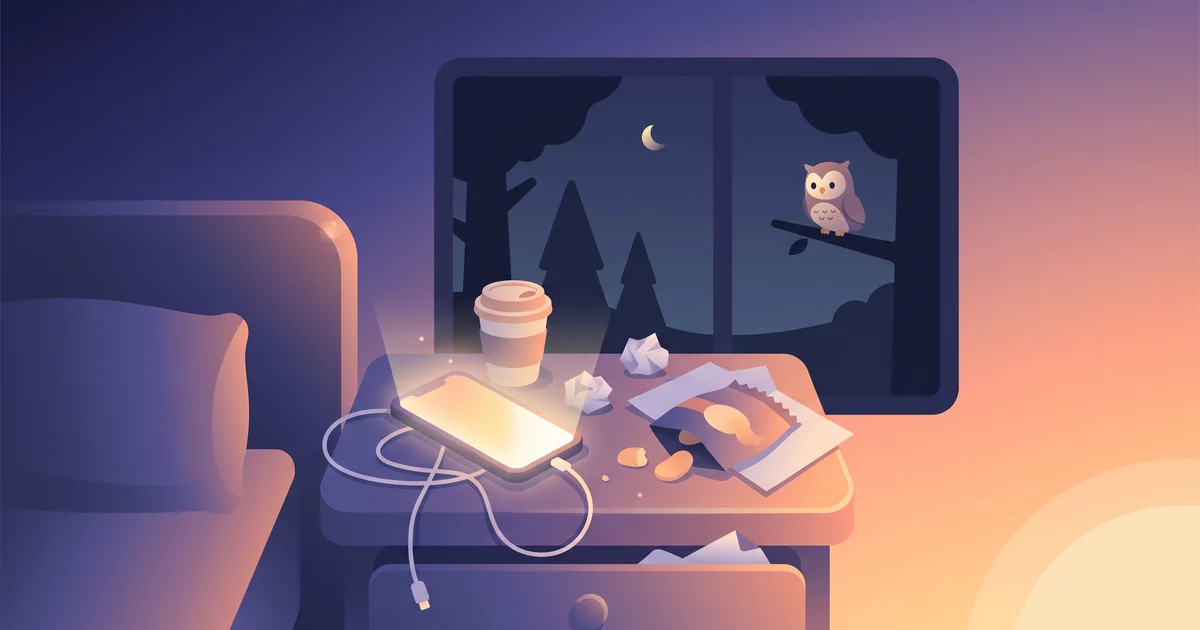
Scrolling in bed does two things: it delays sleep with stimulating content, and the alertness from bright, engaging screens works against your body's wind-down signals. If this is a nightly habit, see what phones do to sleep.
3. You drink coffee after early afternoon
Caffeine has a half-life of roughly 5–6 hours, so a 3pm coffee can still be a quarter-active at 9pm. If you're wired at bedtime and can't figure out why, check your last cup. Caffeine cutoff before bed.
4. You nap whenever, for however long
An occasional planned nap is fine. Poor sleep hygiene looks like falling asleep on the couch at 6pm for two hours, then wondering why you're staring at the ceiling at midnight.
5. Your bedroom doubles as an office, gym, and dining room
When your brain associates the bed with work emails or Netflix binges instead of sleep, falling asleep there becomes harder — a learned association, not a mystery illness.
6. You use alcohol as a sleep aid
A nightcap might make you fall asleep faster, but it fragments sleep later in the night and reduces sleep quality overall — one of the most common self-sabotaging habits people don't realize they have. Alcohol and sleep.
7. Your room is too warm, too bright, or too loud
Poor sleep hygiene isn't only about behavior — it's environment too. A room that's too warm is one of the most underrated sleep disruptors. Best bedroom temperature for sleep.
8. You "sleep in" dramatically on weekends
Sleeping three or more hours later on weekends than weekdays creates a mini jet lag every Monday — often called social jet lag — and it's a strong sign your weekday sleep isn't actually working for you.
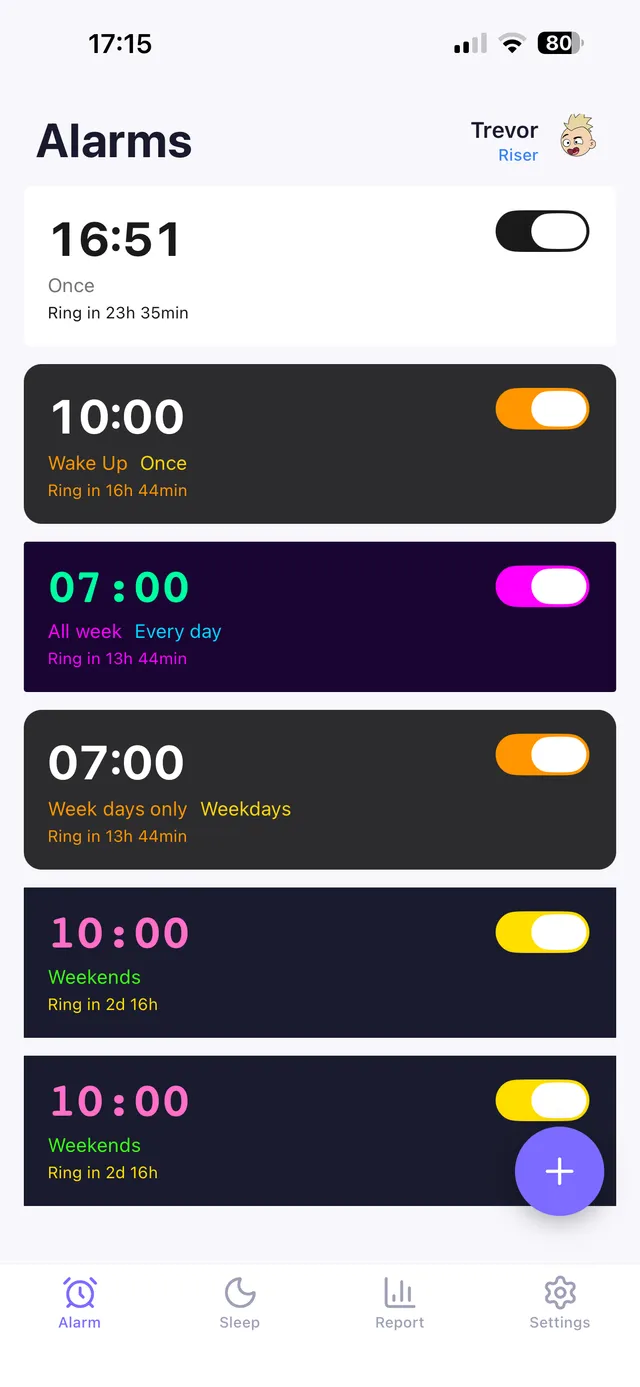
OwlRoutine helps you wind down at night and actually get up in the morning — with a guided wind-down, dismiss missions, and sleep scores. Available on iPhone and Android.


How this is different from a sleep disorder
This is the part that trips people up: poor sleep hygiene and a sleep disorder can look identical from the outside — both leave you tired and both can involve trouble falling or staying asleep. The distinguishing test is response to change.
| Clue | Likely sleep hygiene | Likely something else |
|---|---|---|
| Symptoms improve within 1–2 weeks of fixing habits | Yes | No |
| Problem persists even with a consistent, good routine | No | Yes |
| Loud snoring, gasping, or breathing pauses | No | Possible sleep apnea |
| Trouble sleeping happens even when you're exhausted and have great habits | No | Possible insomnia — see what is insomnia |
| Daytime sleepiness despite 8+ hours and a solid routine | No | Worth a doctor's visit |
If you clean up your routine for two to three weeks and nothing improves, that's a signal to look further, not to try harder at the same habits.
The quickest wins
If you only fix three things, fix these first:
- Pick one wake time and keep it every day, including weekends. This does more for your rhythm than any bedtime rule.
- Set a caffeine cutoff roughly 8–10 hours before bed.
- Get bright light in the morning and dim your lights in the evening — light is the single strongest cue for your circadian rhythm. Morning sunlight.
The bottom line
Poor sleep hygiene shows up as an erratic schedule, screens and caffeine too close to bedtime, a bedroom that fights you instead of helping, and habits that respond to change within a couple of weeks. If you've cleaned up all of the above and still feel wrecked, that's a different problem worth raising with a doctor. Once you've recognized the pattern here, the sleep hygiene checklist is the practical next step for fixing it.
OwlRoutine is built around the two ends of the day that hygiene habits usually break: a guided evening wind-down that replaces late-night scrolling with breathing and journaling, and a mission-based alarm that locks in a consistent wake time — arguably the single highest-leverage sleep hygiene fix there is.
This article is general information, not medical advice.
Frequently asked questions
What are the signs of poor sleep hygiene?
An inconsistent bedtime and wake time, screens in bed, late caffeine or alcohol, unplanned napping, a bedroom that's too warm or bright, and large weekend sleep-ins are all common signs.
How do I know if it's my habits or a sleep disorder?
Poor sleep hygiene usually improves within one to two weeks of fixing the habit. If sleep problems persist despite a consistent, healthy routine, it's worth discussing with a doctor.
What's the single biggest sleep hygiene fix?
A consistent wake time, every day including weekends, tends to have the biggest impact on regulating sleep.
Can poor sleep hygiene cause insomnia-like symptoms?
Yes. An erratic schedule, late caffeine, and screen use can all produce trouble falling or staying asleep that looks like insomnia but resolves once habits change.
Wake up for real. Wind down for good.
OwlRoutine is a sleep-cycle alarm that makes mornings actually stick — with a guided wind-down, dismiss missions, sleep scores and rewards. Available on iPhone and Android.