Alcohol and Sleep: Why a Nightcap Backfires Later in the Night
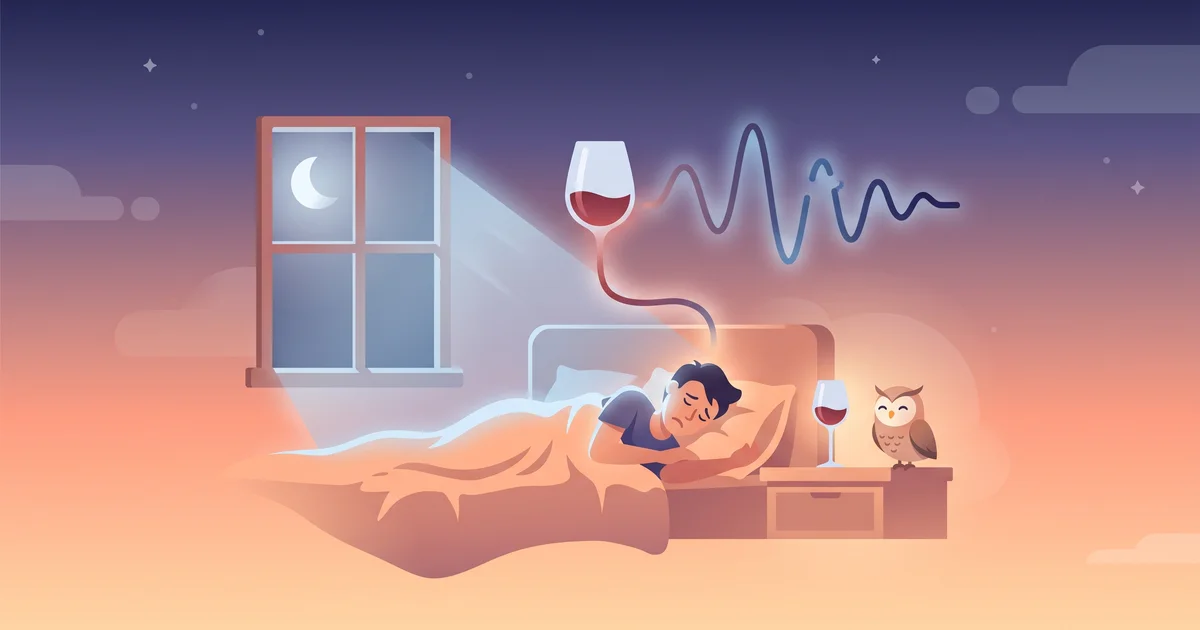
A glass of wine to unwind, a "nightcap" to help you drift off — alcohol and sleep have a long, cozy cultural association. The problem is that the relationship is more of a trade: alcohol genuinely helps you fall asleep faster, but it quietly wrecks the back half of the night. Understanding the trade makes it much easier to decide what's actually worth it.
The short answer
Alcohol acts as a sedative, so it can shorten the time it takes to fall asleep. But as your body metabolizes it over the night, it fragments sleep, suppresses REM sleep, and increases nighttime waking, especially in the second half of the night. The net effect for most people is lower-quality, less restorative sleep, even if the night felt like it started off easy. Timing and quantity both matter — the effect gets worse the closer to bedtime and the more you drink.
How alcohol changes sleep architecture
Sleep isn't uniform — it moves through cycles of lighter sleep, deep sleep, and REM sleep (see sleep cycles explained for the full breakdown). Alcohol disrupts this pattern in a fairly predictable way:
- Faster sleep onset. Alcohol's sedative effect can make you feel like you're falling asleep more easily.
- More deep sleep early on, which is part of why the first stretch of an alcohol-affected night can feel deceptively solid.
- REM sleep suppression, especially in the first half of the night. As blood alcohol level drops, there's often a REM "rebound" later on, which can bring vivid or disturbing dreams.
- More awakenings in the second half of the night, as the sedative effect wears off and your body works to metabolize the alcohol and process the diuretic effect (more bathroom trips).
- Lighter, less restorative sleep overall, even for people who don't consciously remember waking up.
The result is a night that can feel fine going in and rough coming out — grogginess, a foggy head, or feeling unrested despite a full night in bed.
The nightcap myth
The idea that a drink before bed "helps you sleep" isn't entirely wrong — it does help you fall asleep faster in the short term. But that's only half the story most people remember. The trade-off is fragmented, lower-quality sleep later in the night, which is why people who use alcohol as a regular sleep aid often end up more tired overall, not less. It's a bit like caffeine cutoff timing in reverse: one substance keeps you up by delaying sleep, the other undermines sleep after it's already started.
There's also a tolerance effect — regularly relying on alcohol to fall asleep can mean needing more over time to get the same sedative effect, while the sleep-disrupting effects don't go away.
OwlRoutine helps you wind down at night and actually get up in the morning — with a guided wind-down, dismiss missions, and sleep scores. Available on iPhone and Android.


Does the amount matter?
Generally yes — the disruption tends to scale with how much you drink and how close to bedtime.
| Pattern | Likely effect on sleep |
|---|---|
| One drink, finished several hours before bed | Minimal to modest disruption for most people |
| One drink right before bed | Mild disruption, mostly in the second half of the night |
| Multiple drinks, especially close to bedtime | More significant fragmentation, REM suppression, more awakenings |
| Regular heavy drinking | Chronic sleep quality reduction, tolerance effects, and other health risks |
Individual sensitivity varies with body size, metabolism, tolerance, and even genetics, so there's no single number that applies to everyone.
Practical timing and moderation guidance
- Give yourself a buffer. Finishing drinks a few hours before bed, rather than right up until lights out, gives your body more time to process the alcohol before sleep begins.
- Hydrate alongside alcohol. This helps with the diuretic effect that often causes nighttime bathroom trips, and can ease next-day grogginess.
- Notice how you actually feel the next morning, not just how fast you fell asleep — that's a better signal of alcohol's real effect on your sleep than how the evening felt.
- Be cautious about relying on it as a sleep aid. If you're reaching for a drink specifically to fall asleep on a regular basis, that's worth examining — both because of the tolerance issue and because it may be masking an underlying sleep problem worth addressing directly, like an irregular sleep schedule or poor sleep hygiene.
- If you don't drink or are cutting back, there are lower-impact alternatives for winding down — see the sleepy girl mocktail for one popular alcohol-free evening ritual.
Who should be extra cautious
Alcohol's sleep effects can be more pronounced or riskier for people who already have sleep apnea (alcohol relaxes airway muscles, which can worsen breathing pauses), anyone taking medication that interacts with alcohol, and anyone managing anxiety or mood conditions where alcohol can worsen symptoms over time. If any of that applies to you, it's worth a direct conversation with a doctor rather than working it out through trial and error.
The bottom line
Alcohol trades a faster trip to sleep for a rougher back half of the night — fragmented sleep, suppressed REM, and more awakenings as it's metabolized. The nightcap isn't a myth exactly, it's just an incomplete story. If you drink, giving yourself a few hours' buffer before bed and paying attention to how you actually feel the next morning will tell you more than how quickly you dozed off.
If you're looking for a wind-down ritual that doesn't rely on alcohol to feel like "switching off," OwlRoutine's guided evening routine — breathing exercises, journaling prompts, and a bedtime reminder — is built to create that same signal without the second-half-of-the-night trade-off. And on mornings when a late night does catch up with you, the mission alarm is there to make sure you still get up.
This article is general information, not medical advice. If you're concerned about your alcohol use or its effect on your sleep, talk to a doctor.
Frequently asked questions
Does alcohol help you sleep?
It can help you fall asleep faster because of its sedative effect, but it disrupts sleep later in the night — fragmenting sleep, suppressing REM, and causing more awakenings as it's metabolized.
Why do I wake up in the middle of the night after drinking?
As your body metabolizes alcohol over the night, its sedative effect wears off and REM sleep tends to rebound, both of which are linked to more nighttime waking, often alongside the diuretic effect causing bathroom trips.
How long before bed should I stop drinking alcohol?
There's no universal number, but giving yourself a few hours' buffer before bed generally reduces the disruption compared to drinking right up until you sleep.
Does alcohol affect deep sleep or REM sleep more?
It tends to increase deep sleep early in the night but suppresses REM sleep, especially in the first half, often followed by a REM rebound later on that can bring vivid dreams.
Wake up for real. Wind down for good.
OwlRoutine is a sleep-cycle alarm that makes mornings actually stick — with a guided wind-down, dismiss missions, sleep scores and rewards. Available on iPhone and Android.