Sleep Hygiene Checklist: 20 Habits for Better Sleep (Ranked by Impact)
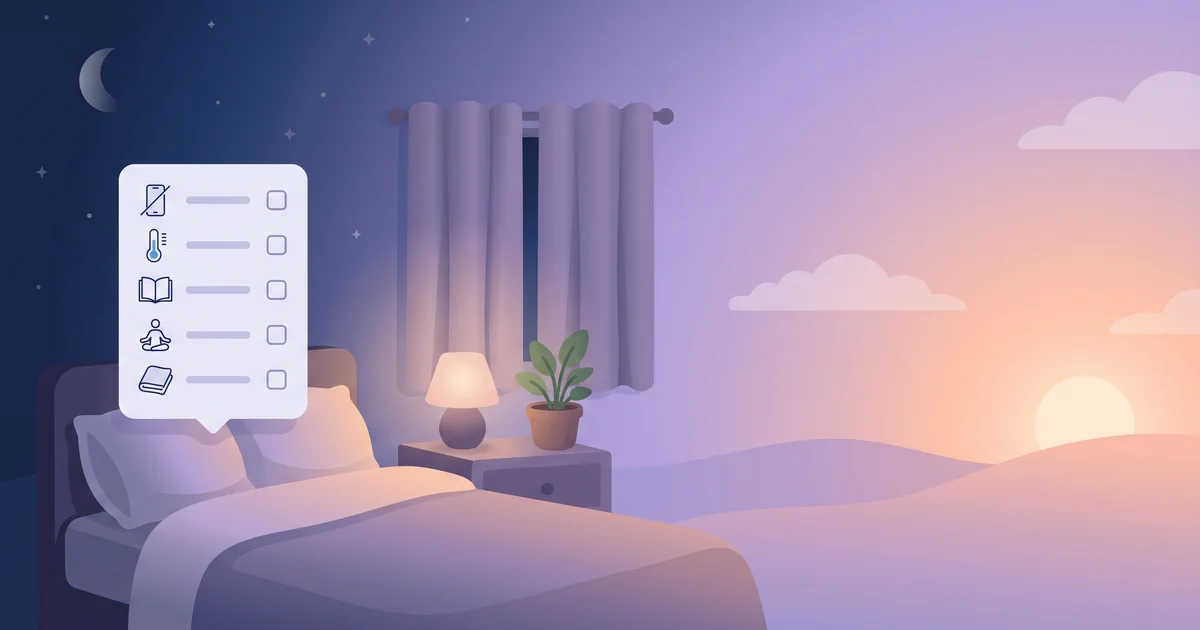
"Improve your sleep hygiene" is the most common advice you'll get for poor sleep — and one of the least specific. Sleep hygiene simply means the everyday habits and environment that support good sleep. The problem is that most lists give you 25 tips with equal weight, when a handful matter far more than the rest. Here's a checklist ranked by impact, so you can start with the changes that pay off most.
The short answer
Good sleep hygiene starts with a consistent wake time, enough time in bed, morning light, limiting caffeine and alcohol, a dark, cool, quiet bedroom and a wind-down routine without your phone. Master those before worrying about the smaller details.
Tier 1: Highest impact
| ✓ | Habit | Why it matters |
|---|---|---|
| ☐ | Same wake time every day (±1 hour on weekends) | Anchors your body clock |
| ☐ | 7–9 hours in bed for sleep | You can't hygiene your way out of not enough time |
| ☐ | Bright light within 30 minutes of waking | Strongest signal to your circadian rhythm |
| ☐ | No caffeine after early afternoon | Caffeine lingers for hours |
| ☐ | Phone away 30–60 minutes before bed | Removes the biggest bedtime-delay |
Consistent wake time
This is the foundation. A fixed wake time builds consistent sleep pressure and keeps your body clock stable, which makes falling asleep at night easier. Sleep consistency matters more than sleep length.
Enough time in bed
Most adults need at least 7 hours of sleep. If you're only in bed for 6, no other habit will fully compensate. How much sleep do I need?
Morning light
Get outside or next to a bright window soon after waking. It helps you feel alert now and sleepy on time tonight.
Caffeine cutoff
Caffeine blocks adenosine, the chemical that builds sleepiness through the day, and its effects last for hours. The 10-3-2-1-0 rule suggests stopping 10 hours before bed.
Phone away
Screens delay sleep through light, engaging content and endless scrolling. What phones really do to sleep.
Tier 2: High impact
| ✓ | Habit |
|---|---|
| ☐ | Dark bedroom (blackout curtains or eye mask) |
| ☐ | Cool bedroom |
| ☐ | Quiet bedroom (earplugs or white noise if needed) |
| ☐ | 20–30 minute wind-down routine |
| ☐ | Limit alcohol, especially within 3 hours of bed |
| ☐ | No large meals within 2–3 hours of bed |
A calm, predictable wind-down routine — dim lights, a shower, reading, stretching or journaling — signals to your brain that sleep is coming. Alcohol may make you drowsy, but it fragments sleep later in the night.
OwlRoutine helps you wind down at night and actually get up in the morning — with a guided wind-down, dismiss missions, and sleep scores. Available on iPhone and Android.


Tier 3: Helpful
| ✓ | Habit |
|---|---|
| ☐ | Regular exercise (not too intense right before bed) |
| ☐ | Keep naps short (10–20 minutes) and early |
| ☐ | Use the bed for sleep (and sex) only |
| ☐ | Get up if you can't sleep after ~20 minutes |
| ☐ | Comfortable mattress and pillow |
| ☐ | Turn the clock away from you |
| ☐ | No snoozing in the morning |
| ☐ | Dim, warm lights in the evening |
| ☐ | Write tomorrow's to-do list before bed |
Short naps help without stealing from the night — how long should a nap be?. Getting up when you can't sleep is a key part of CBT for insomnia. And skipping snooze keeps your morning to one clean wake-up — here's why.
How to use this checklist
- Tick what you already do.
- Pick one Tier 1 habit you don't do. Work on it for two weeks.
- Add the next one. Don't try to change ten things at once.
- Track it. Small, visible streaks help habits stick.
When sleep hygiene isn't enough
Sleep hygiene is important, but on its own it's often not enough to fix chronic insomnia. If you've had trouble sleeping at least three nights a week for three months, or you're exhausted despite good habits, talk to a doctor. CBT for insomnia (CBT-I) is the recommended first-line treatment, and conditions like sleep apnea need proper assessment.
The bottom line
Good sleep hygiene isn't about perfection. Nail the top tier — consistent wake time, enough time in bed, morning light, a caffeine cutoff and phone away before bed — then add a dark, cool, quiet room and a wind-down routine. The small stuff matters less than doing the big stuff every day.
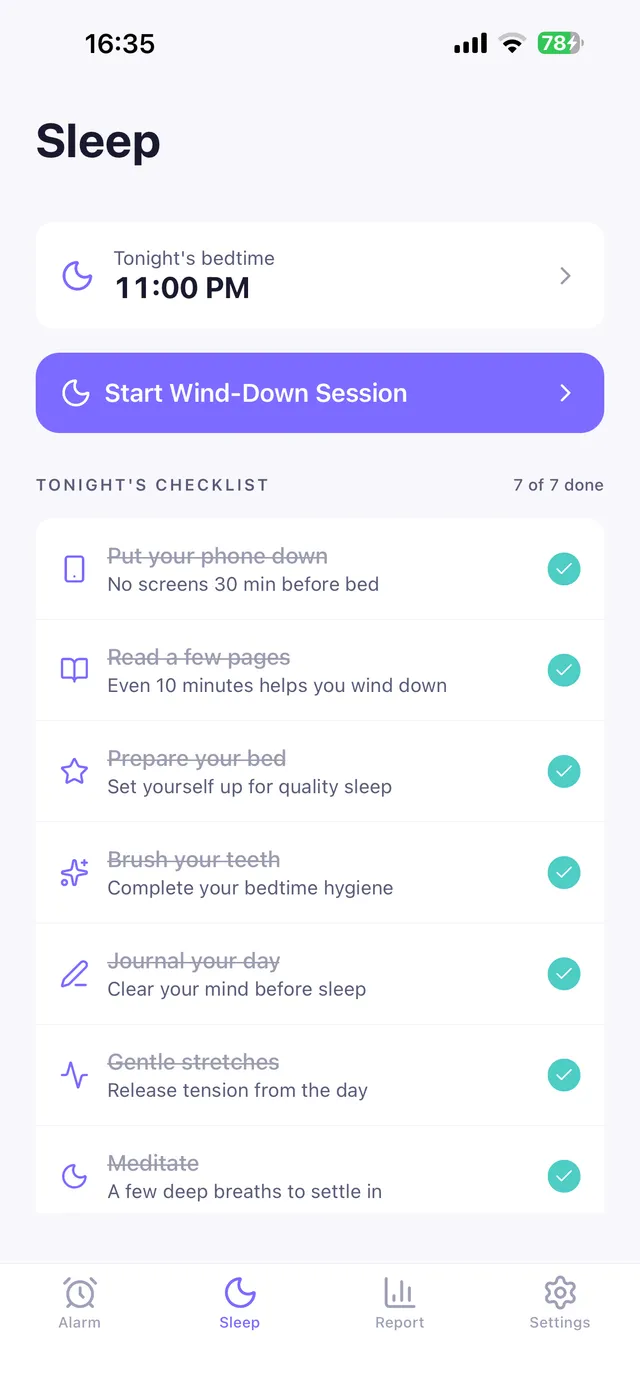
OwlRoutine turns the highest-impact habits into a nightly routine: a "Tonight's checklist" with items like putting your phone down, reading, preparing your bed and brushing your teeth; a guided wind-down that checks your phone stays face-down; and a consistent mission alarm to lock in your wake time.
This article is general information, not medical advice.
Frequently asked questions
What is sleep hygiene?
Sleep hygiene is the set of daily habits and bedroom conditions that support good sleep, such as a consistent schedule, a dark and cool room, limiting caffeine and alcohol, and a wind-down routine.
What are the most important sleep hygiene habits?
A consistent wake time, enough time in bed, morning light, a caffeine cutoff in the early afternoon and keeping your phone away before bed.
Does sleep hygiene cure insomnia?
It helps, but it's often not enough on its own for chronic insomnia. CBT for insomnia is the recommended first-line treatment.
How long does it take for sleep hygiene to work?
Some changes, like a darker room, help immediately. Habits that shift your body clock, like a consistent wake time and morning light, usually take one to two weeks.
Wake up for real. Wind down for good.
OwlRoutine is a sleep-cycle alarm that makes mornings actually stick — with a guided wind-down, dismiss missions, sleep scores and rewards. Available on iPhone and Android.