The Realistic Morning Routine for Students (Late Nights Included)
Most morning routine advice assumes you control your own schedule, have your own bathroom, and went to bed at a sensible hour. Student life is rarely any of those things. Between late study sessions, roommates, and 8am lectures, a student morning routine has to survive chaos, not a perfectly ordered life — here's one that actually does.
The short answer
A realistic student morning routine keeps the essentials small and non-negotiable: a consistent-ish wake time (even on rough sleep), a fast low-friction start (water, light, minimal decisions), and a buffer built in for the mornings after a late night. Protecting a few fixed anchors matters more than following an elaborate 10-step ritual you'll abandon by week two.
Why student mornings are genuinely harder
- Late nights are structural, not optional. Studying, part-time jobs, social life, and time zones with friends back home all push bedtime later.
- Shared spaces mean less control. A roommate's schedule, noise, and shared bathroom queues all eat into your morning.
- Class times vary by day. A 9am Monday and a noon Wednesday make a single fixed routine hard to hold.
- Chronotype and age work against early starts. Many students are naturally wired as night owls during these years — see the night owl guide and chronotypes explained.
If your class schedule regularly starts early, how to wake up for school covers the wake-up side in more depth; this piece is about what happens after the alarm goes off.
A routine built for real student life
1. Prep the night before (this does more work than anything in the morning)
- Lay out clothes and pack your bag before bed.
- Set out anything you need for breakfast so it's zero-decision.
- Decide your wake time based on tomorrow's actual first commitment, not a fixed ideal.
2. Use an alarm you can't sleep through
Regular alarms get silenced half-asleep in seconds — especially after a late night. A mission alarm that requires solving a problem or walking to a specific spot forces enough wakefulness to actually get moving, which matters more for students than almost anyone, given how often sleep debt is stacked.
3. Get light immediately
Open the blinds, step outside, or at minimum turn on a bright light. This does more to cut through grogginess than a second alarm ever will. Why morning light matters.
4. Keep the first 10 minutes decision-free
Brush teeth, splash water on your face, grab whatever breakfast you prepped. Every decision you remove from a groggy brain is one less excuse to crawl back into bed.
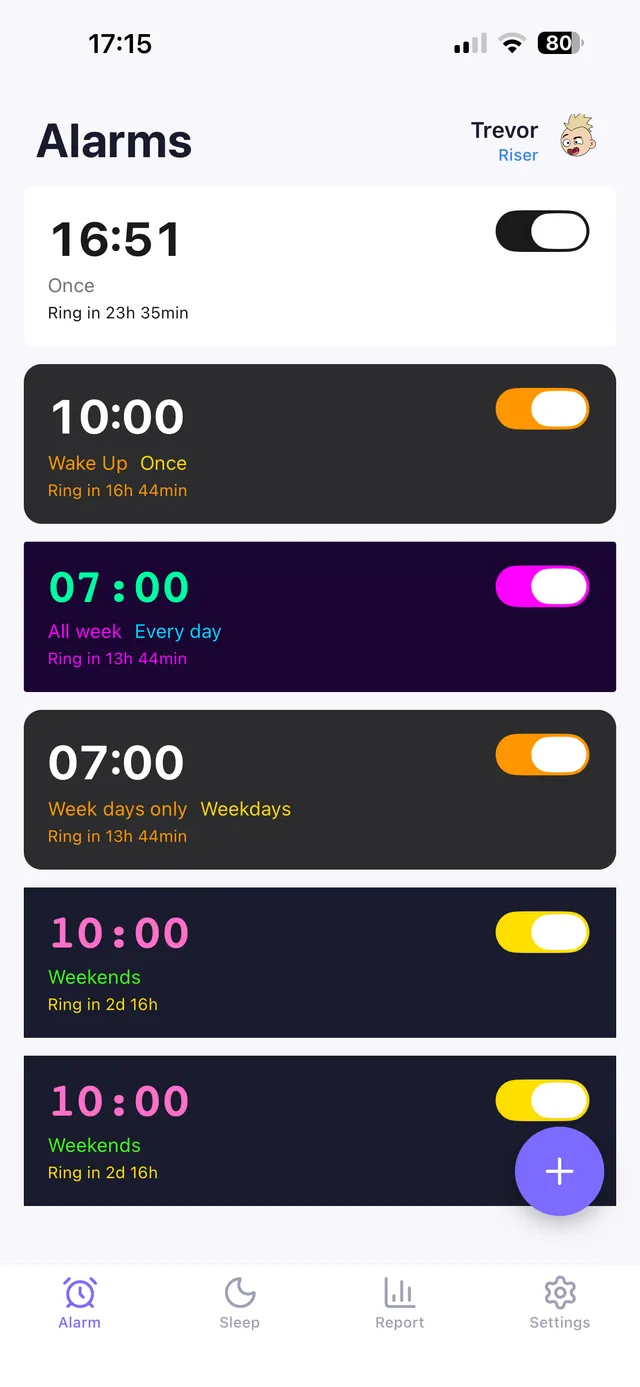
OwlRoutine helps you wind down at night and actually get up in the morning — with a guided wind-down, dismiss missions, and sleep scores. Available on iPhone and Android.


5. One anchor task before you leave
Pick one small, satisfying task — making your bed, a two-minute journal line, checking today's one priority. Making your bed every morning is a classic for a reason: it's fast and gives a sense of control before a chaotic day.
Dorm and shared-housing specifics
- Bathroom queues: shift your wake time 10-15 minutes earlier than you think you need, rather than fighting for shower slots.
- Roommate sleep schedules: use a vibrating alarm or under-pillow alarm if your roommate sleeps later, and headphones for any morning audio.
- Common kitchens: prep grab-and-go breakfast (overnight oats, a stocked drawer of bars) so you're not waiting on shared appliances.
Exam season: the routine that survives finals week
Exam season breaks even good routines because sleep gets sacrificed for study time. A few adjustments:
- Protect wake time over bedtime. You can't always control when you fall asleep during finals, but keeping a consistent wake time protects your body clock better than sleeping in. Sleep consistency matters.
- Cap all-nighters as a last resort, not a strategy. Sleep-deprived recall is measurably worse — a rested brain the night before a test usually outperforms a few extra crammed hours.
- Nap strategically, not accidentally. A 20-minute nap between study blocks beats collapsing for 2 hours and missing dinner and your evening review. How long should a nap be.
- Watch caffeine timing. Late-day coffee to push through studying often wrecks the sleep you need to actually retain what you studied. Caffeine cutoff before bed.
When social life pushes bedtime late
You don't need to opt out of student life to protect your mornings. The trick is decoupling bedtime from wake time on the mornings that matter:
- If you know you're out late, plan a lighter first class or move a task to the afternoon where possible.
- Keep the wake-up ritual identical regardless of how the night went — light, water, one small task — so your body has a consistent signal even when sleep was short.
- Treat truly rough mornings as a short-sleep day, not a write-off: get outside, keep moving, and go to bed earlier that night to repay the debt.
The bottom line
Student mornings don't need to look like a productivity influencer's routine. They need a few protected anchors — a wake time you mostly hold, light as soon as possible, zero-decision first steps, and a plan for the inevitable rough mornings — that survive late nights, shared housing, and exam season. For deeper general routine-building, see the morning routine for productivity guide.
Late study sessions and social nights are part of the deal — the problem is usually not the late night itself but sleeping through the alarm the next morning. OwlRoutine's mission alarm forces a real wake-up task before it'll stop, which is exactly the nudge students running on borrowed sleep tend to need, and the wind-down routine helps make actually getting to bed on the nights you can control a little easier too.
Frequently asked questions
What is a realistic morning routine for a student?
A consistent-ish wake time, a mission-style alarm you can't sleep through, immediate light exposure, a zero-decision start (prepped clothes and breakfast), and one small anchor task before leaving.
How do students wake up after a late night?
Use an alarm that forces real wakefulness, like one requiring a task, get light immediately, and keep the first steps of the morning decision-free so a foggy brain doesn't have to think.
Should students prioritize sleep during exams?
Yes. A consistent wake time and adequate sleep generally support recall and focus better than late-night cramming or all-nighters, which tend to hurt retention.
How can dorm students deal with shared bathrooms and roommates in the morning?
Shift your wake time slightly earlier to avoid queues, use a vibrating or under-pillow alarm to avoid waking roommates, and prep grab-and-go breakfast items in advance.
Wake up for real. Wind down for good.
OwlRoutine is a sleep-cycle alarm that makes mornings actually stick — with a guided wind-down, dismiss missions, sleep scores and rewards. Available on iPhone and Android.