How Long Should a Nap Be? The Ideal Power Nap Length (and When to Nap)
A good nap can rescue a flat afternoon. A bad one leaves you groggier than before and awake at midnight. The difference is mostly timing: how long should a nap be, and when should you take it? Here's a practical guide based on how sleep stages work.
The short answer
For most people, the ideal power nap is 10–20 minutes, taken in the early afternoon (roughly 13:00–15:00). It boosts alertness without dropping you into deep sleep. A 90-minute nap — one full sleep cycle — can work when you're very sleep-deprived, but it's more likely to affect your night. Avoid 30–60 minute naps if you need to be sharp straight afterwards.
Nap lengths compared
| Nap length | What happens | Pros | Cons |
|---|---|---|---|
| 5–10 min | Light sleep | Quick boost, no grogginess | Smaller benefit |
| 10–20 min | Light sleep (N1–N2) | Best balance: alert quickly | — |
| ~26 min | Light sleep | Used in a well-known NASA pilot study | May tip into deeper sleep for some |
| 30–60 min | Often enters deep sleep | Some memory benefits | Strong grogginess on waking |
| ~90 min | Full cycle incl. REM | Restorative when very short on sleep | Can delay night sleep |
Why 10–20 minutes works best
Sleep progresses from light stages into deep (slow-wave) sleep over the first 30 minutes or so. A short nap keeps you in the lighter stages, so you wake without the heavy, foggy feeling of sleep inertia. Studies of brief afternoon naps have found improvements in alertness and performance that appear quickly after waking.
The NASA nap
A frequently cited NASA study of long-haul airline pilots found that a planned in-flight rest opportunity of about 40 minutes — during which pilots slept around 26 minutes on average — improved performance and alertness compared with pilots who didn't nap. It's one reason "power naps" became popular in workplaces.
Why 30–60 minutes can backfire
Naps in this range often end in deep sleep. Waking from deep sleep produces strong grogginess that can last 15–30 minutes or more — not ideal if you have a meeting straight after.
The 90-minute nap
A full cycle includes deep sleep and REM, and you're more likely to wake from lighter sleep at the end. If you're seriously short on sleep, or you're preparing for a very late night, it can be worthwhile. But it takes a big bite out of your sleep pressure, so you may struggle to fall asleep at bedtime.
OwlRoutine helps you wind down at night and actually get up in the morning — with a guided wind-down, dismiss missions, and sleep scores. Available on iPhone and Android.


When to nap
- Best window: early afternoon, about 6–8 hours after you wake. There's a natural dip in alertness then for most people.
- Avoid late naps. Napping after about 15:00–16:00 (for a typical schedule) can delay your bedtime.
- Night owls can nap a little later; early birds a little earlier.
How to take a better nap
- Set an alarm for 20–25 minutes (allowing time to fall asleep).
- Lie down somewhere dim and quiet, or use an eye mask.
- Try a "coffee nap" if you're a regular coffee drinker: have a coffee immediately before a 15–20 minute nap. Caffeine takes about 20 minutes to kick in, so it arrives as you wake. Skip this in the late afternoon.
- Get light and move straight after.
- Don't stress if you don't fall asleep. Quiet rest with your eyes closed still helps.
Should you nap at all?
Napping is useful if:
- You had a short night and need to function safely (for example, before driving).
- You have an afternoon slump that affects your work.
- You work shifts.
Skip naps if:
- You have insomnia or trouble falling asleep at night — naps reduce the sleep pressure that helps you fall asleep. CBT for insomnia typically recommends limiting naps.
- You're trying to fix your sleep schedule — build up evening sleepiness instead.
Naps aren't a substitute for sleep
A nap can take the edge off sleep debt, but it can't replace consistent, sufficient night sleep. If you need a nap every day just to function, you're probably not getting enough sleep at night — here's how much you need. Needing to nap a lot despite long nights can also be a sign of a sleep disorder, so talk to a doctor if that sounds familiar.
The bottom line
The ideal nap is 10–20 minutes in the early afternoon: long enough to recharge, short enough to avoid grogginess and protect your night. Use a 90-minute nap only when you're very short on sleep. And if you rely on naps daily, fix the night first.
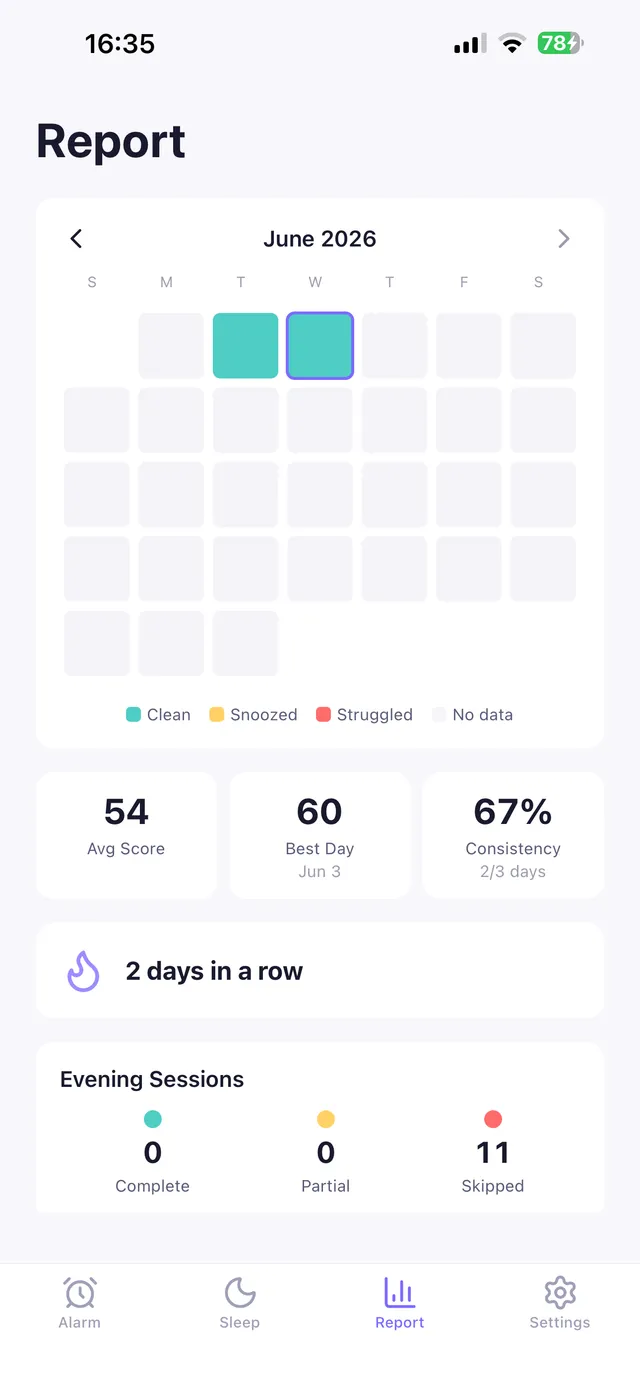
OwlRoutine focuses on the night that naps are trying to make up for: a guided wind-down with bedtime reminders to help you get to bed on time, a consistent mission alarm so your wake time holds, and weekly charts that show whether you're building sleep debt.
This article is general information, not medical advice.
Frequently asked questions
How long should a power nap be?
About 10–20 minutes. This keeps you in light sleep, so you wake feeling more alert without heavy grogginess.
Is a 90-minute nap good?
A 90-minute nap covers a full sleep cycle and can be restorative when you're very short on sleep, but it may make it harder to fall asleep at night.
Why do I feel worse after a nap?
Naps of about 30–60 minutes often end in deep sleep, which causes strong sleep inertia — heavy grogginess that can last 15–30 minutes or more.
What is the best time to take a nap?
Early afternoon, roughly 6–8 hours after waking, when most people have a natural dip in alertness. Avoid napping late in the afternoon.
Wake up for real. Wind down for good.
OwlRoutine is a sleep-cycle alarm that makes mornings actually stick — with a guided wind-down, dismiss missions, sleep scores and rewards. Available on iPhone and Android.