Should You Make Your Bed Every Morning? Why This 2-Minute Habit Matters

"If you want to change the world, start off by making your bed." Retired US Navy Admiral William McRaven's 2014 commencement speech at the University of Texas at Austin made a simple chore famous, and it's been quoted in countless morning-routine articles since. But should you really make your bed every morning? And does a two-minute task actually make a difference?
The short answer
Making your bed every morning is a small, immediate win that starts the day with a completed task, gets you up and moving, makes it less tempting to crawl back in, and gives you a calmer bedroom to come back to at night. There isn't strong scientific evidence that it transforms your life on its own — but as a keystone habit anchored to waking up, it's hard to beat for effort versus payoff.
Where the idea comes from
In his speech, McRaven described how Navy SEAL training started every day with making the bed to exacting standards. His point: completing a small task well first thing gives you a sense of accomplishment, encourages you to do the next task, and — on bad days — means you at least come home to a made bed. The speech went viral and later became a best-selling book.
What making your bed actually does
| Benefit | Why it helps |
|---|---|
| A first completed task | Small wins build momentum for the next one |
| Gets you out of bed | You literally can't make it while lying in it |
| Harder to go back to sleep | A made bed is a visual "the night is over" |
| Calmer bedroom | Less clutter can feel more restful at bedtime |
| Consistency cue | Anchors your morning routine to one repeatable action |
The momentum effect
Behaviour change research often talks about "keystone habits" — small habits that make other good habits easier. Making your bed is a classic candidate because it happens at the very start of the day and requires getting up. It's not magic; it's momentum.
It helps you not go back to bed
If you're the type to get up, sit on the edge of the bed and then "just lie down for five minutes", a made bed is a helpful barrier. It's a clear signal that sleep time is over. How to get out of bed when you don't want to.
A better bedroom at night
Coming back to a made bed feels calmer than a tangle of sheets. A tidy, pleasant bedroom supports the idea that your bed is for sleep, which is a core principle of good sleep hygiene.
OwlRoutine helps you wind down at night and actually get up in the morning — with a guided wind-down, dismiss missions, and sleep scores. Available on iPhone and Android.


What the evidence doesn't say
You'll see claims online that bed-makers are more productive, happier or richer. Those typically come from informal surveys, not controlled studies, and even if there's a correlation, it doesn't mean making your bed causes those outcomes — organised people may simply be more likely to do it. Treat the habit as a useful routine, not a life hack.
Should you air your bed first?
Some people prefer to throw back the covers for a while before making the bed, letting moisture from the night evaporate. That's fine — make it once you've showered or had breakfast. The habit matters more than the exact timing.
How to make it a habit
- Anchor it to getting up. Alarm off → feet on floor → make bed. Same order every day.
- Keep it simple. Pull up the duvet, straighten the pillows. Hotel corners are optional.
- Make it quick. If your bedding makes it a 10-minute job, simplify it.
- Pair it with other small wins: a glass of water, opening the curtains. A simple morning routine.
- Track it. A visible streak makes small habits stick.
A made bed in your alarm?
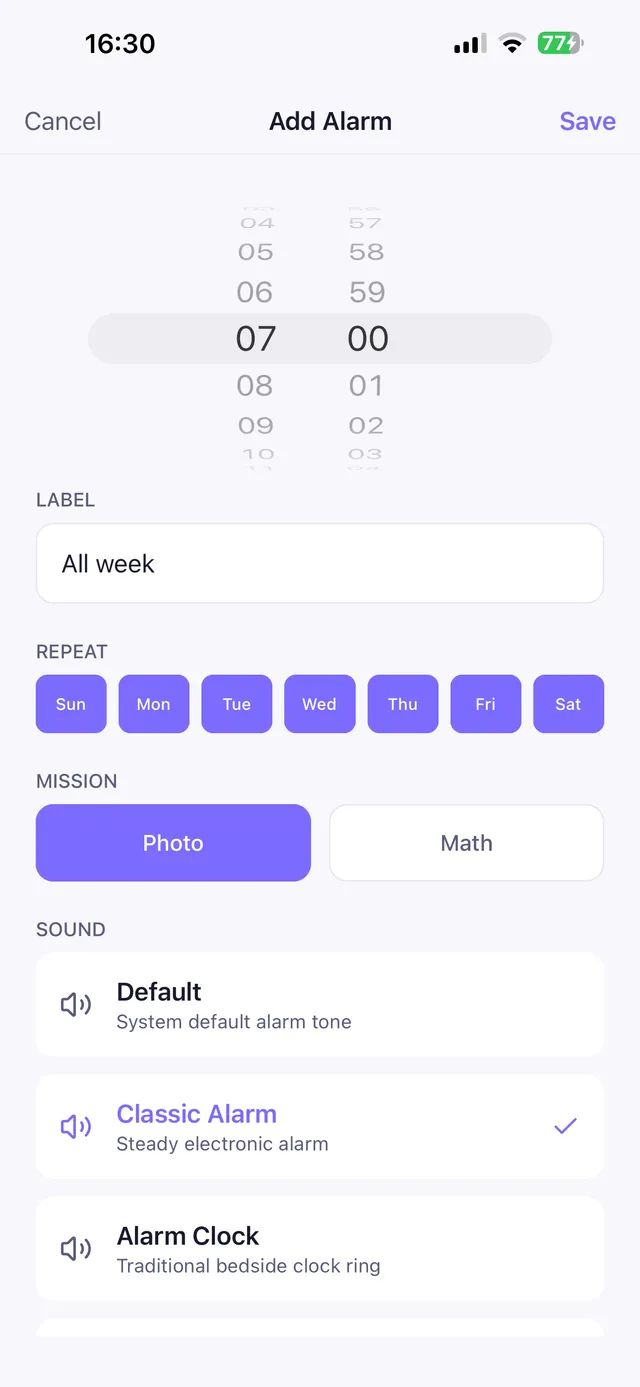
Here's a neat trick: use a photo mission alarm that requires you to take a photo of your made bed to turn the alarm off. You have to get up, make the bed, step back and take the picture — so by the time the alarm stops, you've done your first task of the day and you're too awake to go back to sleep. Alarms that make you get out of bed.
The bottom line
Making your bed every morning won't change your life on its own, but it's a tiny, reliable win that gets you up, makes going back to sleep less tempting and leaves you a calmer bedroom at night. As the first link in a morning routine, it's worth two minutes.
OwlRoutine builds this habit in two ways: "Make your bed" is one of its suggested morning actions, and its bed-photo mission lets you set a photo of your made bed as the reference — so the alarm keeps ringing until you've got up and made it.
Frequently asked questions
Is it good to make your bed every morning?
It's a small habit with practical benefits: it gets you up, gives you an early completed task, makes going back to bed less tempting and leaves you with a calmer bedroom at night.
Who said 'make your bed' to change the world?
Retired US Navy Admiral William McRaven, in a 2014 commencement speech at the University of Texas at Austin, which later became a book.
Does making your bed make you more productive?
There's no strong scientific evidence that it directly increases productivity. Its value is as a small, consistent win that can build momentum for other morning habits.
Should I make my bed right after waking up?
You can make it right away or air it first and make it after your shower or breakfast. Consistency matters more than exact timing.
Wake up for real. Wind down for good.
OwlRoutine is a sleep-cycle alarm that makes mornings actually stick — with a guided wind-down, dismiss missions, sleep scores and rewards. Available on iPhone and Android.