How to Wake Up Without an Alarm: Training Your Body Clock to Wake You Naturally

Imagine waking up at the same time every morning, feeling rested, a few minutes before any alarm would ring. For some people that's normal; for most of us it sounds like a fantasy. But learning how to wake up without an alarm is less mysterious than it seems. Your body already has an internal clock — you just need to give it the right conditions.
The short answer
To wake up without an alarm: get enough sleep (so your body isn't holding on to catch up), keep the same wake time every day (so your body learns when to wake), get bright light soon after waking and keep evenings dim. After a few weeks, many people start waking naturally around their usual time. Keep an alarm as a backup, especially for important days.
Why most people need an alarm
If you can't wake without an alarm, it's usually because of one or both of these:
- You're not getting enough sleep. Your body wants to keep sleeping to pay back sleep debt. An alarm is overriding your biology.
- Your schedule isn't consistent. If your wake time changes by hours between weekdays and weekends, your body can't learn when to wake. Social jet lag is a common culprit.
The alarm isn't the problem. It's covering for these two.
How natural waking works
With a consistent schedule, your circadian rhythm starts preparing for morning before you wake: cortisol rises, body temperature climbs and sleep becomes lighter. That's why people with steady routines often wake up right before their alarm. Waking naturally is the same process — just without the alarm at the end.
A 4-week plan to wake up without an alarm
| Week | Focus | Alarm? |
|---|---|---|
| 1 | Fixed wake time 7 days/week, bedtime for 7.5–9 h | Yes, no snooze |
| 2 | Add morning light + dim evenings | Yes |
| 3 | Notice if you're waking before the alarm | Yes, as backup |
| 4 | Try alarm-free on a low-stakes day | Backup set 15–30 min later |
Week 1: Fix your wake time
Choose a wake time you can hold seven days a week. Set your alarm, turn off snooze and get up at the first ring. Work backwards to set a bedtime that gives you enough sleep — how much sleep do you need?. The bedtime calculator can help.
Week 2: Add light and dim evenings
Get outside within an hour of waking. Why morning sunlight matters. In the evening, dim the lights and put the phone away an hour before bed.
OwlRoutine helps you wind down at night and actually get up in the morning — with a guided wind-down, dismiss missions, and sleep scores. Available on iPhone and Android.


Week 3: Watch for natural waking
Many people start waking a few minutes before the alarm around now. That's your body clock taking over. If you wake close to your alarm time and feel rested, get up.
Week 4: Test it
On a day where oversleeping won't matter, set your alarm 15–30 minutes after your usual time as a safety net and see if you wake naturally. If you do, great. If not, you may need more sleep or more consistency.
Tips that make it easier
- Let light in. Curtains that let in some morning light (or a sunrise alarm) help your body sense morning.
- Avoid alcohol in the evening. It disrupts the second half of the night.
- Cut late caffeine. When to stop drinking coffee.
- Don't sleep in on weekends by more than an hour.
- Wind down consistently. A simple wind-down routine.
Should you ditch the alarm completely?
For most people with jobs, school or kids, no. Natural waking is a great sign your sleep is in good shape, but life happens: a late night, a bad night, a flight, a time change. Keep an alarm as a safety net, especially for important mornings — and make sure it's reliable. On iPhone, alarm apps that use AlarmKit (iOS 26+) ring through Silent mode and Focus.
When natural waking isn't happening
If after a month of consistency you still can't wake without an alarm and feel tired during the day, you may simply need more sleep than you think — or there may be a sleep quality issue like sleep apnea. Why you wake up tired after 8 hours.
The bottom line
Waking up without an alarm isn't a special talent — it's what happens when you get enough sleep on a consistent schedule with good light exposure. Build the routine with an alarm first, then let your body clock take over, and keep the alarm as a backup.
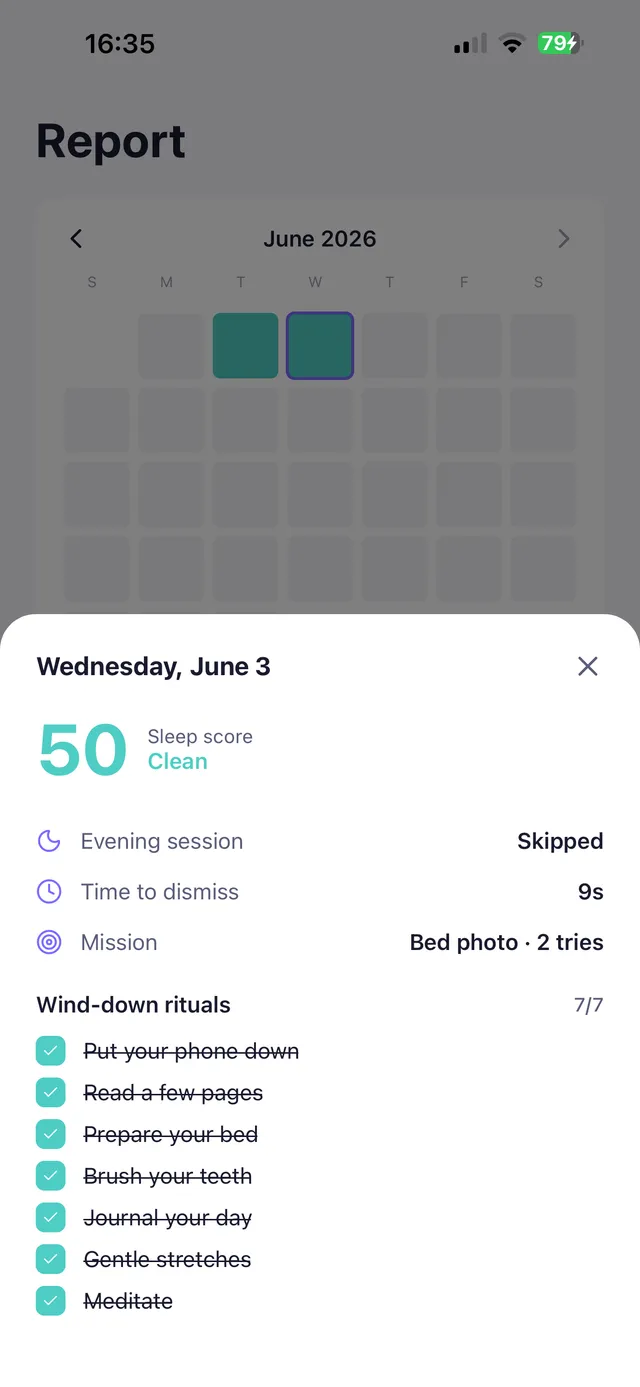
OwlRoutine is designed for the "build the routine" phase: a consistent alarm with a mission so you never snooze your way out of it, a guided wind-down to protect your bedtime, and streaks and a heatmap that show your wake time locking in — until the alarm becomes the backup rather than the boss.
Frequently asked questions
Can you train yourself to wake up without an alarm?
Yes, many people can. Get enough sleep, keep the same wake time every day, get morning light and keep evenings dim. After a few weeks, your body clock often starts waking you naturally.
Why can't I wake up without an alarm?
Usually because you're not getting enough sleep or your wake time varies too much between days, especially weekends.
How long does it take to wake up naturally?
Often two to four weeks of a consistent schedule with enough sleep, though it varies between people.
Should I stop using an alarm completely?
Most people should keep one as a backup for important days, late nights and time changes, even if they usually wake naturally.
Wake up for real. Wind down for good.
OwlRoutine is a sleep-cycle alarm that makes mornings actually stick — with a guided wind-down, dismiss missions, sleep scores and rewards. Available on iPhone and Android.