Why Do I Wake Up Right Before My Alarm? The Body Clock Explanation
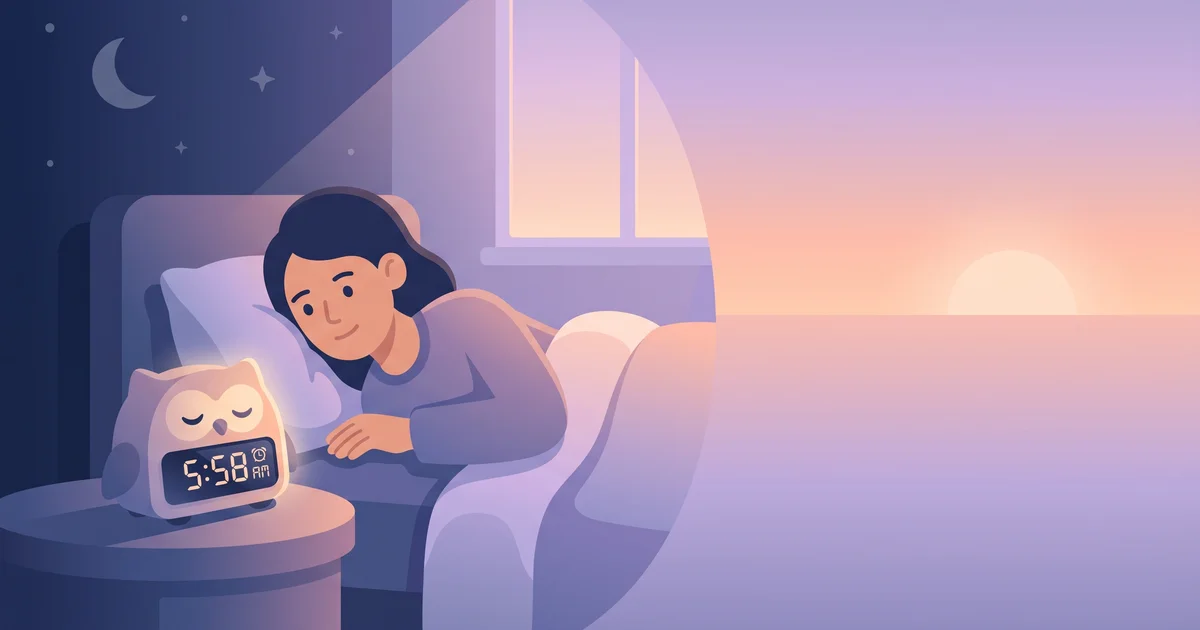
It's one of the strangest little sleep experiences: you open your eyes, check the time, and it's 6:57 — three minutes before your 7:00 alarm. How did your body know? Waking up right before your alarm happens to a lot of people, and it's a good window into how your internal clock works.
The short answer
You wake up before your alarm because your body anticipates your usual wake time. With a consistent schedule, your circadian rhythm starts preparing for waking in advance — raising cortisol, body temperature and alertness — so you surface into light sleep just before the alarm. It's usually a good sign of a stable schedule. It becomes a problem when you wake much too early, can't get back to sleep and feel tired during the day.
How your body "knows" the time
Your circadian rhythm
Your body runs on an internal clock of roughly 24 hours, kept in sync mainly by light and your daily routine. When you wake at the same time every day, that clock learns the pattern. Why consistency matters.
Cortisol rises before waking
In the hours before your usual wake time, levels of cortisol — a hormone involved in alertness — begin to rise, followed by a further surge shortly after waking (the "cortisol awakening response"). Body temperature also starts to climb from its early-morning low. Together, these nudge you toward lighter sleep.
Anticipation
Interestingly, a small, often-cited German study from 1999 found that people who went to bed expecting to wake at a specific early time showed a rise in the stress-related hormone ACTH about an hour before that time, compared with people who were woken as a surprise. It suggests that expecting to wake up can itself prepare the body — though it was a small study, so treat it as intriguing rather than definitive.
Light sleep near the end of the night
By morning, much of your deep sleep is done and you're cycling through lighter sleep and REM. You naturally surface briefly between cycles. If one of those surfacings lands just before your alarm, you're awake.
Good sign or bad sign?
| Situation | What it likely means |
|---|---|
| Wake a few minutes before alarm, feel rested | Stable schedule, enough sleep — great |
| Wake before alarm, fall back asleep, feel groggy when it rings | Normal; consider getting up at the first waking |
| Wake before alarm anxious about oversleeping | Anticipation/stress; build trust in your alarm |
| Wake 1–2+ hours early and can't get back to sleep | Possible stress, alcohol, schedule or mood issue |
OwlRoutine helps you wind down at night and actually get up in the morning — with a guided wind-down, dismiss missions, and sleep scores. Available on iPhone and Android.


If you wake just before your alarm
- Consider just getting up. If you're awake and it's within 10–15 minutes of your alarm, getting up can feel better than drifting back into a few minutes of light sleep only to be jolted awake — and you avoid restarting sleep inertia.
- Keep your schedule consistent — it's working.
- Don't reach for your phone in bed; get up, get light, move.
If you wake up anxious about the alarm
Some people wake repeatedly before important mornings because they're worried the alarm won't go off. The fix is trust:
- Test your alarm, including on silent. On iPhone, apps that use AlarmKit (iOS 26+) ring through Silent mode and Focus. iPhone alarm not going off?
- Set a backup on another device for flights or exams.
- Write down tomorrow's plan before bed so it's not rattling around your head. Journaling before bed.
If you wake up far too early
Regularly waking an hour or more before your alarm and lying awake is different — that's early-morning awakening. Common causes:
- Alcohol in the evening. Why you wake at 3am.
- Stress or anxiety.
- Going to bed very early or taking long naps.
- Light getting into the room early, especially in summer.
- Age — many people naturally become earlier types as they get older.
- Low mood — early waking can be a symptom of depression.
Try blackout curtains, cutting evening alcohol, keeping a consistent bedtime and wake time, and not lying in bed awake for long. If it continues for weeks, or comes with low mood, talk to a doctor.
Can you train yourself to wake without an alarm?
Many people find that after several weeks of a truly consistent schedule and enough sleep, they start waking naturally around the same time. It's a good sign your body clock is well aligned — but keep an alarm as a safety net.
The bottom line
Waking right before your alarm is usually your body clock doing its job: it has learned your wake time and prepares you in advance with rising cortisol and body temperature. If you feel rested, enjoy it — and consider getting up. If you're waking far too early and can't get back to sleep, look at stress, alcohol, light and mood.
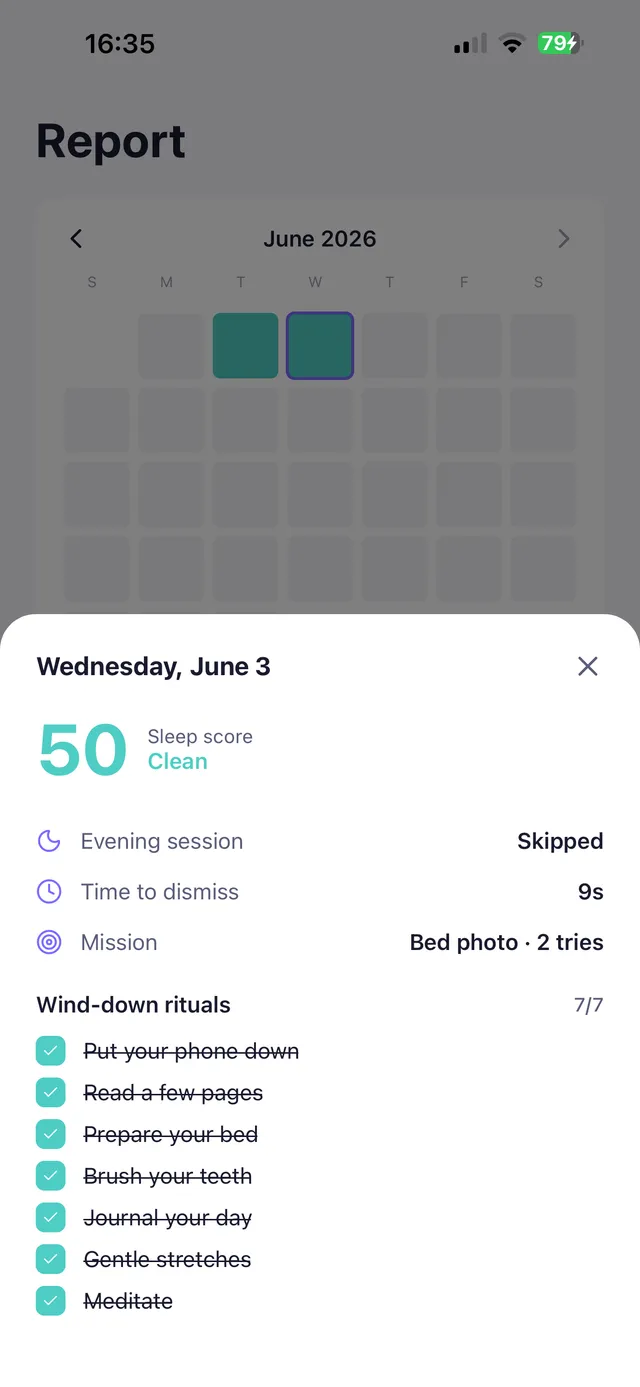
OwlRoutine helps build exactly the kind of consistent schedule that lets your body anticipate your wake time: a steady alarm with a mission to dismiss, a nightly wind-down with bedtime reminders, and streaks and a heatmap that show your rhythm becoming reliable.
This article is general information, not medical advice.
Frequently asked questions
Why do I wake up right before my alarm?
With a consistent schedule, your body anticipates your wake time. Cortisol and body temperature rise beforehand, pulling you into lighter sleep, so you often wake just before the alarm.
Is waking up before your alarm a good sign?
Usually yes, if you feel rested — it suggests a stable schedule and enough sleep. Waking far too early and being unable to get back to sleep is a different issue.
Should I get up if I wake up before my alarm?
If it's within about 10–15 minutes of your alarm, getting up often feels better than drifting back into light sleep and being woken again.
Why do I keep waking up hours before my alarm?
Common causes include evening alcohol, stress, early light, going to bed very early, age and low mood. If it persists, talk to a doctor.
Wake up for real. Wind down for good.
OwlRoutine is a sleep-cycle alarm that makes mornings actually stick — with a guided wind-down, dismiss missions, sleep scores and rewards. Available on iPhone and Android.