Sleep Debt: What It Is, How It Adds Up, and Whether You Can Really Catch Up

You got six hours on Monday, six on Tuesday, five and a half on Wednesday… and by Friday you feel like a zombie. That's sleep debt: the running gap between how much sleep you need and how much you actually get. It builds quietly, it affects you more than you notice, and the popular fix — sleeping in on the weekend — only partly pays it back.
The short answer
Sleep debt is the accumulated shortfall between your sleep need (at least 7 hours for most adults) and your actual sleep. Short-term debt can be partly repaid with a few nights of extra sleep, but weekend lie-ins don't fully reverse the effects of a week of short nights and can shift your body clock. The best approach is to stop the debt from building: consistent bed and wake times with enough sleep every night.
How to calculate your sleep debt
It's a simple subtraction:
Sleep need − actual sleep = nightly debt
| Night | Need | Actual | Debt |
|---|---|---|---|
| Monday | 7.5 h | 6 h | 1.5 h |
| Tuesday | 7.5 h | 6 h | 1.5 h |
| Wednesday | 7.5 h | 5.5 h | 2 h |
| Thursday | 7.5 h | 6.5 h | 1 h |
| Friday | 7.5 h | 6 h | 1.5 h |
| Total | 7.5 h |
That's a full night's sleep missing by Friday. Not sure what your need is? Here's how much sleep you need by age and how to find your personal number.
Why you don't feel as tired as you are
One of the most important findings in sleep research comes from a 2003 University of Pennsylvania study: people restricted to six hours a night for two weeks showed attention lapses that kept getting worse, eventually comparable to people kept awake for one to two nights straight. But their self-rated sleepiness levelled off after a few days. In other words, you adapt to feeling tired much faster than your brain adapts to being tired.
That's why sleep debt is so sneaky. You think you're fine; your reaction time, focus and mood say otherwise.
Signs of sleep debt
- Falling asleep within a few minutes of lying down, every night.
- Needing caffeine to function and again in the afternoon.
- Sleeping 2+ hours longer on free days than work days.
- Irritability, low patience, more cravings for sugar and junk food.
- Nodding off in passive situations — meetings, trains, TV.
- Sleeping through your alarm or heavy morning grogginess.
Can you catch up on sleep on weekends?
Partly — but not completely. Research on "weekend recovery sleep" has found that sleeping in after a week of short nights can reduce sleepiness, but doesn't fully restore attention and doesn't undo some metabolic effects. It also creates social jet lag: sleeping until 11 on Saturday shifts your body clock later, which makes Sunday night's sleep and Monday's alarm harder.
OwlRoutine helps you wind down at night and actually get up in the morning — with a guided wind-down, dismiss missions, and sleep scores. Available on iPhone and Android.


How to pay back sleep debt properly
1. Go to bed earlier rather than sleeping in
Adding 30–60 minutes at the start of the night for a week or two repays debt without shifting your body clock. Your wake time stays the anchor. Here's why consistency matters.
2. Cap weekend lie-ins at about an hour
If you need extra sleep on Saturday, take an extra hour — not four. Pair it with an earlier bedtime.
3. Use short naps strategically
A 10–20 minute nap in the early afternoon can reduce sleepiness without much grogginess. Avoid long or late naps that steal from the night.
4. Remove the reasons for short nights
Most chronic sleep debt isn't insomnia — it's going to bed too late. Common culprits: revenge bedtime procrastination, phones in bed, late caffeine and late work. The 10-3-2-1-0 rule is an easy framework for all of them.
5. Protect a consistent wake time
It feels wrong when you're tired, but holding your wake time and moving bedtime earlier is how you repay debt without making the schedule worse. How to fix your sleep schedule.
How long does it take to recover?
For short-term debt (a bad week), a few nights of extra sleep can make a big difference. For long-term, chronic debt, expect several weeks of consistent, sufficient sleep before you feel genuinely rested — and don't be surprised if, once you start sleeping enough, you discover you needed more than you thought.
When sleep debt isn't the problem
If you're spending enough time in bed and still feel exhausted, the issue may be sleep quality: sleep apnea, restless legs, pain, some medications or mood disorders. Why you wake up tired after 8 hours covers common causes. Talk to a doctor if tiredness persists.
The bottom line
Sleep debt is the gap between the sleep you need and the sleep you get, and it adds up faster than it feels. Weekend lie-ins help a little but don't fully reverse it and can throw off your body clock. The real fix is boring and effective: earlier bedtimes, a consistent wake time and fewer late nights.
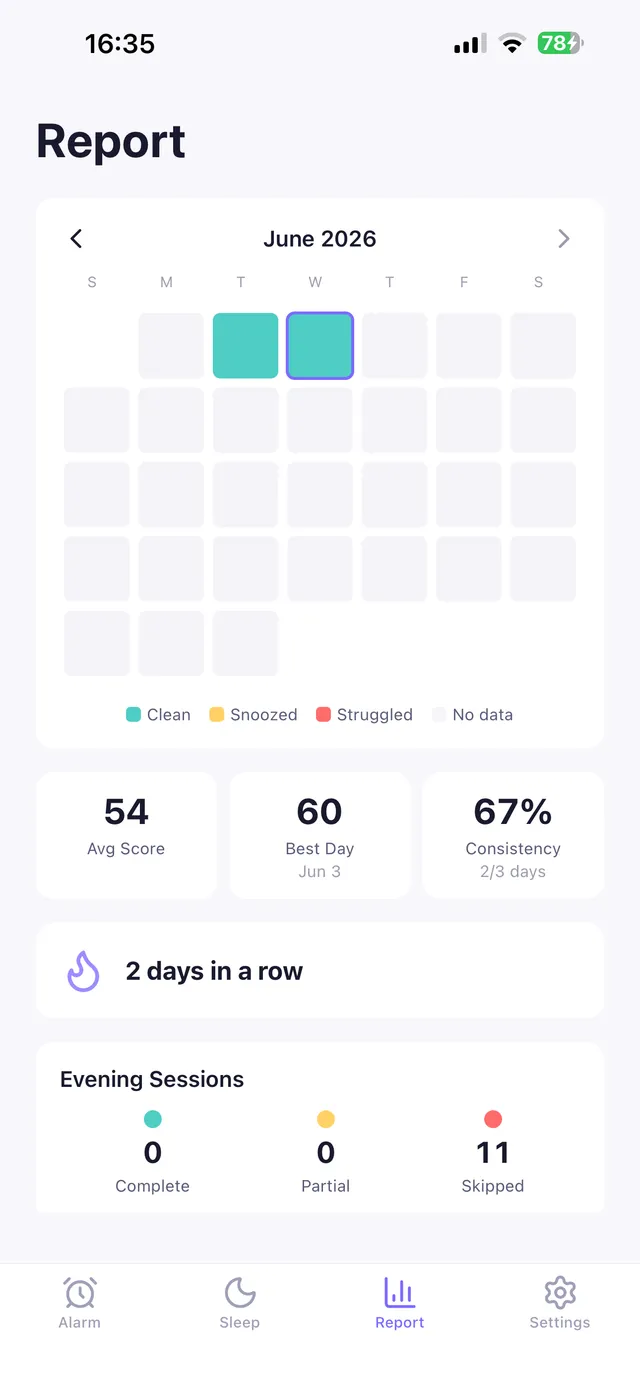
OwlRoutine is built to stop debt building in the first place: bedtime reminders and a guided wind-down to get you to bed on time, a consistent mission alarm to anchor your mornings, and weekly charts and a heatmap that make a week of short nights visible before it becomes a habit.
This article is general information, not medical advice.
Frequently asked questions
What is sleep debt?
Sleep debt is the accumulated difference between the sleep you need and the sleep you actually get. For example, sleeping 6 hours when you need 7.5 creates 1.5 hours of debt each night.
Can you catch up on sleep on weekends?
Partly. Weekend lie-ins reduce sleepiness but don't fully restore attention after a week of short nights, and big lie-ins shift your body clock. Going to bed earlier is a better way to repay debt.
How long does it take to recover from sleep debt?
A few nights of extra sleep help with short-term debt. Chronic sleep debt can take several weeks of consistent, sufficient sleep to recover from.
How do I know if I have sleep debt?
Common signs include falling asleep within minutes every night, relying on caffeine, sleeping much longer on free days, irritability and nodding off in passive situations.
Wake up for real. Wind down for good.
OwlRoutine is a sleep-cycle alarm that makes mornings actually stick — with a guided wind-down, dismiss missions, sleep scores and rewards. Available on iPhone and Android.