Sunrise Alarm Clocks: Do Wake-Up Lights Actually Work? (What to Look For)

Waking up to a pitch-black room and a blaring alarm is a rough way to start the day. A sunrise alarm clock — also called a wake-up light or dawn simulator — tries to fix that by slowly brightening your room over 20–40 minutes before your alarm, like a sunrise. They're popular gifts and have a loyal following. But do they work, and are they worth it?
The short answer
Sunrise alarm clocks can make waking up feel gentler and easier, especially on dark autumn and winter mornings. Research on dawn simulation suggests benefits for how alert people feel on waking, and it has been studied as a treatment option for seasonal mood problems. They're less helpful for very heavy sleepers, who may need a stronger alarm, and they don't fix a short or irregular night. Look for adjustable brightness and sunrise duration, a backup sound and a warm colour range.
How a sunrise alarm works
Light is the strongest signal your body clock receives. In the final part of the night, rising light through your eyelids helps suppress melatonin and nudges your body toward waking. In summer, the sun does this naturally. In winter — or in a room with blackout curtains — nothing does. A sunrise alarm fills the gap by gradually increasing light, usually from a deep red to a bright warm white, ending at your alarm time.
What the research says
- Studies of dawn simulation have found improvements in subjective alertness and mood on waking compared with waking in darkness.
- Dawn simulation has been studied as a treatment for seasonal affective disorder, with some positive results, though bright light boxes have a stronger evidence base.
- Findings on objective sleep and performance are more mixed.
In short: good for making mornings feel less brutal, not a magic cure.
Who benefits most
| You… | Sunrise alarm helpful? |
|---|---|
| Hate dark winter mornings | Very |
| Use blackout curtains | Very |
| Wake up groggy and grumpy | Often |
| Share a room with an early riser | Maybe (light affects both of you) |
| Are a very heavy sleeper | Only with a strong backup alarm |
| Snooze repeatedly | Not on its own |
If dark mornings are your main problem, see why it's so hard to wake up in winter.
OwlRoutine helps you wind down at night and actually get up in the morning — with a guided wind-down, dismiss missions, and sleep scores. Available on iPhone and Android.


What to look for in a sunrise alarm clock
We don't recommend specific brands, but these features matter:
- Maximum brightness. Brighter lamps have a stronger effect. Look for a clearly stated lux or lumen rating.
- Adjustable sunrise duration — typically 10 to 40 minutes.
- Warm colour progression from red/orange to white, rather than just a dimmer white.
- Backup sound that plays at the end of the sunrise, with adjustable volume.
- Sunset mode for a gradual dimming at bedtime — useful for a wind-down.
- Simple controls you can use half-asleep, and a display that dims fully at night.
- Position. It should be close enough to light up your face — typically on a bedside table.
Sunrise alarm vs phone alarm
| Sunrise alarm | Phone alarm | |
|---|---|---|
| Wakes you gently with light | Yes | No |
| Works for heavy sleepers | Sometimes | With missions, yes |
| Stops snoozing | No | Yes, if snooze is off and a mission is required |
| Tracks habits and streaks | No | App-dependent |
| Keeps phone out of bed | Yes | Only if placed across the room |
Many people use both: the sunrise lamp to make waking gentler, and a phone alarm with a mission as the "you really must get up now" backup. Best alarm apps for heavy sleepers.
Tips for getting the most from a sunrise alarm
- Set it to finish at your wake time and use a 20–30 minute sunrise.
- Keep your wake time consistent — the lamp works best when your body clock expects it. Why consistency matters.
- Get outside light too. Even a bright lamp is far dimmer than daylight.
- Don't let it become snooze time. When the sound goes, get up.
- Use the sunset feature as part of a wind-down routine.
Safety note
If you have an eye condition, bipolar disorder, or take medication that increases light sensitivity, check with a doctor before using bright light therapy devices.
The bottom line
Sunrise alarm clocks make waking up gentler, especially on dark mornings, and many people find them genuinely helpful. They're not a fix for sleep debt or heavy snoozing, though. Pair one with a consistent wake time, outdoor light and a backup alarm that actually gets you out of bed.
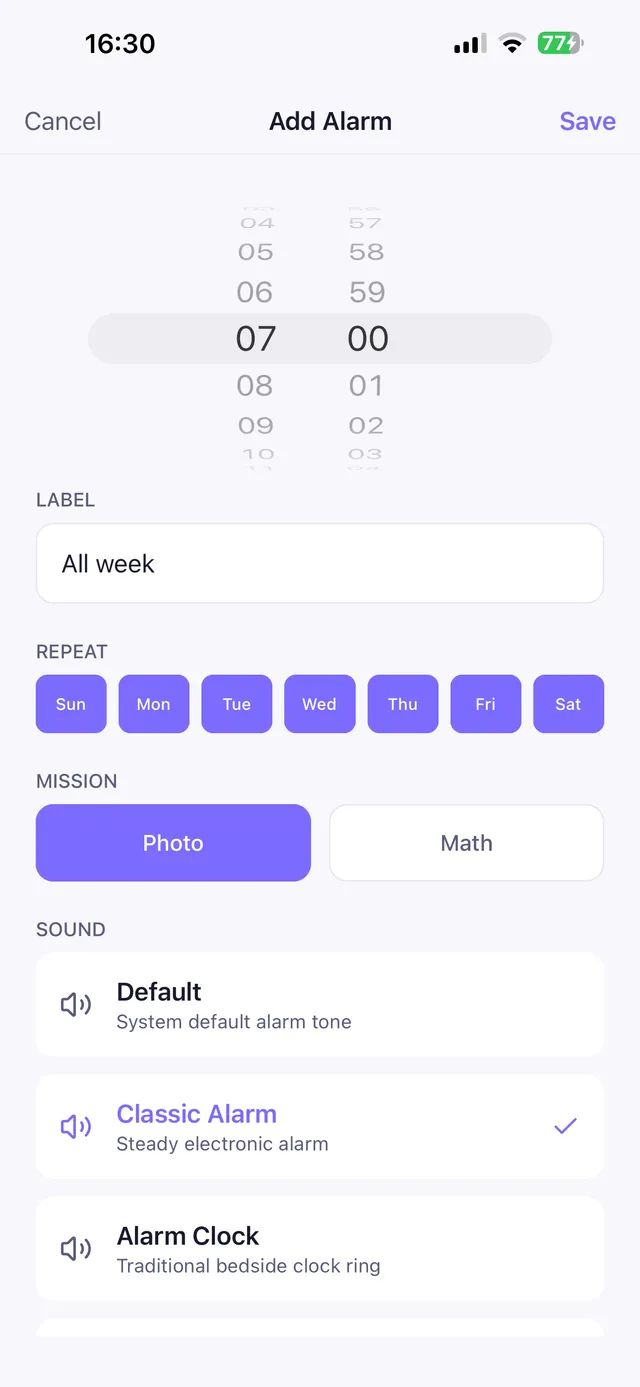
OwlRoutine works well alongside a wake-up light: let the lamp ease you out of sleep, then let OwlRoutine's mission alarm — math, word, typing or bed photo — make sure you get up. On iOS 26+ it uses AlarmKit so it rings even when your phone is on silent.
This article is general information, not medical advice.
Frequently asked questions
Do sunrise alarm clocks work?
They can make waking feel gentler and help alertness on waking, especially on dark mornings. They're less effective on their own for very heavy sleepers or people who snooze repeatedly.
How long should the sunrise last on a wake-up light?
Most people use 20–30 minutes, finishing at their wake time. Many lamps let you choose between about 10 and 40 minutes.
Are sunrise alarms good for seasonal affective disorder?
Dawn simulation has been studied for seasonal mood problems with some positive results, but bright light boxes have stronger evidence. Talk to a doctor if you suspect SAD.
Should I use a sunrise alarm with a phone alarm?
Many people do: the light wakes you gently and a phone alarm with a mission makes sure you actually get up.
Wake up for real. Wind down for good.
OwlRoutine is a sleep-cycle alarm that makes mornings actually stick — with a guided wind-down, dismiss missions, sleep scores and rewards. Available on iPhone and Android.