How to Get Out of Bed When You Don't Want To: 10 Tricks for Mornings That Feel Impossible

The alarm goes off. You're awake enough to know you should get up, and every part of you says "no". It's warm, it's comfortable, and whatever's waiting for you out there can surely wait ten more minutes. If you're wondering how to get out of bed when you don't want to, the answer isn't finding more willpower at 6:45am — it's making the decision before you're lying there.
The short answer
To get out of bed when you don't want to: make the first move automatic (feet on the floor on a count of five), remove snooze, use an alarm that requires getting up or thinking, turn the lights on immediately, and have a small, pleasant first task waiting. Long term, enough sleep and a consistent wake time make mornings much less of a fight. If you regularly can't face getting up at all, it may be a sign of low mood worth talking to someone about.
Why it's so hard
- You're in sleep inertia. For the first 15–30 minutes after waking, the parts of your brain responsible for decisions and self-control are still coming online. Sleep inertia explained.
- The bed is comfortable and the room isn't. Especially on dark, cold mornings. Why winter mornings are harder.
- You're short on sleep. Sleep debt makes everything feel harder. Sleep debt explained.
- The day ahead feels heavy. Stress, dread or low mood make staying in bed feel like protection.
10 tricks to get out of bed
| Trick | Works because |
|---|---|
| Decide the night before | Removes the morning negotiation |
| 5-second countdown | Interrupts overthinking |
| No snooze | One decision instead of five |
| Mission alarm | Forces your brain online |
| Phone across the room | You're already standing |
| Lights on immediately | Signals "day" to your body |
| Warm room, dressing gown ready | Removes the cold shock |
| Tiny first task | Momentum |
| Something to look forward to | Reason beats willpower |
| Consistent wake time | Your body starts waking itself |
1. Decide the night before
Tell yourself before bed: "When the alarm goes, I sit up." Rehearse it once. You're turning a morning decision into a plan made by the more rational evening version of you.
2. Count down from five
A popular trick: when the alarm rings, count "5, 4, 3, 2, 1" and move on "1". There's no magic in the numbers — it simply interrupts the stream of excuses and gives you a trigger to act before your brain argues back.
3. Remove snooze entirely
Snooze turns one hard decision into five. It also makes you groggier by fragmenting your last sleep cycle. Why snoozing backfires.
4. Use an alarm that demands something
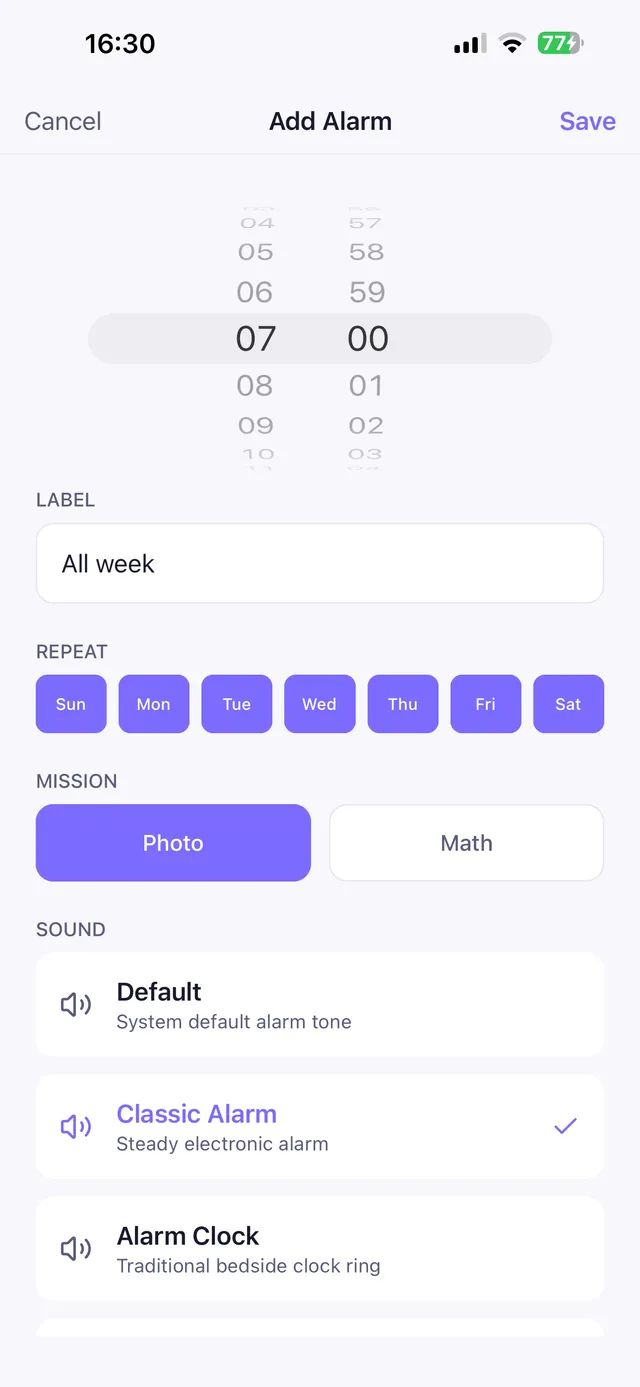
A mission — solve a math problem, type a phrase, take a photo of your bathroom sink — pulls your brain out of the fog. By the time it's done, the hardest bit is over. A photo mission somewhere outside the bedroom is especially effective.
5. Put the phone out of reach
If you have to stand up to turn the alarm off, you're already halfway there.
OwlRoutine helps you wind down at night and actually get up in the morning — with a guided wind-down, dismiss missions, and sleep scores. Available on iPhone and Android.


6. Turn on the lights
Bright light straight away suppresses melatonin and makes your body feel like it's actually morning. Open the curtains or switch on the main light before you think about it.
7. Make leaving the duvet less brutal
Set the heating to come on 20 minutes early, or keep a dressing gown and slippers right by the bed. Remove the shock and half the resistance goes.
8. Have a tiny first task
Drink a glass of water, make the bed, wash your face. Small, physical, and easy — a win that builds momentum. A simple morning routine builds on exactly this.
9. Give yourself something to look forward to
Good coffee, a favourite podcast, ten quiet minutes before anyone else is up, a morning walk. "I get to" is much more motivating than "I have to".
10. Fix the schedule, not just the morning
A consistent wake time, seven days a week, trains your body to start waking before the alarm. Add enough sleep and a wind-down routine and many "I can't get up" mornings simply stop happening. How to fix your sleep schedule.
When it's more than a tough morning
If you regularly can't get out of bed — not because you're tired, but because you can't face the day — or you notice persistent low mood, loss of interest in things you used to enjoy, changes in appetite or sleeping much more than usual, please talk to a doctor or someone you trust. These can be signs of depression, which is common and treatable. You don't have to fix it with an alarm.
If you're in crisis or thinking about harming yourself, contact your local emergency number or a crisis line right away.
The bottom line
Getting out of bed when you don't want to is hard because you're asking a half-asleep brain to make a tough decision. So don't. Decide the night before, remove snooze, use an alarm that demands you get up or think, turn on the lights, and have something small and pleasant waiting. Then fix the schedule so tomorrow is easier.
OwlRoutine takes the decision out of your hands: an alarm that won't stop until you complete a math, word, typing or bed-photo mission, snooze you can switch off, simple morning suggestions like water and sunlight, and streaks and rewards that give your future self a reason to keep going.
This article is general information, not medical advice.
Frequently asked questions
How do I force myself to get out of bed?
Decide the night before, remove snooze, use an alarm that requires you to get up or solve something, turn on bright light immediately and have a small first task ready.
Why is it so hard to get out of bed in the morning?
Sleep inertia makes decisions harder right after waking, and sleep debt, dark or cold mornings and stress about the day make it worse.
Does the 5-second rule work for getting out of bed?
Many people find counting down from five and moving on one helpful because it interrupts the stream of excuses and gives a clear trigger to act.
When is not wanting to get out of bed a sign of something more?
If it happens regularly and comes with persistent low mood, loss of interest, appetite changes or oversleeping, talk to a doctor — it can be a sign of depression, which is treatable.
Wake up for real. Wind down for good.
OwlRoutine is a sleep-cycle alarm that makes mornings actually stick — with a guided wind-down, dismiss missions, sleep scores and rewards. Available on iPhone and Android.