How to Fix Your Sleep Schedule: A 14-Day Reset That Actually Sticks

Maybe it was a holiday, a deadline, a new baby, a gaming binge or just months of drifting later and later. Either way, you now fall asleep at 2am, wake at 10, and feel terrible whenever life requires you to be up at 7. Here's how to fix your sleep schedule in a way that sticks — without the "just stay up all night and crash early" trick that almost never works.
The short answer
To fix your sleep schedule: choose a target wake time and hold it every day, get bright light within 30 minutes of waking, move your bedtime earlier in 15–30 minute steps every couple of days, keep evenings dim and screen-light, and don't sleep in on weekends. Most people can shift their schedule by 2–3 hours within about two weeks.
Why your schedule drifted late
Your body clock (circadian rhythm) naturally runs slightly longer than 24 hours for most people, so without strong daily cues it tends to drift later. Light is the main cue that keeps it anchored. Evening light — especially from screens and bright overhead lights — pushes your clock later; morning light pulls it earlier. If you sleep through the morning and spend late nights on a bright phone, you're pushing in only one direction.
On top of that, sleeping in "to catch up" moves your wake time, and the wake time is what sets everything else. Sleep consistency matters more than extra hours for exactly this reason.
Why the all-nighter reset rarely works
The popular hack is to stay awake for a full day and crash at a normal bedtime. It sometimes works for one night. But you're resetting with huge sleep debt, the next morning's wake-up is brutal, and the first late night or lie-in pulls you straight back. It's also genuinely risky if you're driving or working the next day. A gradual shift is slower on paper and much faster in practice because it actually holds.
The 14-day reset plan
| Days | Wake time | Target bedtime | Focus |
|---|---|---|---|
| 1–2 | Target wake time (e.g. 07:30) | Whenever sleepy, but not before 00:30 | Hold the wake time no matter what |
| 3–4 | 07:30 | 00:15 | Morning light 10–20 min |
| 5–6 | 07:30 | 23:45 | Screens down 60 min before bed |
| 7–8 | 07:30 | 23:30 | 30-min wind-down routine |
| 9–10 | 07:30 | 23:15 | No caffeine after early afternoon |
| 11–12 | 07:30 | 23:00 | Keep weekends identical |
| 13–14 | 07:30 | 23:00 | Review: are you falling asleep within ~20 min? |
Adjust the numbers to your life, but keep the logic: wake time fixed from day one, bedtime creeps earlier.
Step 1: Pick a realistic wake time and don't move it
Choose the time you actually need to be up on weekdays. Then keep it on Saturday and Sunday too. Yes, the first few days you'll be short on sleep. That sleep pressure is exactly what makes you sleepy earlier the next night — it's working for you.
If mornings are the part you fail at, remove the negotiation: an alarm with a mission (math, typing, photo) is much harder to silence on autopilot. How to stop hitting snooze covers why the first alarm has to be the only alarm.
Step 2: Get light early — as early as possible
Within 30 minutes of waking, get bright light: outdoors if possible, even on cloudy days, or next to a bright window. This is the single strongest signal to move your clock earlier. Ten to twenty minutes is a good target.
Step 3: Make evenings dim
In the last two hours before bed, switch to lamps instead of overhead lights and cut screen brightness. The goal is to let melatonin rise on time. Night mode helps a little; putting the phone down helps a lot.
Step 4: Move bedtime in small steps
Every two days, aim to get into bed 15 minutes earlier. Don't force yourself into bed wide awake — lying awake for an hour trains your brain to associate bed with frustration. If you can't sleep after about 20 minutes, get up, do something calm in dim light, and return when sleepy.
OwlRoutine helps you wind down at night and actually get up in the morning — with a guided wind-down, dismiss missions, and sleep scores. Available on iPhone and Android.


Step 5: Add a wind-down you actually follow
A consistent routine is a signal your brain learns quickly. Twenty to thirty minutes of the same calm activities — reading, stretching, a shower, journaling — tells your body sleep is coming. Here's how to build one.
Step 6: Watch the hidden schedule wreckers
- Caffeine in the afternoon can still be active at bedtime.
- Late, heavy meals and alcohol fragment sleep, even if they help you drift off.
- Long afternoon naps reduce sleep pressure. Keep naps under 20 minutes and before mid-afternoon.
- Weekend lie-ins of two or more hours effectively give you jet lag every Monday.
How long does it take to fix a sleep schedule?
A rough rule: your body clock can shift about an hour a day at most with strong light cues, and in practice closer to 15–30 minutes per day if you're easing in. Moving 2–3 hours earlier usually takes one to two weeks. The first three to five days feel the worst; that's normal and doesn't mean it isn't working.
How to keep it fixed
- Keep the wake time within about an hour on weekends.
- Protect morning light as a daily habit.
- Treat late nights as exceptions, and return to your normal wake time the next morning instead of sleeping in.
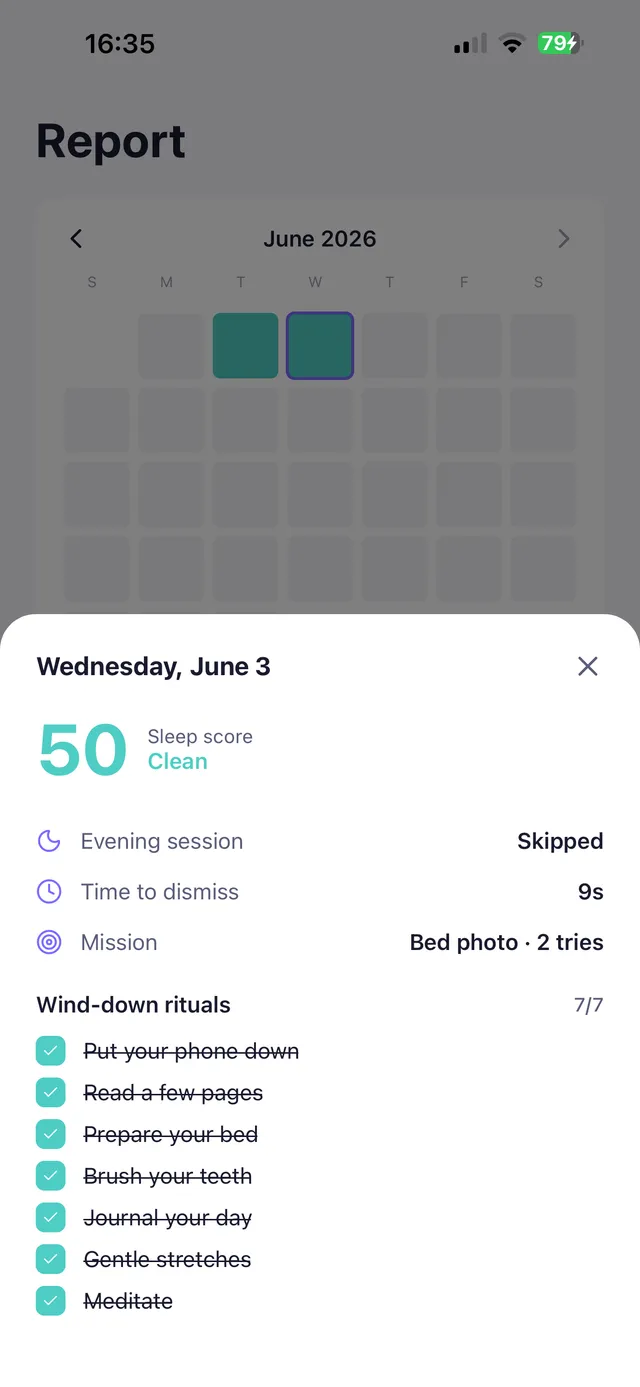
- Track it. A simple record of bedtimes and wake times makes drift visible before it becomes a new "normal".
The bottom line
Fixing your sleep schedule is a wake-time project, not a bedtime project. Lock your wake time, get morning light, dim your evenings and move bedtime earlier in small steps. Give it two weeks without weekend lie-ins, and your "impossible" early mornings start to feel ordinary.
OwlRoutine is designed around exactly this reset: fixed alarms with missions so the wake time holds, a guided wind-down with bedtime reminders to make the earlier bedtime realistic, and a heatmap and streaks so you can see the new schedule settling in.
This article is general information, not medical advice. If you can't shift your schedule despite consistent effort, a doctor can check for circadian rhythm disorders such as delayed sleep phase.
Frequently asked questions
How do I fix my sleep schedule fast?
Hold a fixed wake time from day one, get bright light within 30 minutes of waking, dim your evenings, and move your bedtime earlier by 15–30 minutes every couple of days. Most people shift 2–3 hours within one to two weeks.
Should I pull an all-nighter to reset my sleep schedule?
It rarely works long term. You reset with heavy sleep debt, the next day is risky and exhausting, and one lie-in usually undoes it. A gradual shift is more reliable.
Can I sleep in on weekends while fixing my sleep schedule?
Try to keep your wake time within about an hour of your weekday time. Big weekend lie-ins shift your body clock later and make Monday feel like jet lag.
What if I can't fall asleep at my new bedtime?
Don't lie in bed awake for long. Get up after about 20 minutes, do something calm in dim light, and go back when sleepy. Keep the wake time fixed — that's what makes you sleepier earlier the next night.
Wake up for real. Wind down for good.
OwlRoutine is a sleep-cycle alarm that makes mornings actually stick — with a guided wind-down, dismiss missions, sleep scores and rewards. Available on iPhone and Android.