Revenge Bedtime Procrastination: Why You Stay Up Late on Purpose (and How to Stop)

It's 12:40am. You're exhausted, you know you have to be up at 7, and you're still on your phone. Not because you can't sleep — because this is the only time all day that feels like yours. That's revenge bedtime procrastination: delaying sleep to reclaim personal time the day didn't give you. It's incredibly common, it's not a character flaw, and it's very fixable once you stop treating it as a willpower problem.
The short answer
Revenge bedtime procrastination happens when your days are packed with obligations and the late evening is the only unscheduled time left. You "take revenge" on the day by staying up, even though you'll pay for it tomorrow. The fix isn't forcing yourself to bed; it's moving some of that free time earlier, making the transition to bed easier, and replacing the scroll with something that actually feels restorative.
Where the term comes from
The idea of "bedtime procrastination" was described by researchers in the Netherlands in 2014 as going to bed later than intended without a good external reason. The "revenge" version took off online around 2020, from a Chinese phrase describing workers with long hours who stayed up late to get back some sense of control over their time. It stuck because so many people recognised themselves in it.
Why it happens
- Your day has no margin. Work, commuting, caregiving, chores. If the only unclaimed hours are 10pm–1am, your brain treats them as precious.
- Evening self-control is at its lowest. After a long day, the pull of "one more episode" beats the abstract benefit of sleep.
- Phones are built to be endless. Infinite feeds and autoplay remove the natural stopping points that books or TV schedules used to have.
- Bed feels like the end of your freedom. Going to bed means tomorrow's obligations start sooner.
- Low mood or stress. For some people, delaying sleep is a way of avoiding the next day.
The real cost
Staying up late isn't free time — it's borrowed from tomorrow. Short sleep is linked to worse mood, weaker focus, more cravings and poorer decision-making, which makes the next day feel even more draining, which makes the next evening's "revenge" feel even more deserved. It's a loop.
| Night | Bedtime | Sleep | Next-day effect |
|---|---|---|---|
| Monday | 00:45 | ~6h | Groggy, extra coffee, snoozed twice |
| Tuesday | 01:15 | ~5.5h | Low focus, skipped workout |
| Wednesday | 01:30 | ~5h | Irritable, "I deserve my evening" |
| Thursday | 00:30 | ~6h | Sleep debt piling up |
If that table looks familiar, the problem isn't the evenings; it's that the whole week is running on a deficit. Sleep debt is real and cumulative, even if you "catch up" on weekends.
How to stop revenge bedtime procrastination
1. Schedule "me time" earlier — on purpose
If your brain is fighting for free time, give it some before 10pm. Even 30–45 minutes that are genuinely yours — a walk, a game, a show, a hobby — reduces the sense that the night is the only chance you get. Put it in your calendar like any other appointment.
2. Set a "screens down" time, not just a bedtime
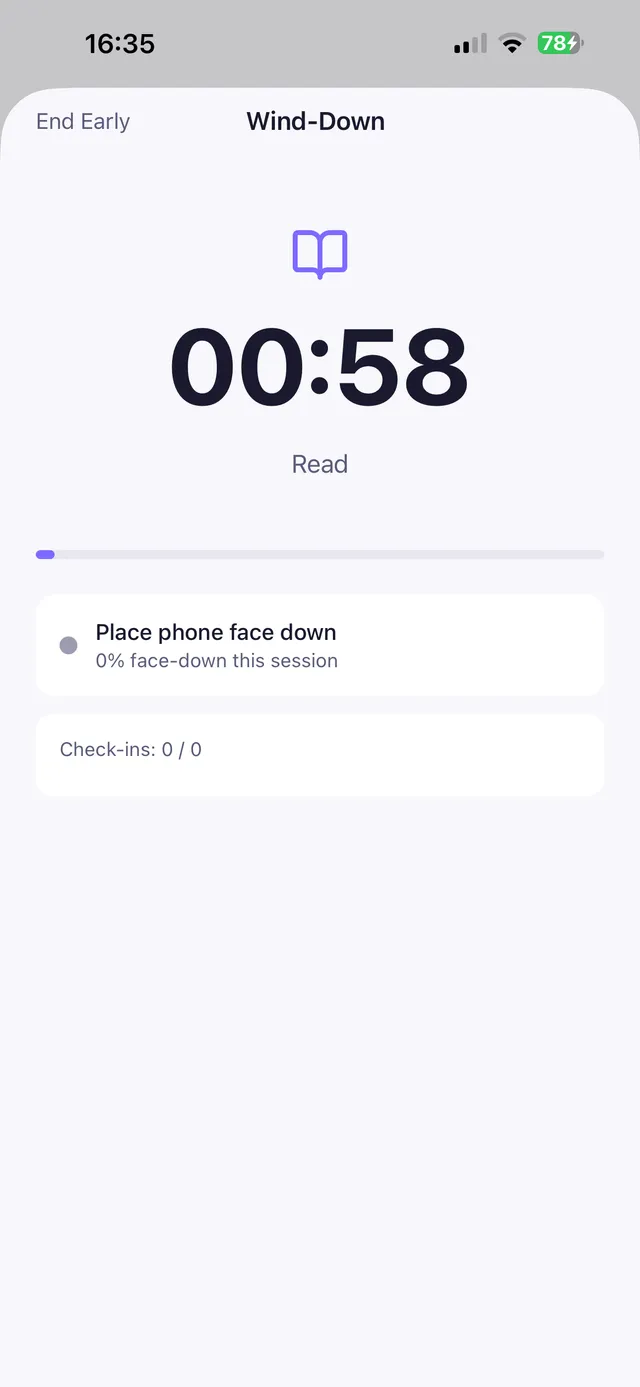
A bedtime is easy to ignore; a transition point is easier to keep. Pick a time — say 10:30pm — when the phone goes face-down and charges away from the bed. A simple wind-down routine works because it creates a clear off-ramp between "evening" and "bed".
3. Make the wind-down enjoyable, not punishing
If going to bed feels like surrendering, you'll resist it. Make the last 30 minutes something you look forward to: a book you're into, a hot shower, journaling, stretching, a podcast with a sleep timer. The goal is to replace scrolling with a reward, not with nothing.
4. Remove the infinite scroll from the bedroom
Charge your phone across the room or outside the bedroom. Use an alarm that doesn't require the phone to be within arm's reach at night. If you must keep it close, turn on grayscale and a Focus mode that hides social apps after a set time.
OwlRoutine helps you wind down at night and actually get up in the morning — with a guided wind-down, dismiss missions, and sleep scores. Available on iPhone and Android.
5. Anchor your wake time
It sounds backwards, but a fixed wake time is the strongest lever on bedtime. If you get up at the same time every day, you'll naturally feel sleepy earlier within a week or two. Sleeping in to compensate for late nights keeps the whole cycle going.
6. Track it so it becomes visible
Revenge bedtime procrastination thrives because each night feels like an exception. Seeing a week of 1am bedtimes on a chart is sobering in a way that "I'll go to bed earlier tomorrow" never is. Track bedtimes and how you felt the next day.
7. Look at the daytime, not just the night
If your day is genuinely overloaded, no bedtime trick will fully fix it. Is there anything you can drop, delegate or batch? Protecting one or two evenings a week for yourself often reduces the urge to steal hours from every night.
When to get help
If staying up late is tied to anxiety, low mood, or dread about the next day, or if you lie awake unable to sleep even when you try, speak to a doctor or mental health professional. Insomnia and mood problems are treatable, and CBT for insomnia (CBT-I) has strong evidence behind it.
The bottom line
Revenge bedtime procrastination is a reasonable response to a day with no room in it — but it's a bad trade. Move some free time earlier, create a clear screens-down moment, make the wind-down something you enjoy, and anchor your wake time. Within a couple of weeks, your evenings stop feeling like a fight.
That's exactly what OwlRoutine's evening side is for. A guided wind-down session (30 minutes by default) uses the phone's motion sensor to notice whether it stays face-down, and each night is graded as completed, partial or failed. A completed wind-down earns you an easier mission on tomorrow's alarm — a small, concrete reward for putting the phone down.
This article is general information, not medical advice.
Frequently asked questions
What is revenge bedtime procrastination?
It's deliberately staying up late — often on your phone — to reclaim personal time you didn't get during the day, even though you know you'll be tired the next morning.
Why do I stay up late when I'm tired?
Usually because the late evening is the only time that feels like yours, your self-control is lowest at night, and phones offer endless content with no natural stopping point.
How do I stop revenge bedtime procrastination?
Schedule personal time earlier in the evening, set a screens-down time, make your wind-down enjoyable, keep your phone out of reach and hold a consistent wake time.
Is revenge bedtime procrastination a sleep disorder?
No, it's a behaviour pattern rather than a diagnosis. But if you can't fall asleep even when you try, or it's linked to anxiety or low mood, talk to a doctor.
Wake up for real. Wind down for good.
OwlRoutine is a sleep-cycle alarm that makes mornings actually stick — with a guided wind-down, dismiss missions, sleep scores and rewards. Available on iPhone and Android.