Why Do I Sleep Through My Alarm? 9 Real Reasons (and the Fix for Each)
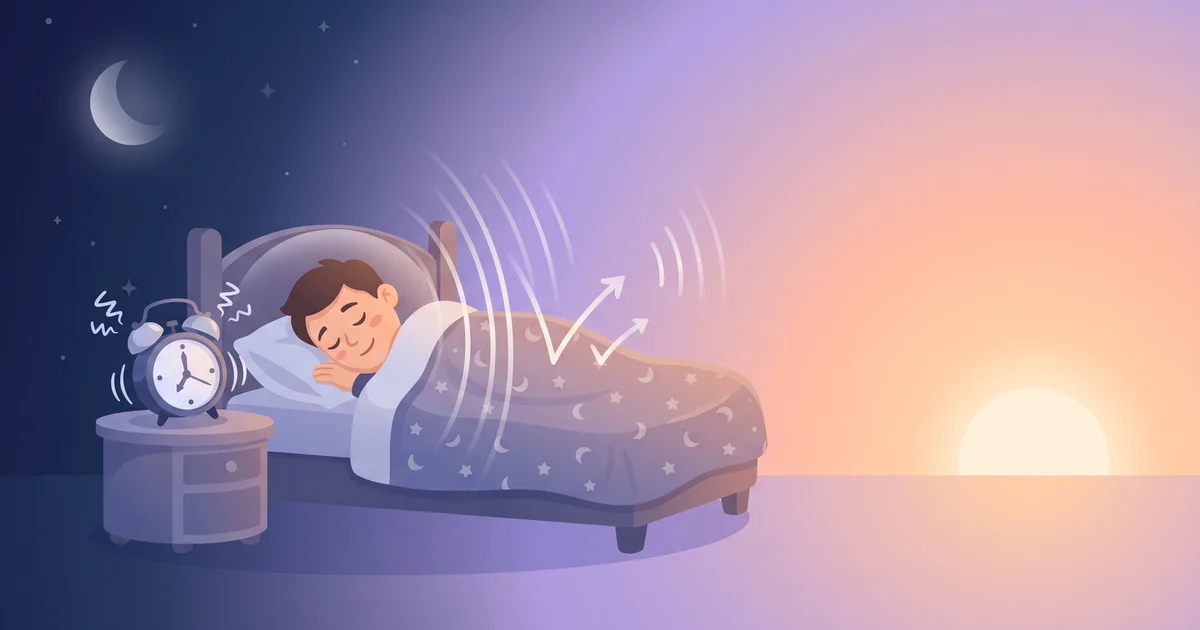
You set the alarm. You're sure you did. And yet you wake up at 9:12 with no memory of it ringing — or, worse, with a vague memory of turning it off. If you keep asking "why do I sleep through my alarm?", the good news is that the answer is almost never "because you're lazy". There are a handful of very specific causes, and each one has a fix.
The short answer
Most people sleep through alarms because of sleep debt, an alarm that lands in deep sleep, dismissing it on autopilot without becoming conscious, or an alarm that never rang because of silent mode, Focus or a dead battery. Fix your schedule, make the alarm require real thinking to switch off, and test that it rings on silent.
Quick diagnosis
| What happens | Likely cause | Fix |
|---|---|---|
| No memory of the alarm at all | Deep sleep + sleep debt, or it didn't ring | Test alarm on silent; get more sleep; fix wake time |
| You remember turning it off | Autopilot dismissal | Mission alarm; phone out of reach |
| You snooze 5+ times | Snooze habit, sleep inertia | Disable snooze or cap at one |
| Worse on Mondays | Weekend schedule drift | Keep wake time consistent 7 days/week |
| Worse after drinking | Alcohol-fragmented sleep | Stop alcohol earlier |
| Every day, despite 8+ hours | Possible sleep disorder | See a doctor |
1. You're running on sleep debt
When you're short on sleep, your brain prioritises deep sleep and raises the threshold for waking. An alarm that would wake you easily after a good week can be completely ignored after four nights of six hours. Sleep consistency matters more than you'd think — and so does simply sleeping enough.
Fix: Work backwards from your wake time and give yourself at least a 7–9 hour sleep opportunity. If that's not realistic every night, at least avoid stacking several short nights in a row.
2. The alarm lands in deep sleep
Sleep runs in roughly 90-minute cycles. If the alarm hits during deep (N3) sleep — more likely when you're sleep-deprived or your bedtime is irregular — you're far harder to wake and far groggier when you do. Sleep cycles explained covers the stages.
Fix: Keep your bedtime and wake time consistent so your body starts moving into lighter sleep before the alarm.
3. You're dismissing it on autopilot
This is the big one. The motion of reaching for your phone and tapping "stop" can become so automatic that you do it without ever reaching full consciousness. You literally turn the alarm off in your sleep, and you won't remember doing it.
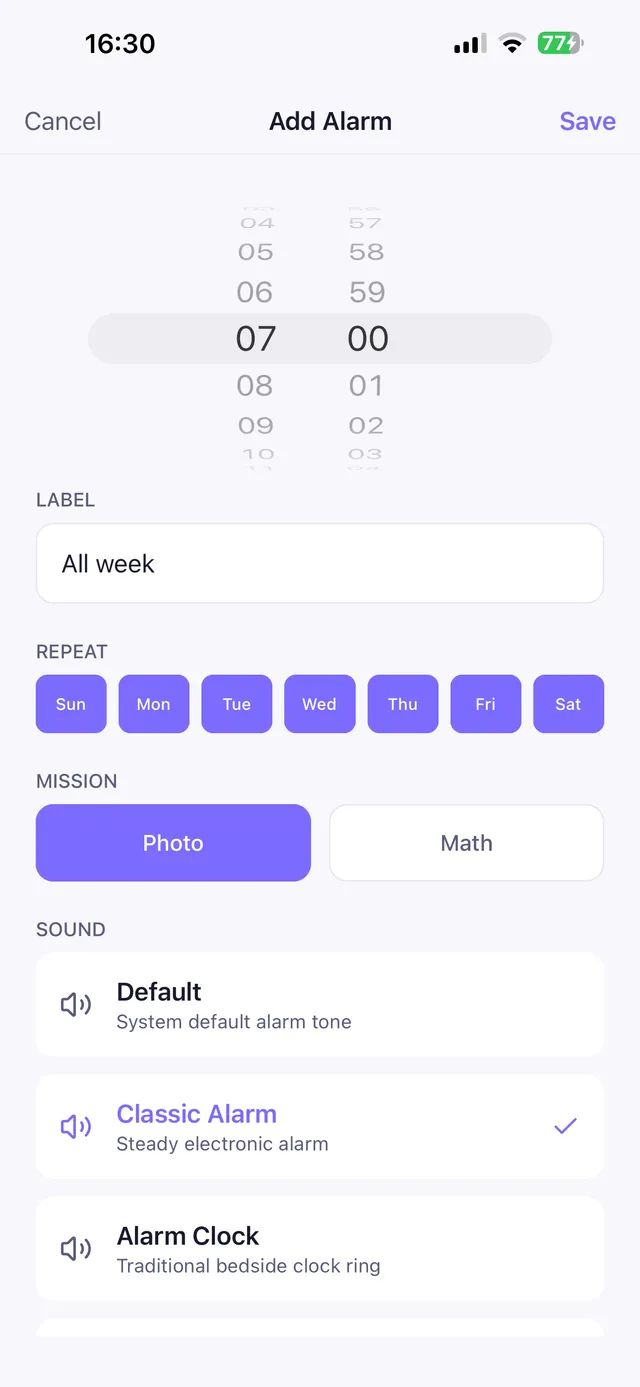
Fix: Make dismissal require your brain, not your thumb. A mission — a short math problem, typing a phrase, taking a photo of a specific place — can't be done on autopilot. By the time you finish, you're awake.
4. Snooze has trained you to ignore the first alarm
If you always snooze, your brain learns that the first alarm doesn't mean anything. Each snooze cycle also restarts sleep inertia, so you feel worse, not better. Why snoozing makes you more tired.
Fix: Turn snooze off, or allow one short snooze only for a transition period.
OwlRoutine helps you wind down at night and actually get up in the morning — with a guided wind-down, dismiss missions, and sleep scores. Available on iPhone and Android.


5. The alarm never actually rang
A surprising number of "I slept through my alarm" mornings are "my alarm didn't go off" mornings:
- Phone on Silent, or a Focus/Do Not Disturb mode muting third-party alarm apps.
- Battery died overnight or the phone restarted for an update.
- The alarm was set for PM instead of AM, or for the wrong day.
- The app was killed by battery optimisation (common on some Android phones).
Fix: Test your alarm with the phone on silent and Focus on. On iPhone, apps that use Apple's AlarmKit (iOS 26+) can ring through Silent and Focus like the Clock app. Charge overnight and keep a backup alarm on another device for important mornings.
6. The sound is too familiar
If you've used the same alarm tone for years, your brain may have learned to filter it out — or you've learned to dismiss it faster than you can wake up.
Fix: Change the tone every few weeks, and try a melodic tone. A 2020 RMIT University study linked melodic alarms to less self-reported grogginess than harsh beeps.
7. Alcohol, late meals or late screens
Alcohol fragments sleep and pushes deep sleep around; late screens and late meals delay sleep onset. Either way, you start the morning with less real rest.
Fix: Stop alcohol and heavy meals about three hours before bed and put the phone down an hour before. The 10-3-2-1-0 rule is an easy framework.
8. Your schedule drifts on weekends
Sleeping in on Saturday and Sunday gives you what researchers call social jet lag. Monday's alarm then lands at what your body thinks is 5am.
Fix: Keep your wake time within about an hour on weekends. How to fix your sleep schedule has a two-week plan.
9. There's an underlying health issue
If you consistently sleep through loud alarms despite 8+ hours of sleep, feel exhausted during the day, snore heavily or wake gasping, speak to a doctor. Sleep apnea, hypersomnia, depression, thyroid problems and certain medications can all make waking extremely difficult. Hearing loss is another overlooked cause — vibrating alarms can help.
The bottom line
Sleeping through your alarm is a systems problem. Make sure the alarm rings (test it on silent), make it impossible to dismiss on autopilot (use a mission), stop snoozing, and fix the schedule so you're not waking from deep sleep with a pile of sleep debt.
OwlRoutine tackles several of these at once. On iOS 26+ it uses AlarmKit so the alarm rings through Silent mode; alarms can require a math, word, typing or bed-photo mission; snooze can be switched off per alarm; and the guided wind-down helps you get the sleep that makes waking easier in the first place.
This article is general information, not medical advice.
Frequently asked questions
Why do I sleep through my alarm?
Common causes are sleep debt, the alarm landing in deep sleep, dismissing it on autopilot, a snooze habit, or the alarm not ringing at all because of silent mode, Focus or a dead battery.
Can you turn off your alarm in your sleep?
Yes. Dismissing an alarm can become a motor habit that happens without full consciousness, so you don't remember it. Alarms that require a mission to dismiss prevent this.
How do I stop sleeping through my alarm?
Test that the alarm rings on silent, use an alarm that requires a mission to dismiss, turn off snooze, keep a consistent wake time and get enough sleep.
When should I see a doctor about sleeping through alarms?
If it happens regularly despite 8+ hours of sleep, or you have loud snoring, gasping, or heavy daytime sleepiness, a doctor can check for sleep apnea or other conditions.
Wake up for real. Wind down for good.
OwlRoutine is a sleep-cycle alarm that makes mornings actually stick — with a guided wind-down, dismiss missions, sleep scores and rewards. Available on iPhone and Android.