Loudest Alarm Clock for Heavy Sleepers: Why Volume Alone Isn't the Answer
If you search "loudest alarm clock," you'll find devices boasting 110-140 decibels — genuinely painful, ambulance-siren-level volume. It's a tempting fix for heavy sleepers, and sometimes it's part of the answer. But volume alone is a blunter tool than it seems, and a lot of very heavy sleepers still sleep through even the loudest alarms, or turn them off with zero memory of it. Here's what actually works.
The short answer
The loudest alarm clocks on the market hit 110+ decibels, comparable to a chainsaw or ambulance siren, and can genuinely help some heavy sleepers. But volume alone has limits: it can be slept through, snoozed unconsciously, or become so unpleasant that it trains dread rather than a reliable habit. The most effective setups for heavy sleepers combine escalating volume, a bed shaker/vibration, and — for the hardest cases — a task-based mission alarm that requires you to actually be awake and functional to turn it off.
How loud is loud enough?
| Decibel level | Comparable to |
|---|---|
| 60-70 dB | Normal conversation |
| 75-85 dB | A typical alarm clock |
| 90-100 dB | A blender or lawnmower |
| 110-120 dB | A chainsaw, or a rock concert |
| 130+ dB | Approaching pain threshold |
Most "extra loud" alarm clocks marketed to heavy sleepers sit in the 110-120 dB range. That's loud enough to wake most people through several closed doors — but "loud enough to physically hear" and "loud enough to actually get you moving" are different things. Sleep researchers note that arousal threshold varies a lot by sleep stage: an alarm during deep sleep may barely register even at high volume, while the same sound during lighter sleep wakes you easily. See sleep cycles explained and why do I sleep through my alarm.
Why volume alone often fails heavy sleepers
- You can be conscious enough to silence it, not conscious enough to remember it. This is one of the most common reports from heavy sleepers — turning off a loud alarm on autopilot and having zero memory the next morning.
- Habituation. The brain adapts to repeated, predictable loud sounds faster than you'd expect, especially if the same tone plays every single morning.
- It doesn't require anything of you. A sound, however loud, can be silenced by a single half-conscious motion. There's no step that forces you to actually be awake.
- It can wake everyone else in the house. Not a small consideration in shared bedrooms or apartments.
OwlRoutine helps you wind down at night and actually get up in the morning — with a guided wind-down, dismiss missions, and sleep scores. Available on iPhone and Android.


What actually helps, in order of effectiveness
1. Escalating volume, not constant volume
An alarm that starts moderate and ramps up over 30-60 seconds mimics your body's natural arousal process better than an immediate blast, and it's less likely to trigger the "slam the button" reflex that constant loud sound does. It also means you're not woken from a dead stop by maximum volume every single morning.
2. Bed shakers and vibration
A vibrating puck placed under your mattress or pillow adds a physical sensation that's harder to sleep through and doesn't rely on hearing at all — useful for very heavy sleepers, deaf or hard-of-hearing users, and shared bedrooms where sound would wake a partner. Full details in vibrating alarm clock.
3. Varied or unpredictable sound
A sound that changes pattern (rather than one flat repeating tone) is harder for the brain to tune out or "sleep through" via habituation. See best alarm sounds to wake up.
4. Task-based mission alarms
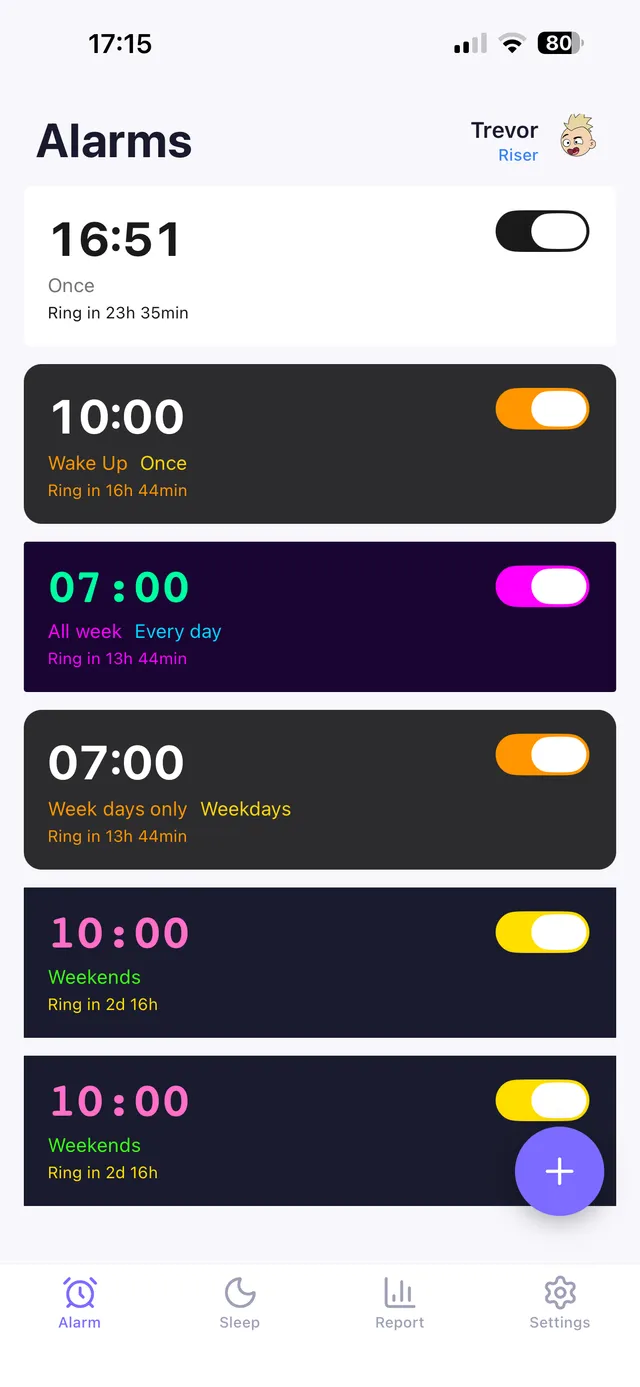
For genuinely hard-to-wake sleepers, this is usually the deciding factor, not volume. An alarm that requires solving a math problem, taking a photo of a specific spot (like the bathroom mirror), typing a phrase, or scanning a QR code cannot be dismissed unconsciously — you have to be cognitively online to complete the task, which means by the time it stops, you're actually awake. OwlRoutine is built around this approach specifically because loud alone so often fails. See alarm that makes you get out of bed and math alarm app.
5. Placement matters as much as volume
Putting the alarm across the room — so silencing it requires standing up — does more for reliable waking than turning the volume up another 10 decibels ever will.
A combined setup for very heavy sleepers
- A bed shaker under the mattress as the first trigger — physical, unmissable.
- Escalating alarm volume from the phone or speaker across the room.
- A mission task to actually stop it — nothing turns off until it's completed.
- A consistent bedtime and wind-down routine so you're not compounding heavy sleep with sleep debt, which makes any alarm harder to hear.
For the fuller picture on this profile of sleeper, see best alarm app for heavy sleepers and how to wake up a heavy sleeper.
The bottom line
A genuinely loud alarm clock (110+ dB) can help, but volume by itself is often not enough for the heaviest sleepers — it can be silenced half-asleep with no memory of it. The more reliable combination is escalating volume or vibration paired with a task that requires you to actually be conscious and functional to turn it off. Loud gets your attention; a mission gets you out of bed.
OwlRoutine takes this approach directly: alarms can escalate in volume and pair with a mission — a math problem, a photo of a specific spot, a typed phrase, or a QR scan — so the alarm doesn't stop until you've proven you're actually up, not just that you can still reach your phone.
Frequently asked questions
What is the loudest alarm clock you can buy?
Most alarm clocks marketed as 'extra loud' for heavy sleepers sit around 110-120 decibels, comparable to a chainsaw. A handful of specialty devices claim higher, but very high volumes approach the pain threshold.
Why do I sleep through even loud alarms?
Arousal threshold varies by sleep stage — an alarm during deep sleep can go unnoticed or be silenced unconsciously even at high volume, because volume alone doesn't require you to be cognitively awake to stop it.
Do vibrating alarms work better than loud ones for heavy sleepers?
For many heavy sleepers, yes, especially combined with sound — the physical sensation is harder to sleep through and doesn't rely on hearing alone.
What's more effective than a louder alarm?
A task-based mission alarm that requires solving a problem, taking a photo, or typing a phrase before it stops tends to be more reliable than volume alone, because it forces genuine cognitive engagement rather than a half-asleep reflex to silence it.
Wake up for real. Wind down for good.
OwlRoutine is a sleep-cycle alarm that makes mornings actually stick — with a guided wind-down, dismiss missions, sleep scores and rewards. Available on iPhone and Android.