The Best Alarm Sound to Wake Up To: Melody vs Beeps, Volume, and What Research Suggests
Most people pick an alarm tone once and never think about it again. But the sound you wake to can affect how quickly you wake up, how groggy you feel, and whether you end up sleeping through it altogether. So what's the best alarm sound to wake up to? Research doesn't point to one perfect tone, but it does give some useful clues.
The short answer
A melodic alarm — a tone with a clear, recognisable melody — may leave you feeling less groggy than a harsh, monotone beep, according to research from RMIT University. The best alarm sound is one that's melodic, rises gradually in volume, isn't one you've learned to ignore, and is loud enough to wake you but not so jarring that it spikes your stress. Change it every few weeks if you notice you're tuning it out.
What the research says
In 2020, researchers at RMIT University in Melbourne published a study in PLOS One surveying people about the alarm sounds they used and how groggy they felt after waking. People who woke to melodic alarm sounds reported less morning grogginess (sleep inertia) than those who used harsh, beeping tones. A follow-up analysis looked at which musical elements seemed to matter, pointing to melody and rhythm.
These studies are based on self-reported data, so they show an association rather than proof. But the direction is consistent with what many people experience: being jolted awake by a buzzing beep feels worse than being pulled out of sleep by something musical.
A plausible explanation is that a harsh sound triggers a stress-like response, while a melody may help your attention engage more smoothly as you wake. Sleep inertia explained.
Alarm sound types compared
| Sound type | Wakes you reliably? | Grogginess | Notes |
|---|---|---|---|
| Harsh beep / buzzer | Usually | Associated with more | Easy to learn to ignore over time |
| Melodic tone | Usually | Associated with less | A good default |
| Your favourite song | Varies | Often pleasant | Can ruin the song for you |
| Nature sounds (birds, waves) | Often too gentle | Low | Better for light sleepers |
| Gradually rising volume | Yes | Lower | Reduces startle |
| Voice or spoken alarm | Varies | Varies | Can be effective for some |
Why your alarm stops working
If you've used the same tone for years, you may find you sleep through it or dismiss it without remembering. Your brain can get very good at filtering familiar sounds — and at performing the automatic "reach and tap" routine without fully waking. Why you sleep through your alarm.
Fix: change your alarm tone every few weeks, and pair it with a mission so the dismiss action requires real thinking. Math alarms explained.
OwlRoutine helps you wind down at night and actually get up in the morning — with a guided wind-down, dismiss missions, and sleep scores. Available on iPhone and Android.


How to choose the best alarm sound
- Start with a melodic tone. Something with a clear, pleasant melody rather than a single repeated beep.
- Use rising volume if your app or device supports it. Starting quietly and building up reduces the startle.
- Make sure it's loud enough. Test it at your normal volume from where you sleep.
- Avoid sounds tied to stress, like your phone's notification or ringtone.
- Be careful with favourite songs. Plenty of people end up hating a song after a month as their alarm.
- Rotate every few weeks to avoid habituation.
- Heavy sleepers: combine sound with a mission, vibration or a bed shaker. How to wake up a heavy sleeper.
Volume and reliability
A beautiful alarm tone is useless if it doesn't play. On iPhone, the built-in Clock alarm follows the Ringtone & Alerts volume, and third-party apps that use AlarmKit (iOS 26+) can ring through Silent mode and Focus. iPhone alarm not going off? covers the settings to check.
Sound isn't everything
The best alarm sound in the world won't make waking easy if the alarm lands in deep sleep after a short night. The bigger levers are:
- A consistent wake time — why it matters.
- Enough sleep — how much you need.
- No snoozing — why it backfires.
- Light straight after waking.
The bottom line
Research suggests melodic alarm sounds are associated with less grogginess than harsh beeps. Choose a melodic tone with rising volume, make sure it's loud enough, change it every few weeks, and don't rely on sound alone — pair it with a consistent schedule and a dismissal that requires real attention.
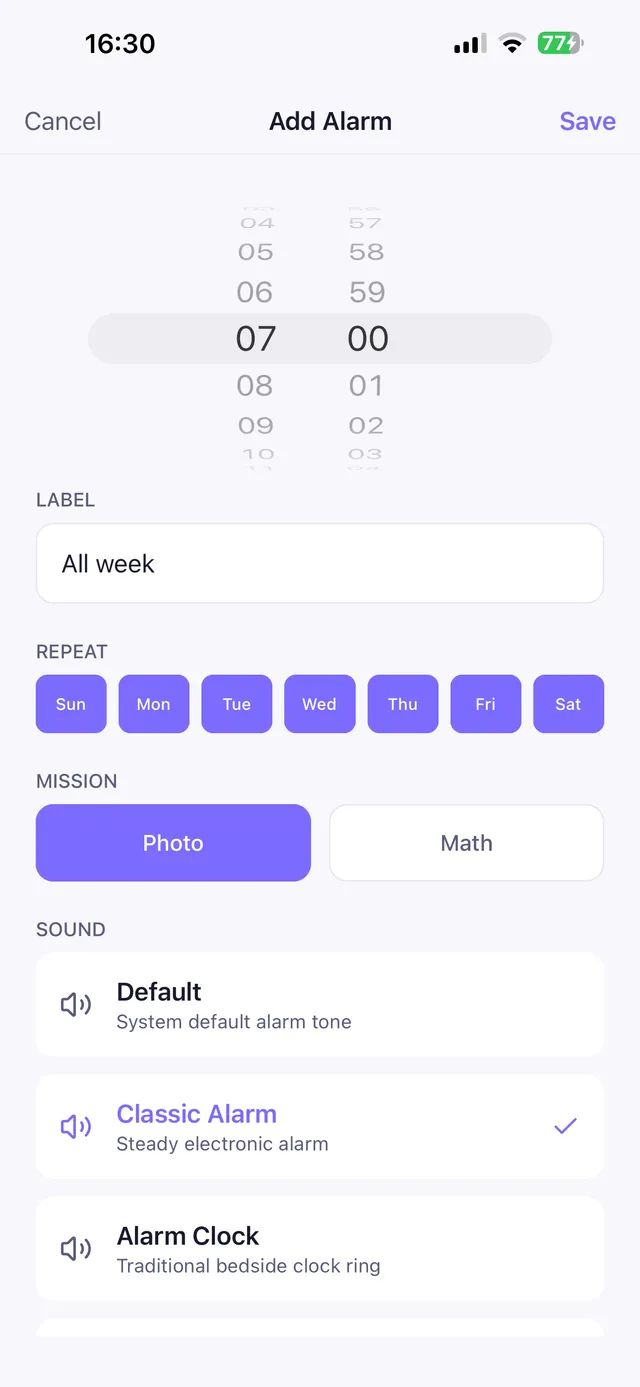
OwlRoutine lets you pick from 14 alarm sounds and a custom background for each alarm, then pairs the sound with a mission — math, word, typing or bed photo — so the alarm doesn't stop until you're genuinely awake.
Frequently asked questions
What is the best alarm sound to wake up to?
Research from RMIT University suggests melodic alarm sounds are associated with less morning grogginess than harsh beeping tones. A melodic tone with gradually rising volume is a good default.
Why do I sleep through my alarm sound?
You may have become habituated to a familiar tone or learned to dismiss it on autopilot. Change the tone every few weeks and use a mission to dismiss it.
Is it bad to wake up to a loud alarm?
A sudden, harsh alarm can feel jarring and may be associated with more grogginess. Rising volume and melodic tones are gentler while still waking you.
Should I use my favourite song as an alarm?
You can, but many people end up disliking the song. A melodic tone you don't mind hearing every day is often a safer choice.
Wake up for real. Wind down for good.
OwlRoutine is a sleep-cycle alarm that makes mornings actually stick — with a guided wind-down, dismiss missions, sleep scores and rewards. Available on iPhone and Android.