Hatch Alarm Clock Alternatives: Sunrise Lights, Apps, and What Actually Works
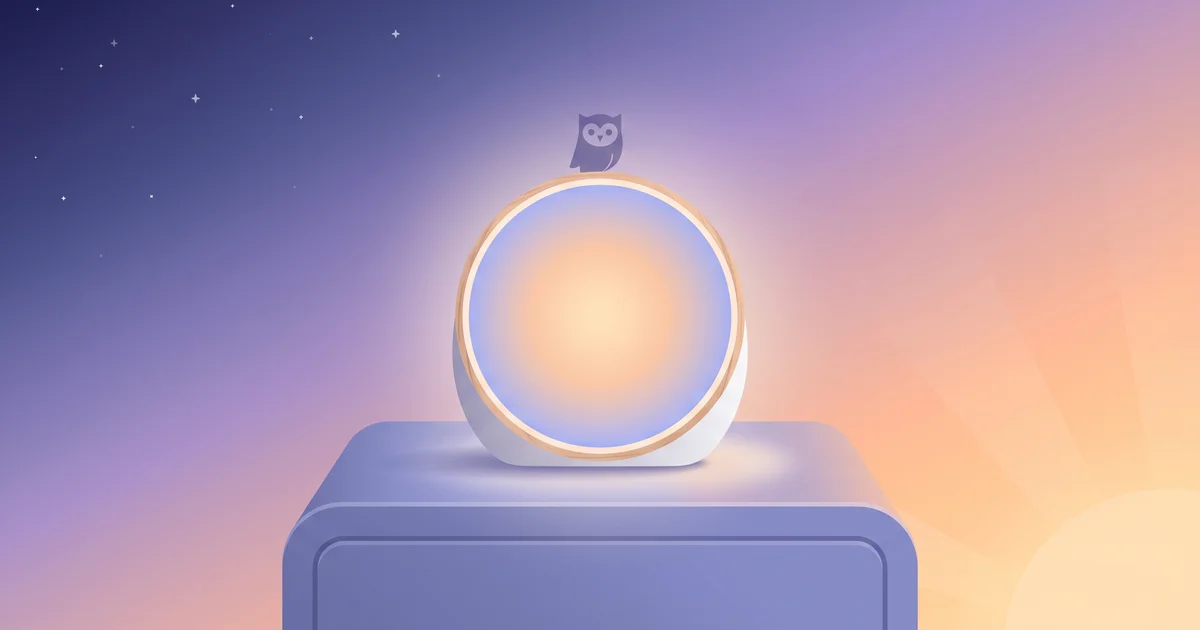
If you've searched for a better way to wake up, you've probably run into Hatch — the sunrise-light alarm clock and sound machine that's become a go-to gift and a genuinely well-designed product. It's a solid device for a lot of people. But it's not the only option, and it's not the right fit for everyone. Here's an honest look at what Hatch does well, where it falls short, and what to consider instead.
The short answer
Hatch-style devices simulate a sunrise and pair it with calming sounds to make waking up feel gentler — great for people who struggle with harsh, abrupt alarms. Their limits are price (roughly $130-170 per device), the fact that they're another gadget to buy, set up, and keep charged, and that gentle light alone doesn't reliably wake heavy sleepers. Alternatives include other standalone sunrise clocks, and phone-based alarm apps like OwlRoutine that combine a wake-up light effect (via your existing lamp or smart bulbs) with sound escalation and task-based alarms that force you fully awake.
What Hatch-style alarms do well
Hatch (and similar sunrise alarm clocks) work by gradually brightening a light in your room over 20-30 minutes before your alarm time, mimicking a natural sunrise. This taps into how your body actually wakes up: light is the main cue your circadian rhythm uses to signal "it's morning." Pair that with a gentle sound instead of a jarring beep, and the whole experience is less of a jolt.
Real strengths:
- Softer wake experience. Less cortisol spike, less grogginess for people who wake reasonably easily anyway.
- Doubles as a sound machine. White noise, nature sounds, and meditations for falling asleep.
- Good for kids' rooms. Many parents use the "time-to-rise" glow as a visual cue for young children — see alarm clock for kids.
- No phone in the bedroom. Appeals to people trying to cut phone before bed habits.
If you already wake up close to your alarm time and just want the experience to feel calmer, a sunrise light genuinely helps. For more on the format generally, see sunrise alarm clock.
Where Hatch-style alarms fall short
Price and commitment
A single unit runs well over $100, and most people put one in every room they wake up in — home, a partner's place, travel. That adds up fast compared to an app already on your phone.
It's still a gentle wake-up tool
The gradual light and soft sound are the whole point — which is exactly the problem if you're someone who sleeps through a phone alarm at full volume. Gentle wake-ups are designed to prevent a jarring start, not to guarantee you actually get up. If you've ever turned off an alarm in your sleep and not remembered it, a sunrise light won't fix that. See why do I sleep through my alarm and best alarm app for heavy sleepers.
One more device to manage
It needs its own charging, its own app, its own place on the nightstand, and it's one more thing that can run out of battery or lose wifi connection on the one morning it matters.
No accountability step
A light turning on doesn't require you to do anything. There's no equivalent of getting out of bed, solving a problem, or proving you're upright — which is often the actual missing piece for people who struggle to wake up.
OwlRoutine helps you wind down at night and actually get up in the morning — with a guided wind-down, dismiss missions, and sleep scores. Available on iPhone and Android.


Alternatives to consider
| Option | Best for | Trade-off |
|---|---|---|
| Hatch or similar sunrise clock | Light sleepers who want a gentler wake | Price, another device, no wake-up guarantee |
| Basic sunrise lamp (budget brands) | Similar effect, lower cost | Build quality and app features vary |
| Smart bulb + automation | People who already have smart lights | Requires setup, see smart home alarm integration |
| Phone alarm app with mission tasks (like OwlRoutine) | Heavy sleepers, snoozers, anyone who needs to actually get up | You need your phone nearby |
| Vibrating alarm / bed shaker | Deaf/hard-of-hearing users, shared bedrooms | No light or sound element |
Smart bulbs as a free-ish alternative
If you already own smart bulbs (Philips Hue, LIFX, or similar), you can set up a sunrise-style automation through your smart home app or through a routine on OwlRoutine at a fraction of the cost of a dedicated device. It's not quite as polished, but it gets most of the benefit. More on pairing this with an alarm app in what is a smart alarm clock.
Task-based alarm apps
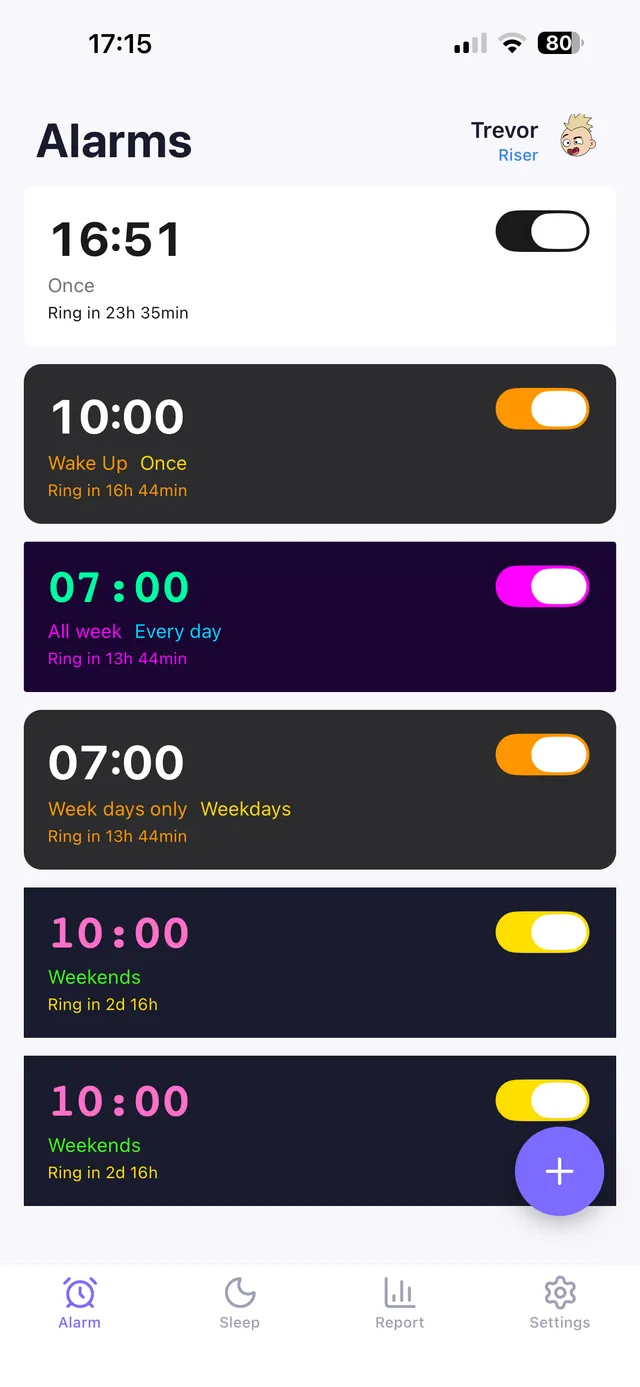
This is the category that solves the problem Hatch doesn't try to solve: actually getting you out of bed. Apps like OwlRoutine use mission alarms — you have to solve a math problem, take a photo of a specific spot (like the bathroom mirror), type a phrase, or scan a QR code before the alarm will stop. It's the opposite philosophy from a gentle sunrise: instead of easing you awake, it makes going back to sleep impossible until you've proven you're up. For people who've tried gentle wake-ups and still oversleep, this combination — plus optional volume escalation — tends to work better. See math alarm app and alarm that makes you get out of bed.
Combining approaches
You don't have to pick just one. A common setup that works well:
- Smart bulb or lamp on a sunrise schedule 20-30 minutes before wake time, for the gentler physiological cue.
- A phone alarm with mission-based tasks as the actual wake-up trigger, so a bright room alone can't be slept through.
- A wind-down routine the night before so you're not starting the morning already behind on sleep — see perfect wind-down routine.
The bottom line
Hatch and similar sunrise alarm clocks are well-built products that genuinely make waking up feel less jarring — if you're someone who wakes up reasonably easily already. They're not designed to solve the harder problem of actually getting a heavy sleeper or chronic snoozer out of bed, and they cost real money to add to every room you sleep in. If gentle light hasn't been enough, pairing (or replacing) it with a task-based phone alarm is the more reliable fix.
OwlRoutine won't replace the ambiance of a sunrise lamp, but it covers the part Hatch-style devices leave open: a mission alarm that won't stop until you've actually completed a task, plus a guided wind-down at night so you're falling asleep on a better schedule in the first place.
Frequently asked questions
Is Hatch worth it?
For people who wake up fairly easily and want a gentler, less jarring start to the day, yes — the sunrise light and sound machine features are well executed. It's less useful for heavy sleepers who need something stronger to actually get up.
What's a cheaper alternative to Hatch?
A basic sunrise lamp, or setting up a sunrise-style automation with smart bulbs you already own, gets much of the same effect for less money.
Does Hatch work for heavy sleepers?
Not reliably on its own. Gentle light and sound are designed to make waking up feel calmer, not to force you awake, so heavy sleepers often still sleep through it or fall back asleep after turning it off.
Can I combine a sunrise light with an alarm app?
Yes. Many people use a sunrise light or smart bulb automation for the gentle wake cue, paired with a task-based phone alarm like OwlRoutine as the actual guarantee that they get up.
Wake up for real. Wind down for good.
OwlRoutine is a sleep-cycle alarm that makes mornings actually stick — with a guided wind-down, dismiss missions, sleep scores and rewards. Available on iPhone and Android.