How to Get More Deep Sleep (and Why It's Worth the Effort)
If you've ever woken up feeling physically restored — not just rested, but genuinely repaired — that's usually deep sleep doing its job. Also called slow-wave sleep, it's the stage most tied to physical recovery, and it's also one of the first things to shrink when your schedule gets messy, your stress goes up, or your bedtime creeps later. The good news is it responds well to a handful of specific, controllable habits.
The short answer
Deep sleep (slow-wave sleep) is the physically restorative stage of sleep — tissue repair, growth hormone release, and immune support happen here. It's concentrated in the first half of the night, so consistent, adequate total sleep matters more than any single trick. The most evidence-backed ways to get more of it are regular exercise (not too close to bedtime), a cool bedroom, a consistent sleep schedule, and limiting alcohol, which is one of the most reliable deep-sleep suppressors.
What deep sleep actually does
Deep sleep is the stage with the slowest, highest-amplitude brain waves — hence "slow-wave sleep." During this stage:
- Growth hormone is released, supporting tissue repair and muscle recovery.
- The immune system gets a boost, with increased production of certain immune cells and cytokines.
- The brain clears metabolic waste more efficiently, including processes linked to clearing beta-amyloid, a protein associated with Alzheimer's disease when it accumulates.
- Blood pressure and heart rate drop to their lowest points of the day.
- It's very hard to wake someone up during this stage — which is also why being woken from deep sleep tends to cause the worst sleep inertia.
For how deep sleep fits alongside light sleep and REM across the night, see sleep cycles explained. If you want the REM-specific deep dive instead, see REM sleep explained.
Why deep sleep happens early in the night
Deep sleep is front-loaded — your longest, deepest slow-wave periods happen in the first two or three sleep cycles, then taper off as the night progresses and REM takes over in the later cycles. This has a practical implication: going to bed late and waking up at a fixed time cuts disproportionately into deep sleep, not just total sleep, because you're trimming from the front of the night where deep sleep is concentrated.
What increases deep sleep
| Factor | Why it helps |
|---|---|
| Regular aerobic exercise | Consistently associated with more slow-wave sleep, especially moderate-to-vigorous exercise earlier in the day |
| A cool bedroom (roughly 60–67°F / 15–19°C) | Core body temperature needs to drop for deep sleep to initiate and sustain |
| A consistent sleep schedule | Deep sleep is more robust when your circadian rhythm is well-anchored |
| Managing stress before bed | High cortisol and a racing mind reduce slow-wave sleep |
| Adequate total sleep time | You can't front-load deep sleep if you're chronically cutting the night short |
What reduces deep sleep
- Alcohol — one of the most reliable deep-sleep suppressors. It can help you fall asleep faster but reduces slow-wave sleep and fragments the second half of the night. Alcohol and sleep.
- Late, intense exercise — vigorous exercise too close to bedtime can raise core temperature and heart rate right when your body needs to be winding down. Exercise and sleep timing.
- Chronic sleep debt — paradoxically, being sleep deprived can increase the proportion of deep sleep your body prioritizes on recovery nights, but it doesn't compensate for the total lost. See sleep debt.
- A warm bedroom. If your body can't cool down, slow-wave sleep suffers.
- Aging. Deep sleep naturally declines with age — this is normal and not necessarily a sign of a problem on its own.
- Sleep apnea and frequent awakenings, which prevent the long, uninterrupted stretches deep sleep needs to build up.
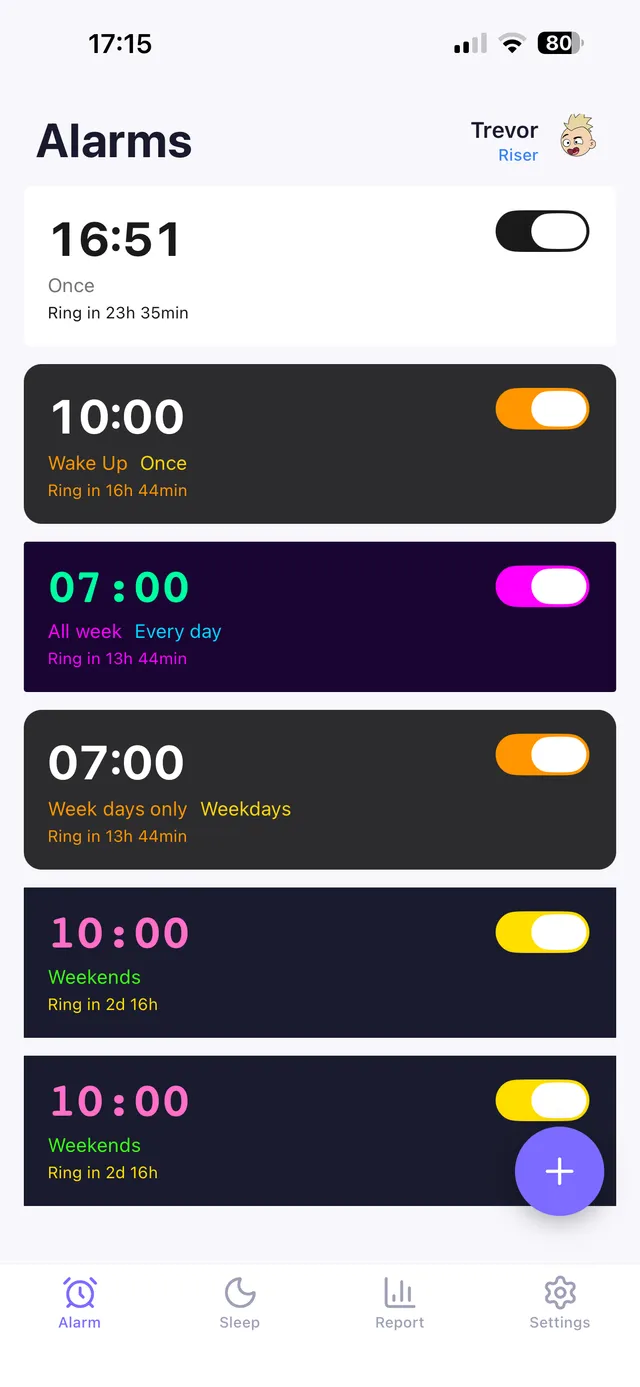
OwlRoutine helps you wind down at night and actually get up in the morning — with a guided wind-down, dismiss missions, and sleep scores. Available on iPhone and Android.


A realistic plan to get more deep sleep
- Protect your total sleep time first. Deep sleep is a percentage of the whole night — you can't optimize your way around simply not sleeping enough.
- Exercise most days, ideally finishing vigorous workouts at least a few hours before bed.
- Cool the room down — this is one of the cheapest, most reliable levers available. Best bedroom temperature for sleep.
- Cut back on alcohol, especially in the hours before bed.
- Keep a consistent bedtime and wake time, including weekends — an erratic schedule undermines the circadian signals that help deep sleep consolidate.
- Address stress before bed with a wind-down routine rather than carrying the day's tension into bed. The perfect wind-down routine.
Realistic expectations
Deep sleep typically makes up 13–23% of total sleep time in healthy adults, and that share naturally declines with age — a 60-year-old will generally have less deep sleep than a 25-year-old, and that's not automatically a red flag. Don't chase a specific percentage from a sleep tracker as if it were a test score; trackers estimate stages indirectly and vary in accuracy. Focus on the habits above and how you feel, not on hitting an arbitrary number. If you're curious how trackers estimate this in the first place, see do sleep trackers work.
The bottom line
Deep sleep is your body's main physical repair window, concentrated in the first half of the night. The most reliable ways to get more of it are unglamorous but effective: exercise regularly, keep the bedroom cool, drink less alcohol, and protect a consistent, adequate sleep schedule. There's no single hack that outperforms simply protecting enough total, uninterrupted sleep.
Since deep sleep is front-loaded and easily cut short by a late bedtime, OwlRoutine's wind-down routine is built to help you actually get to bed on time — breathing exercises and prompts that lower the mental noise keeping you up — so those crucial early sleep cycles aren't the ones getting sacrificed.
This article is general information, not medical advice.
Frequently asked questions
How can I get more deep sleep naturally?
Exercise regularly (but not too close to bedtime), keep your bedroom cool, limit alcohol, and keep a consistent sleep schedule. These are the most evidence-backed ways to support slow-wave sleep.
Why does alcohol reduce deep sleep?
Alcohol can help you fall asleep faster but suppresses slow-wave sleep and fragments the second half of the night as it's metabolized, reducing overall deep sleep quality.
How much deep sleep do I need?
Deep sleep typically makes up about 13-23% of total sleep time in healthy adults, and naturally declines somewhat with age. There's no single ideal number to chase.
Why is deep sleep concentrated early in the night?
Slow-wave sleep is front-loaded into the first few sleep cycles, tapering off as REM sleep takes over later in the night. This means a late bedtime with a fixed wake time disproportionately cuts into deep sleep.
Wake up for real. Wind down for good.
OwlRoutine is a sleep-cycle alarm that makes mornings actually stick — with a guided wind-down, dismiss missions, sleep scores and rewards. Available on iPhone and Android.