REM Sleep Explained: What It Does and Why You Need It
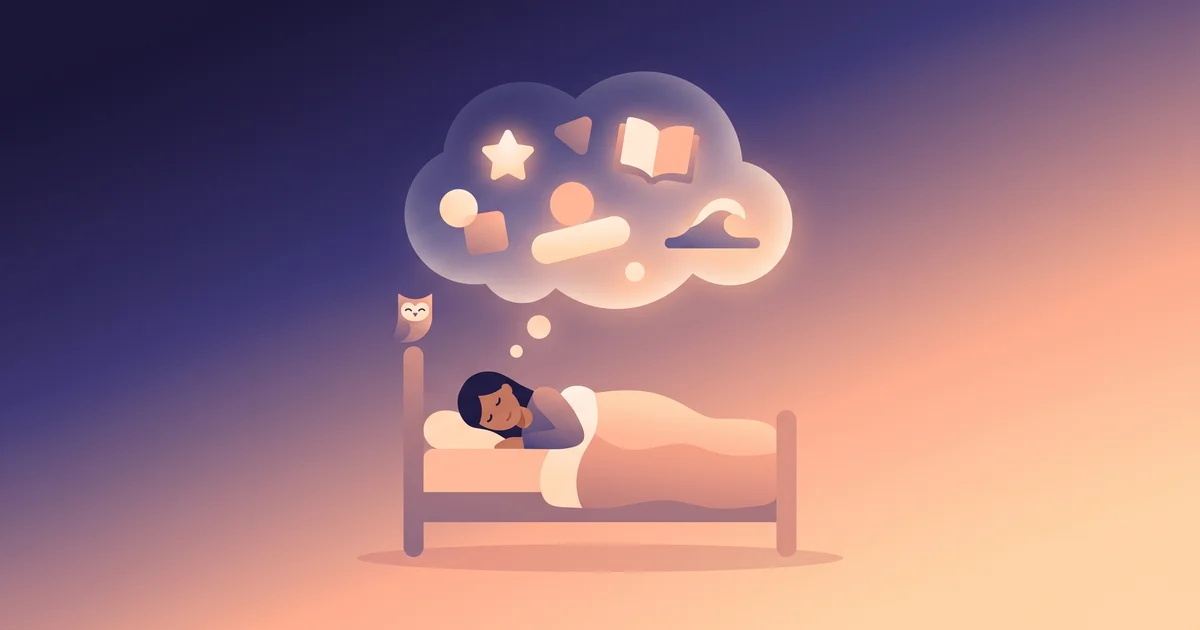
If deep sleep is when your body repairs itself, REM sleep is when your brain does its most interesting work — consolidating memories, processing emotions, and producing the vivid, story-like dreams most people remember. It's named for the Rapid Eye Movements that happen behind closed eyelids during this stage, and it's one of the most active-looking states your brain enters, awake or asleep.
The short answer
REM sleep (Rapid Eye Movement sleep) is a sleep stage marked by fast eye movements, near-total muscle paralysis, and brain activity that resembles wakefulness. It's when most vivid dreaming happens, and it plays a major role in memory consolidation, learning, and emotional processing. Most adults need roughly 20–25% of total sleep time in REM, occurring in increasingly long bursts later in the night — which is why cutting sleep short disproportionately cuts into REM.
What actually happens during REM sleep
REM is genuinely strange from a physiological standpoint. During REM:
- Your eyes dart rapidly beneath closed lids, giving the stage its name.
- Your brain activity looks similar to being awake — fast, low-amplitude waves on an EEG, very different from the slow waves of deep sleep.
- Your body goes into temporary paralysis (called REM atonia), which prevents you from physically acting out dreams.
- Heart rate and breathing become irregular, unlike the slow, steady pattern of deep sleep.
- Most vivid, narrative dreaming happens here, though some dreaming also occurs in other stages.
This is why REM is sometimes called "paradoxical sleep" — your brain looks awake, but your body is more still than at any other point in the night.
Where REM fits in the sleep cycle
Sleep moves through cycles of roughly 90 minutes each, alternating between light sleep, deep sleep, and REM. But REM isn't distributed evenly across the night:
| Time of night | REM characteristics |
|---|---|
| First cycle (~90 min in) | REM periods are short, maybe 10 minutes |
| Middle of the night | REM periods get progressively longer |
| Early morning (last cycles) | REM periods can last 30+ minutes and dominate |
This is why the dreams you remember most vividly tend to happen right before you wake up — you're more likely to wake up during or just after a long REM period in the early morning. For the full breakdown of how all the stages fit together across the night, see sleep cycles explained.
Why REM sleep matters
Memory consolidation
REM sleep appears to play a key role in procedural and emotional memory — skills, habits, and the emotional tone attached to experiences. Deep sleep is more associated with consolidating factual, declarative memory, while REM seems to help integrate emotional and experiential learning.
Emotional processing
Several studies suggest REM sleep helps "defuse" the emotional intensity of difficult experiences overnight, essentially letting you process a hard day without the same emotional charge the next morning. Chronic REM disruption has been linked with worse emotional regulation and mood.
Learning and creativity
REM sleep has been associated with improved problem-solving and creative connections between ideas — the classic experience of "sleeping on it" and waking up with a fresh perspective.
Brain development
REM sleep makes up a much larger share of total sleep in infants (as much as 50%) than in adults, supporting the idea that it plays an important role in brain development.
OwlRoutine helps you wind down at night and actually get up in the morning — with a guided wind-down, dismiss missions, and sleep scores. Available on iPhone and Android.


How much REM sleep do you actually need?
For most adults, roughly 20–25% of total sleep time is spent in REM — so on a typical 8-hour night, that's around 90–120 minutes, usually spread across 4–5 REM periods. There's no single "correct" number; what matters more is getting enough total sleep so your later, REM-heavy cycles aren't cut short.
What disrupts REM sleep
Because REM-heavy cycles happen later in the night, anything that shortens your sleep or wakes you early hits REM hardest:
- Cutting sleep short — if you sleep 6 hours instead of 8, you lose a disproportionate amount of REM, since it's concentrated in the later cycles.
- Alcohol — suppresses REM sleep early in the night, and can cause a rebound of vivid, sometimes disturbing dreams later as it wears off. See alcohol and sleep.
- Certain medications, including some antidepressants, which can suppress or alter REM.
- Sleep apnea and frequent awakenings, which fragment sleep and prevent long, uninterrupted REM periods.
- Stress and irregular schedules, which reduce total and REM sleep alike.
REM sleep vs. deep sleep — what's the difference?
People often lump these together as "good sleep," but they do different jobs. Deep sleep (slow-wave sleep) is more about physical restoration — growth hormone release, tissue repair, immune function. REM is more about mental and emotional processing. You need both, and neither substitutes for the other. If deep sleep is what you're trying to improve specifically, see how to get more deep sleep.
The bottom line
REM sleep is the stage where your brain looks almost awake, your body goes still, and most vivid dreaming happens — and it's central to memory, emotional processing, and learning. It's concentrated in the later part of the night, which means cutting sleep short costs you disproportionately more REM than other stages. Protecting your total sleep time is the single best way to protect it.
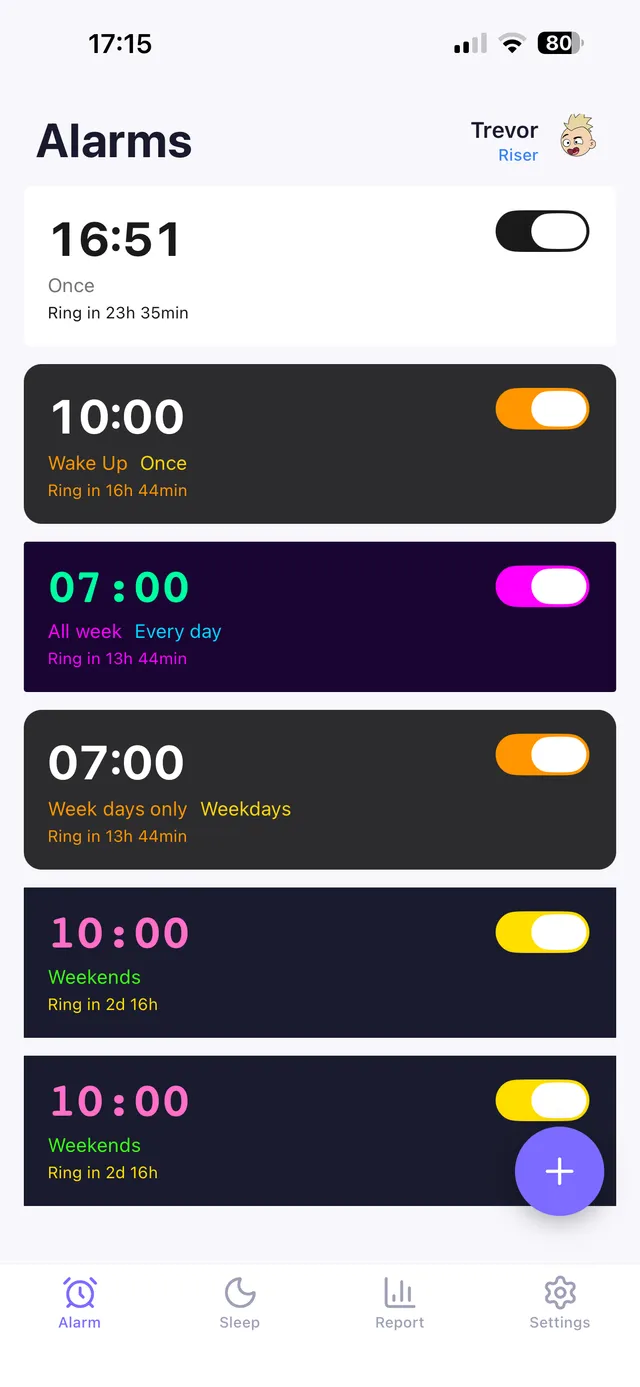
Because REM-rich cycles cluster in the final hours of sleep, waking up on time (not too early) matters as much as going to bed on time. OwlRoutine's mission alarm is built to wake you at your actual intended time without letting snoozing quietly eat into those last, REM-heavy cycles, while the wind-down routine helps you fall asleep earlier so you get the full night those cycles need.
This article is general information, not medical advice.
Frequently asked questions
What is REM sleep?
REM (Rapid Eye Movement) sleep is a sleep stage marked by fast eye movements, near-total muscle paralysis, wake-like brain activity, and most vivid dreaming. It plays a key role in memory consolidation and emotional processing.
How much REM sleep do adults need?
Roughly 20-25% of total sleep time, which is about 90-120 minutes on a typical 8-hour night, spread across several REM periods that get longer as the night goes on.
What happens if you don't get enough REM sleep?
Cutting sleep short disproportionately reduces REM, since it's concentrated in the later sleep cycles. This has been linked with worse memory consolidation, emotional regulation, and mood.
Does alcohol affect REM sleep?
Yes. Alcohol suppresses REM sleep earlier in the night and can cause a rebound of vivid dreams later as it wears off, along with generally more fragmented sleep.
Wake up for real. Wind down for good.
OwlRoutine is a sleep-cycle alarm that makes mornings actually stick — with a guided wind-down, dismiss missions, sleep scores and rewards. Available on iPhone and Android.