The Best Time to Wake Up (There's No Universal Answer, But There's Your Answer)

Search "best time to wake up" and you'll get a confident number — usually 5am, sometimes 6am — presented like a universal law. It isn't. The best time to wake up depends on your sleep cycles, your chronotype, and your actual schedule, not a number that works identically for everyone. Here's how to find the one that's actually best for you.
The short answer
There's no single ideal wake-up time for everyone. The best time to wake up for you is one that: lands at the end of a ~90-minute sleep cycle rather than in the middle of one, fits your natural chronotype reasonably well, gives you 7-9 hours of total sleep counting backward from it, and — most importantly — is one you can hold consistently, including on weekends.
Why "5am" isn't automatically the answer
5am works well for some people and is genuinely miserable for others, and the difference usually isn't discipline — it's biology and circumstance. If you're a night owl by chronotype, 5am means fighting your body clock daily, which is a much harder, less sustainable version of "waking up early" than the same hour for a natural early bird. If you have a job or family schedule that keeps you up past midnight most nights, 5am simply doesn't leave room for enough sleep. For the specific version of this question, see 5am club — it's a good format for some people and a poor fit for others, and that's fine.
The three things that actually determine your best wake time
1. Sleep cycle math
Waking up at the end of a ~90-minute sleep cycle, in lighter sleep, feels dramatically better than being pulled out mid-cycle from deep sleep — that's sleep inertia at work. Count backward in 90-minute blocks from your target wake time to find bedtimes that land you at a cycle boundary, or just use a bedtime calculator to do the math for you. For the numbers on how many cycles you need in total, see how many sleep cycles per night.
2. Your chronotype
Chronotype is the biological tendency toward being a morning person, a night owl, or somewhere in between — and it's not just preference, it's measurably different circadian timing. Chronotypes explained covers the categories in depth. The practical takeaway: your "best" wake time should work with your chronotype where possible, not against it. A moderate night owl aiming for 6:30am has a realistic target; the same person aiming for 4:30am is setting up a much harder fight.
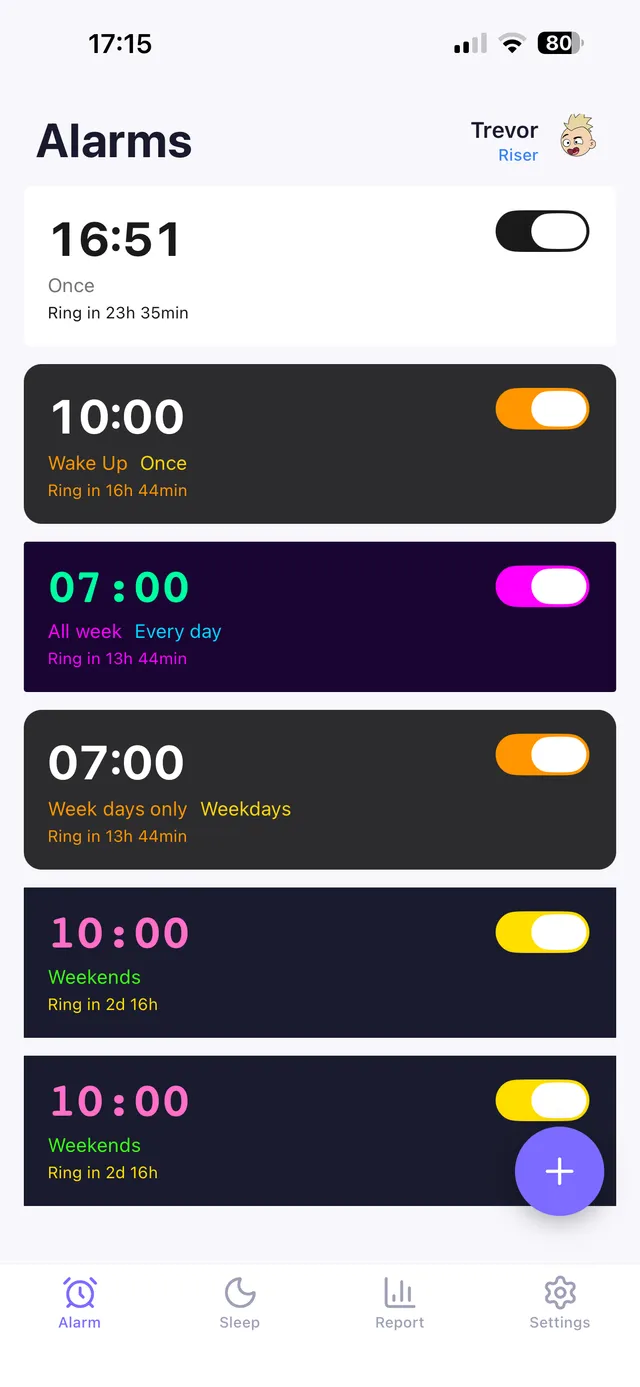
OwlRoutine helps you wind down at night and actually get up in the morning — with a guided wind-down, dismiss missions, and sleep scores. Available on iPhone and Android.


3. Consistency
This might matter more than the exact hour you pick. A wake time you hold within about an hour, every day including weekends, keeps your body clock stable and your mornings predictable. A "perfect" wake time you only hit three days a week, with wildly different times the other four, will feel worse overall than a slightly-less-ideal time held consistently. Sleep consistency matters goes deeper on why irregular schedules undermine sleep quality even when total hours look fine on paper.
A simple process to find your number
- Work backward from a fixed commitment — work start, school, a class — and note the latest wake time that gets you there without rushing.
- Count backward in 90-minute blocks from that wake time to find a bedtime that lands on a cycle boundary and gives you 7-9 hours.
- Try it for two weeks, holding both ends steady.
- Check how you actually feel: alert within 30-60 minutes, stable energy through the afternoon, and naturally sleepy at the new bedtime are all good signs. Persistent grogginess or lying awake at bedtime means adjusting the numbers, not pushing through.
- Hold it on weekends too, within about an hour, to avoid undoing the adjustment.
What if your ideal time and your obligations don't match?
Most people don't get to pick a wake time in a vacuum — work, school, or family schedules set a floor. In that case, the "best" wake time becomes the earliest bedtime-to-wake-time combination that's actually achievable given your evening obligations, rather than an abstract ideal. If that means your available window doesn't allow a full 7-9 hours, the more useful fix is usually reducing what's eating into the evening (see how to wake up early without being tired) rather than accepting chronic short sleep as normal.
A quick reference table
| Goal | Wake time guidance |
|---|---|
| General health/productivity | Whatever gives 7-9 hours and lands on a cycle boundary, held consistently |
| Natural early chronotype | Earlier wake times (5-6am range) tend to feel easier |
| Natural night owl chronotype | A later, still-consistent wake time (7-8am) is usually more sustainable than forcing 5am |
| Shift workers | "Morning" is whenever your sleep block ends — see morning routine for night shift workers |
The bottom line
There's no universally best time to wake up — 5am is right for some people and wrong for others. Your best wake time is the one that respects your sleep cycles, works with (not against) your chronotype, gives you enough total sleep, and that you can actually hold consistently, weekends included. Find that number through a couple of weeks of testing rather than copying someone else's routine.
Whatever wake time you land on, the hardest part is usually the same: actually getting up when the alarm goes off. OwlRoutine's mission alarm — a math problem, a photo of a specific spot, a shake or scan — makes sure your carefully chosen wake time doesn't get silently snoozed away, and the wind-down routine helps you consistently hit the bedtime that makes that wake time sustainable.
Frequently asked questions
Is 5am the best time to wake up?
Not universally. 5am works well for people with an early chronotype and a schedule that supports it, but it's a poor, unsustainable fit for many night owls and anyone whose evening obligations don't allow enough sleep before it.
How do I find my personal best wake-up time?
Work backward from your earliest fixed commitment, count back in 90-minute sleep cycle blocks to find a bedtime giving 7-9 hours, test it for two weeks, and adjust based on how alert and consistent you feel.
Does chronotype affect the best time to wake up?
Yes. Natural early chronotypes tend to do well with earlier wake times, while night owls generally sustain a later, still-consistent wake time far more easily than forcing an early one.
Is it better to wake up at the same time every day, even weekends?
Generally yes. Keeping wake time consistent within about an hour, including weekends, stabilizes your body clock and tends to matter more for how rested you feel than the exact hour chosen.
Wake up for real. Wind down for good.
OwlRoutine is a sleep-cycle alarm that makes mornings actually stick — with a guided wind-down, dismiss missions, sleep scores and rewards. Available on iPhone and Android.