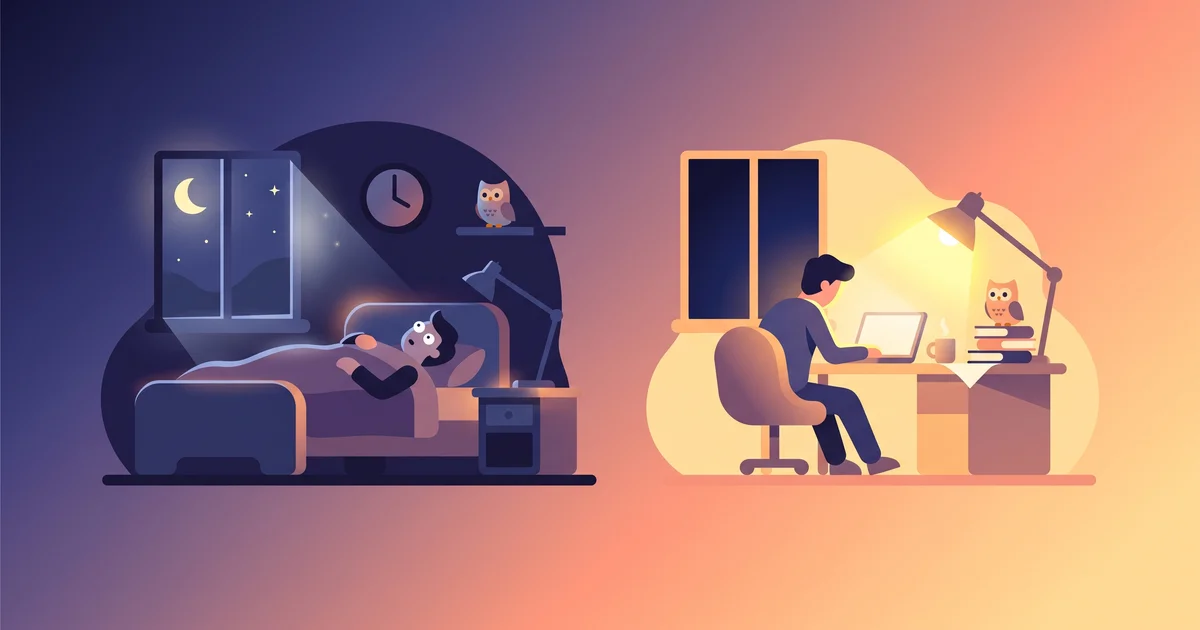
A Morning Routine for Night Shift Workers (When 'Morning' Is 3pm)

For a night shift worker, "morning" doesn't happen at sunrise — it happens whenever your shift ends and whenever you wake up, which might be 8am or 4pm. Most morning-routine advice assumes daylight and a 9-to-5, which makes it nearly useless for the millions of people who work nights. Here's a morning routine for night shift workers built around the actual biology of an inverted schedule.
The short answer
For night shift workers, the "morning routine" that matters most happens in two places: right after your shift ends (wind-down, dark room, protected sleep) and right after you wake up (your real "morning," whatever the clock says). The core tools are light control — dark sunglasses on the commute home, blackout curtains for sleep, bright light when you wake — and treating your daytime sleep block with the same discipline a night sleeper gives theirs.
Why the normal advice doesn't work
Standard morning routines lean on sunlight exposure, an early alarm, and a body clock that's cooperating with the schedule. Night shift workers are fighting their circadian rhythm by design — your body is biologically primed to be awake in daylight and asleep at night, and shift work asks it to do the opposite. That mismatch is part of why chronotypes explained and general night-owl biology only get you partway; shift work is a different problem than simply being a late chronotype. For the lifestyle side of being wired later, the night owl guide has useful overlap, but shift work adds a layer of literally sleeping during daylight.
Step 1: End-of-shift wind-down (your real "bedtime")
Treat the end of your shift like a night sleeper treats 10pm — this is the routine that determines whether your sleep actually works.
- Wear dark sunglasses on the way home, even if it doesn't feel dark to you. Morning sunlight is a powerful wake signal, and exposure to it right before you try to sleep works directly against you.
- Keep the commute calm. Avoid stimulating conversations, bright screens, or a stop at a sunlit café.
- Eat lightly, if at all. A heavy meal right before sleep works against you regardless of the hour.
- Use a consistent wind-down sequence once home — dim lights, a shower, a few minutes of quiet — the same cues a night sleeper would use before bed. A guided wind-down routine works exactly the same way here, just shifted to whatever hour your shift ends.
Step 2: Protecting daytime sleep
This is the single hardest part of shift work, and the biggest lever you have:
- Blackout curtains or a sleep mask are non-negotiable. Daylight leaking into the room actively suppresses the sleep hormones your body needs.
- White noise or earplugs to cover daytime household and street noise.
- Tell your household your sleep block is real sleep, not a nap — treat it with the same protection an overnight sleeper's 11pm-7am gets.
- Keep the room cool, same as any good sleep environment. Best bedroom temperature for sleep.
- Silence your phone or use do-not-disturb scheduling that matches your actual sleep window, not the clock's assumption that you're awake during the day.
OwlRoutine helps you wind down at night and actually get up in the morning — with a guided wind-down, dismiss missions, and sleep scores. Available on iPhone and Android.


Step 3: Your real "morning routine" — when you wake up
Whatever time your body wakes up (afternoon, evening, whenever), that's your morning. Treat it like one:
- Get bright light immediately — ideally actual outdoor light if your schedule allows it, or a bright light source indoors. This is the single most effective signal for telling your body "this is daytime, be alert."
- Hydrate and eat something before your shift, the same way you'd want breakfast before a normal workday.
- Move your body. A short walk or stretch session works as well at 5pm as it does at 7am for waking the body up — see energizing morning stretches for a sequence that isn't tied to sunrise.
- Do your highest-focus task early in your "day." Just like a day worker front-loads hard tasks in the morning, do the same right after you wake, before fatigue creeps back in during the shift.
Managing days off
Rotating shift patterns and days off are where most night shift sleep schedules fall apart. Two broad strategies work:
- Stay on shift-schedule through days off if you can — sleep at the same daytime hours, stay up at the same night hours. This keeps your body clock stable but limits time with family/friends on a normal schedule.
- Shift gradually toward a normal schedule on days off if you need to be available in daylight, moving your sleep time by 1-2 hours a day rather than flipping all at once, which minimizes the jet-lag-like effect. Jet lag covers the same underlying mechanism your body goes through with any big schedule shift.
Neither is perfect — pick based on how many days off you get and what matters more that week.
Watch for the warning signs
Chronic shift work sleep disruption is a real, documented strain on health, not just an inconvenience. If you're consistently exhausted despite following a disciplined routine, or you notice mood changes, digestive issues, or dozing off dangerously (especially while driving), it's worth talking to a doctor about shift work sleep disorder rather than pushing through.
The bottom line
A night shift "morning routine" is really two routines: a disciplined wind-down right after your shift to protect daytime sleep, and a real morning routine — light, movement, focus — whenever you actually wake up, regardless of what the clock says outside. The tools are the same ones day workers use (light, consistency, a wind-down ritual); they're just applied at different hours.
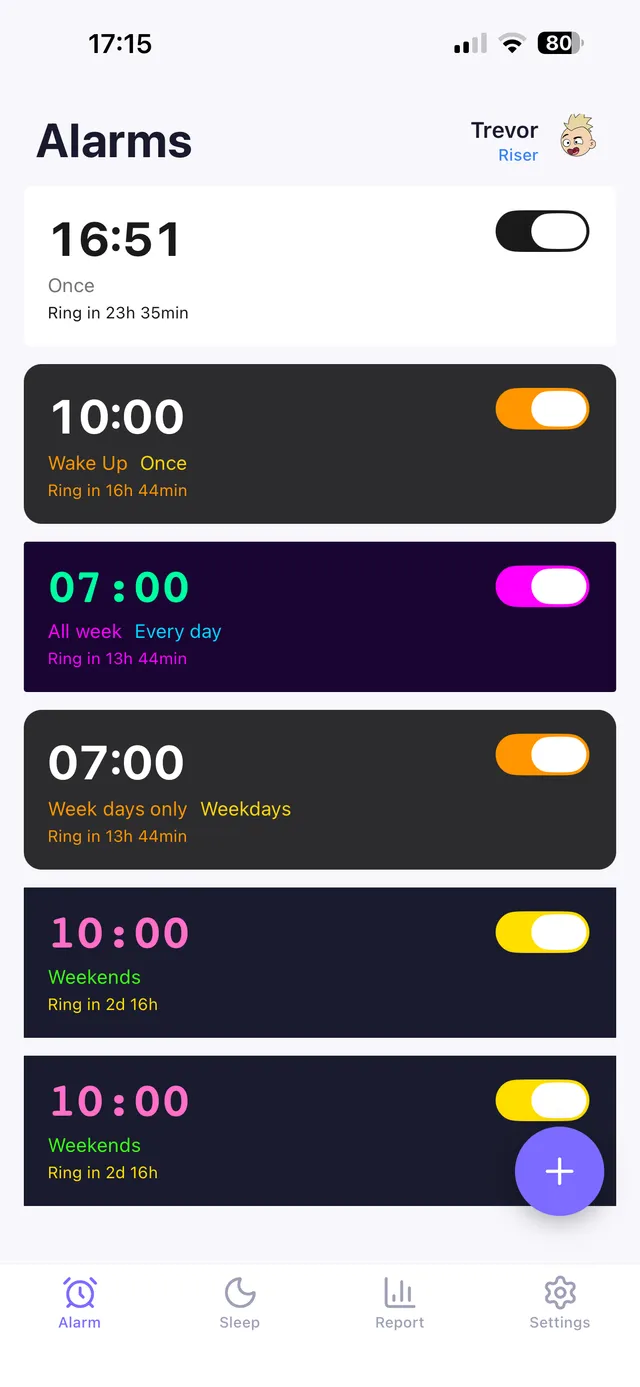
Night shift schedules are exactly where a flexible alarm matters most — OwlRoutine doesn't care what time "morning" is for you, and its mission alarm makes sure a groggy, daylight-disrupted wake-up still gets you moving, while the wind-down routine gives your body the same consistent cues a night sleeper relies on, just shifted to your hours.
Frequently asked questions
How do night shift workers create a morning routine?
Their real morning routine happens whenever they wake up after daytime sleep, not at sunrise, and should include immediate bright light, hydration, movement, and front-loading focus-heavy tasks.
How can night shift workers sleep better during the day?
Use blackout curtains or a sleep mask, white noise to cover daytime sounds, dark sunglasses on the commute home to avoid morning light, and treat the daytime sleep block as seriously as a normal night's sleep.
Should night shift workers stay on their schedule on days off?
It depends on priorities. Staying on the shift schedule keeps the body clock stable, while gradually shifting toward a normal schedule helps with daytime availability but costs some adjustment time, similar to jet lag.
Is shift work bad for your health?
Chronic circadian disruption from shift work is a documented strain and can raise the risk of various health issues over time, so protecting sleep quality and watching for excessive daytime sleepiness matters. Talk to a doctor if fatigue feels unmanageable.
Wake up for real. Wind down for good.
OwlRoutine is a sleep-cycle alarm that makes mornings actually stick — with a guided wind-down, dismiss missions, sleep scores and rewards. Available on iPhone and Android.