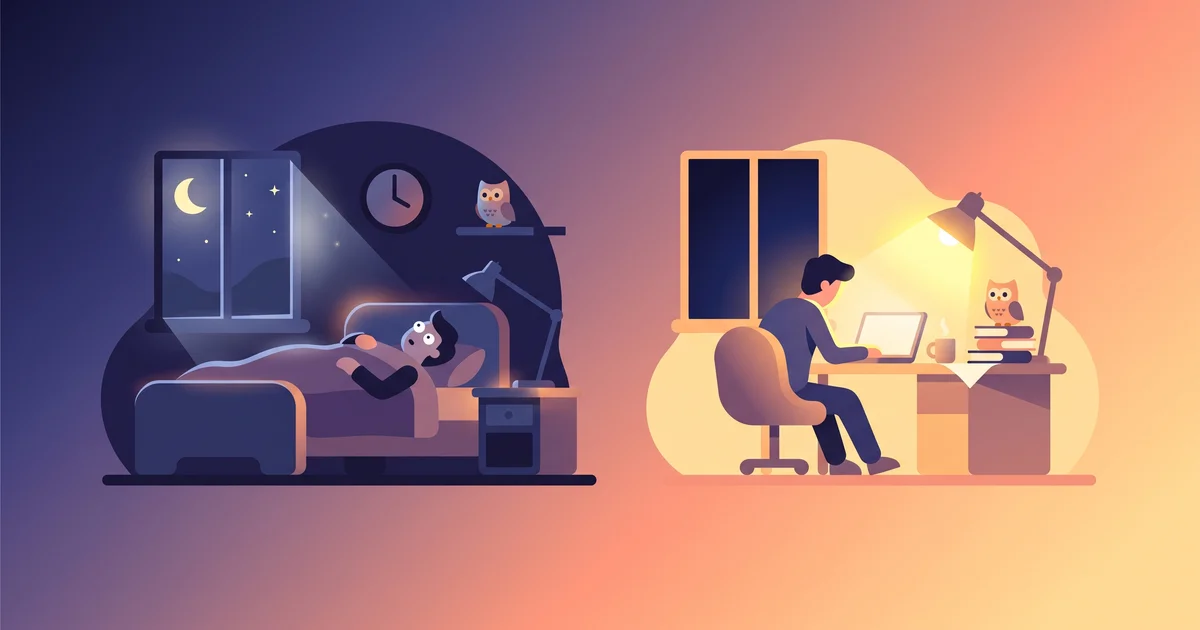
How to Wake Up Early Without Being Tired (Avoid the Sleep Debt Trap)

You set the alarm 90 minutes earlier, feel great for about two days, and then you're dragging by Thursday, running on coffee and willpower. This is the single most common failure pattern in "waking up early," and it has a clear cause: you moved your wake time without moving your sleep time. Here's how to wake up early without being tired — the version that actually holds up past week one.
The short answer
Waking up early without exhaustion requires shifting your bedtime earlier along with your wake time, not just setting an earlier alarm on the same amount of sleep. The trap is treating an early wake-up as a willpower problem when it's really a sleep-debt problem — you can't out-discipline a shortage of hours. Shift gradually (15-20 minutes every few days), get morning light immediately, and protect the total sleep you need.
The trap, explained
Most people who try to become early risers make the same mistake: they move the alarm earlier and leave bedtime exactly where it was. The math doesn't work. If you cut 90 minutes off your sleep and expect to feel fine, you're not becoming a morning person — you're accumulating sleep debt, and debt always comes due eventually, usually as afternoon crashes, irritability, and a creeping urge to sleep in on weekends that undoes the whole plan.
This is different from the identity question of becoming a morning person — see how to become a morning person for that angle. This piece is specifically about the mechanics of avoiding exhaustion while you do it.
Step 1: Shift bedtime, not just wake time
The single most important rule: for every block of time you want to wake up earlier, move your bedtime earlier by roughly the same amount, in advance.
- Don't jump straight to your target wake time. Shift by 15-20 minutes every 2-3 days until you reach your goal.
- Move bedtime first, or at the same time as your wake time — not after you've already been waking up early and exhausted for a week.
- Give yourself real time to adjust: a 90-minute shift can reasonably take 1-2 weeks done gradually, rather than one abrupt jump.
Step 2: Know your actual sleep need
You can't shift your way around needing enough total sleep. Most adults need somewhere in the 7-9 hour range — waking up earlier only works long-term if you're still hitting that number on the other end. How much sleep do I need helps you find your personal figure rather than guessing.
OwlRoutine helps you wind down at night and actually get up in the morning — with a guided wind-down, dismiss missions, and sleep scores. Available on iPhone and Android.


Step 3: Use light to anchor the new schedule
Light is the strongest tool for shifting your body clock without feeling wrecked:
- Get bright light immediately on waking — outside if possible, even for just 5-10 minutes. This tells your body clock "the day has started" and helps suppress lingering sleep hormones.
- Dim lights and avoid screens in the hour before your new, earlier bedtime. Evening light exposure is one of the biggest reasons people struggle to fall asleep earlier even when they want to.
- See morning sunlight for the full mechanism.
Step 4: Don't fight your chronotype completely
Some resistance to an early wake-up is just discipline. Some of it is genuine biology — chronotypes explained covers how individual variation in your body clock affects how easily you can shift, and how far. A night owl can become a reasonably early riser with consistent effort, but pushing dramatically against your natural chronotype (say, aiming for 4:30am when you're wired for midnight) will always cost more energy to maintain than a more moderate shift.
Step 5: Protect consistency, especially on weekends
Sleeping in on weekends to "catch up" undoes a lot of the adjustment — it's essentially a mini jet lag every Monday, sometimes called social jet lag. Keeping your wake time within about an hour of your weekday time, even on days off, makes the whole schedule far easier to sustain. Sleep consistency matters goes deeper on why.
Signs you're doing it right vs. wrong
| Doing it right | Doing it wrong |
|---|---|
| Waking up mostly without needing multiple alarms | Needing 3+ snoozes daily |
| Alert within 30-60 minutes of waking | Foggy for hours |
| Stable energy through the afternoon | Hard crash by 2-3pm |
| Naturally sleepy at your new, earlier bedtime | Lying awake for an hour at the new bedtime |
If you're seeing the right-hand column, the fix usually isn't more willpower — it's slowing the shift down or moving bedtime earlier still.
The bottom line
Waking up early without being tired isn't about toughing it out — it's about not creating a sleep deficit in the first place. Shift your bedtime along with your wake time, do it gradually, use morning light to anchor the new schedule, and stay consistent on weekends. Get those right and the tiredness that usually kills early-rising attempts mostly doesn't show up.
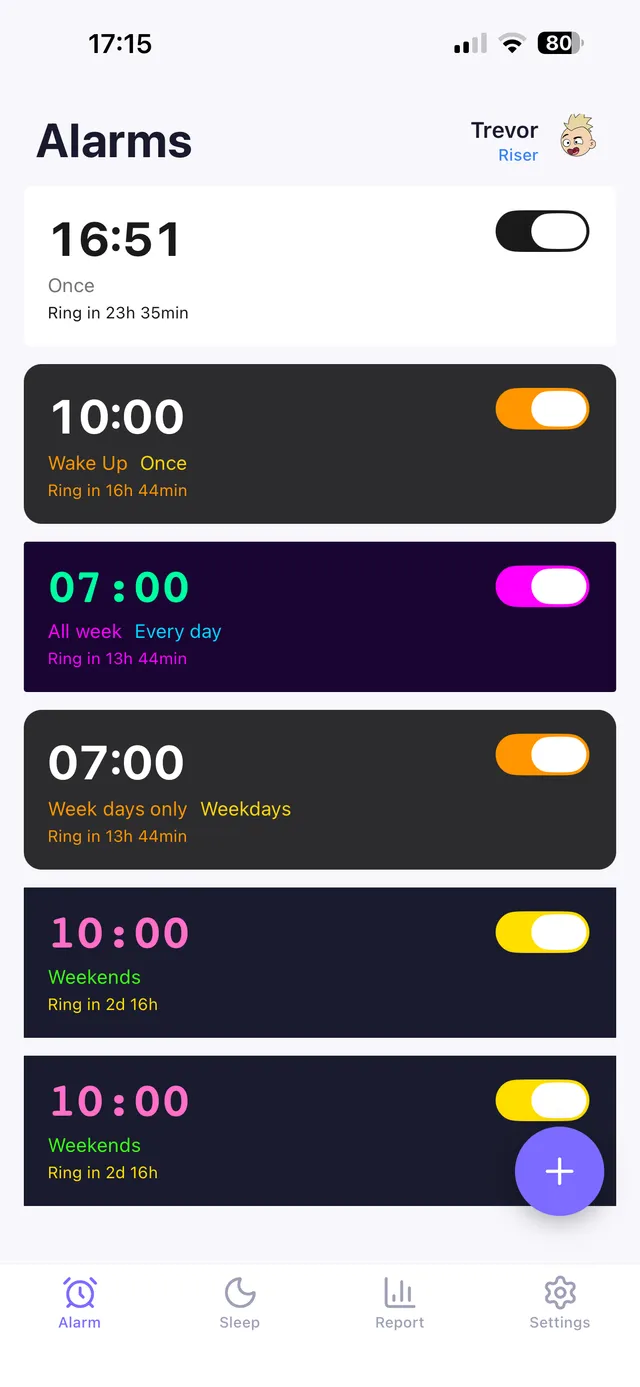
Even with a well-managed shift, some mornings your body will still want those extra 20 minutes — that's exactly when a regular alarm gets silenced half-asleep and the whole schedule slips. OwlRoutine's mission alarm requires a real task before it stops, which protects the new wake time you worked to build, while the guided wind-down helps you actually get to the earlier bedtime this whole approach depends on.
Frequently asked questions
Why am I so tired when I wake up early?
Usually because your wake time moved earlier but your bedtime didn't, creating a sleep deficit. The fix is shifting bedtime earlier by a similar amount, not pushing through with less sleep.
How do I wake up early without being exhausted?
Shift both bedtime and wake time gradually (15-20 minutes every few days), get bright light immediately on waking, protect your total sleep need, and stay consistent on weekends.
How long does it take to adjust to an earlier wake-up time?
A shift of around 90 minutes can reasonably take 1-2 weeks when done gradually in small increments, rather than trying to adjust all at once.
Can everyone become an early riser without feeling tired?
Most people can shift somewhat, but individual chronotype affects how far and how easily. A moderate shift is much easier to sustain than one that fights strongly against your natural body clock.
Wake up for real. Wind down for good.
OwlRoutine is a sleep-cycle alarm that makes mornings actually stick — with a guided wind-down, dismiss missions, sleep scores and rewards. Available on iPhone and Android.