How to Fall Asleep Fast: 12 Techniques That Actually Work (Tonight and Long Term)

Lying in bed, wide awake, watching the minutes tick by is one of the most frustrating experiences there is — and the harder you try, the worse it gets. The good news is that learning how to fall asleep fast is mostly about lowering your brain's arousal, not forcing sleep. Below are techniques you can use tonight, followed by the habits that make falling asleep quick and automatic.
The short answer
To fall asleep fast: keep the room dark, cool and quiet; put the phone away; slow your breathing; relax your body from head to toe; and give your mind something boring and non-threatening to focus on. If you're still awake after about 20 minutes, get up and do something calm until you feel sleepy. Long term, a consistent wake time and a wind-down routine do the most.
How long should it take to fall asleep?
For most healthy adults, falling asleep takes roughly 10–20 minutes. Falling asleep in under five minutes every night can be a sign of sleep deprivation. Regularly taking more than 30 minutes is a common sign of insomnia and worth addressing.
Techniques for tonight
| Technique | What you do | Best for |
|---|---|---|
| 4-7-8 breathing | Inhale 4, hold 7, exhale 8 | Racing heart, tension |
| Military method | Relax face, shoulders, chest, legs; clear mind | Physical tension |
| Cognitive shuffle | Picture random unrelated objects | Looping thoughts |
| Progressive muscle relaxation | Tense then release muscle groups | Stress held in the body |
| Body scan | Slowly move attention through the body | Anxiety |
| Paradoxical intention | Try to stay awake, calmly | Performance anxiety about sleep |
1. Slow, long exhales (4-7-8)
Breathe in quietly through your nose for 4 counts, hold for 7, breathe out slowly through your mouth for 8. Repeat four times. Long exhales activate the parasympathetic "rest and digest" response. If the hold feels uncomfortable, simply make your exhale longer than your inhale.
2. The military sleep method
Relax your face, drop your shoulders and arms, exhale and relax your chest, relax your legs, then clear your mind for 10 seconds with a calm image. It takes practice. Full step-by-step guide here.
3. The cognitive shuffle
Pick a random word — say, "blanket". For each letter, picture as many unrelated things as you can: b → balloon, bicycle, banana… l → lamp, leaf, lemon… This mimics the random imagery of drifting off and crowds out worry loops. It was developed by cognitive scientist Luc Beaudoin.
4. Progressive muscle relaxation
Starting at your feet, tense a muscle group for about five seconds, then release for 10–20 seconds. Work up through calves, thighs, stomach, hands, arms, shoulders and face. The contrast teaches your body what "relaxed" feels like.
5. A body scan
Move your attention slowly from your toes to the top of your head, noticing sensations without trying to change them. It's a common part of mindfulness-based sleep programmes.
6. Paradoxical intention
Lie in bed and gently try to stay awake with your eyes open in the dark. It sounds odd, but it removes the pressure to fall asleep, which is often what's keeping you up.
OwlRoutine helps you wind down at night and actually get up in the morning — with a guided wind-down, dismiss missions, and sleep scores. Available on iPhone and Android.


7. Get up if it isn't working
If you've been awake for about 20 minutes and feel frustrated, get out of bed. Do something calm in dim light — read a paper book, fold laundry, sit quietly — and return when sleepy. This is a core rule of cognitive behavioural therapy for insomnia (CBT-I): it stops your brain linking your bed with lying awake.
Habits that make falling asleep easy
8. Fix your wake time
It sounds backwards, but the most powerful lever on bedtime is waking up at the same time every day. It builds consistent sleep pressure so you're genuinely sleepy at night. How to fix your sleep schedule.
9. Cut caffeine by early afternoon
Caffeine can stay active for many hours. Even an afternoon coffee can delay sleep. The 10-3-2-1-0 rule suggests no caffeine within 10 hours of bed.
10. Wind down for 20–30 minutes
Use the same calm routine every night — dim lights, a warm shower, reading, stretching, journaling. Repetition is the point; your brain learns the pattern. Here's how to build one.
11. Put the phone away
Not just for the blue light: engaging content keeps your mind alert, and scrolling pushes bedtime later. What your phone really does to sleep.
12. Make the room sleep-friendly
Dark (blackout curtains or a mask), quiet (earplugs or white noise) and cool. A slightly cool room helps your body temperature drop, which is part of falling asleep.
What to avoid when you can't sleep
- Checking the time. It triggers "I only have 5 hours left" calculations and stress. Turn the clock away.
- Scrolling "until you're tired". It usually has the opposite effect.
- Alcohol as a sleep aid. It may help you drift off, but it fragments sleep later in the night.
- Long daytime naps. They reduce the sleep pressure you need at night.
When to get help
If you regularly take more than 30 minutes to fall asleep, wake frequently, or feel exhausted during the day for several weeks, speak to a doctor. Insomnia is common and treatable; CBT-I is recommended as a first-line treatment and is available in person and through digital programmes.
The bottom line
To fall asleep fast tonight, calm your body with slow breathing or a body scan, occupy your mind with something boring like the cognitive shuffle, and get up if you're still awake after 20 minutes. To fall asleep fast every night, fix your wake time, cut late caffeine, wind down consistently and keep your phone out of bed.
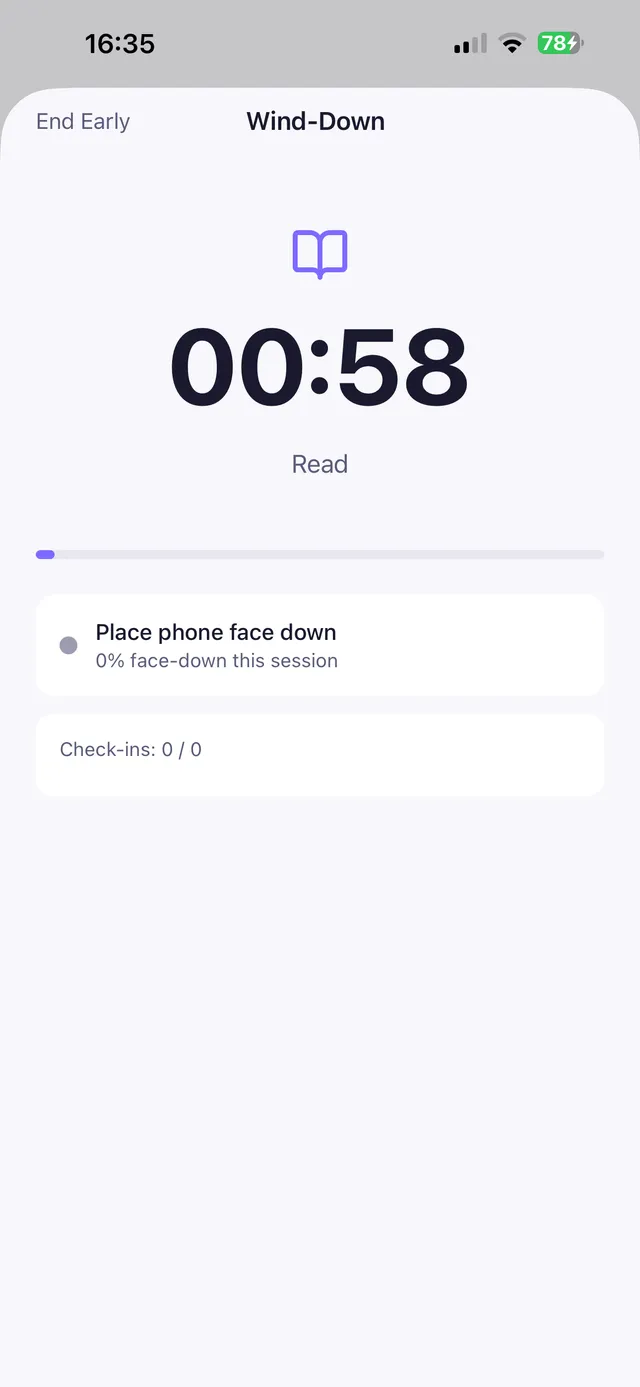
OwlRoutine is designed for the "every night" part. The guided wind-down session (with activities like reading, stretching, journaling and meditation) keeps your phone face-down, bedtime reminders start it on time, and a consistent alarm anchors your wake time so you're naturally sleepy when you get into bed.
This article is general information, not medical advice.
Frequently asked questions
How can I fall asleep fast?
Keep the room dark, cool and quiet, put your phone away, slow your breathing, relax your body from head to toe, and focus your mind on something boring like the cognitive shuffle. If you're awake after about 20 minutes, get up and do something calm until sleepy.
How long should it take to fall asleep?
For most healthy adults, about 10–20 minutes. Regularly taking more than 30 minutes can be a sign of insomnia.
What is the 4-7-8 breathing technique?
Breathe in through your nose for 4 counts, hold for 7, and breathe out slowly through your mouth for 8. Repeat about four times.
What should I do if I can't fall asleep?
Don't lie there for ages. Get up after about 20 minutes, do something calm in dim light, and go back to bed when you feel sleepy. Avoid checking the clock and your phone.
Wake up for real. Wind down for good.
OwlRoutine is a sleep-cycle alarm that makes mornings actually stick — with a guided wind-down, dismiss missions, sleep scores and rewards. Available on iPhone and Android.