White Noise for Sleep: Does It Actually Work?
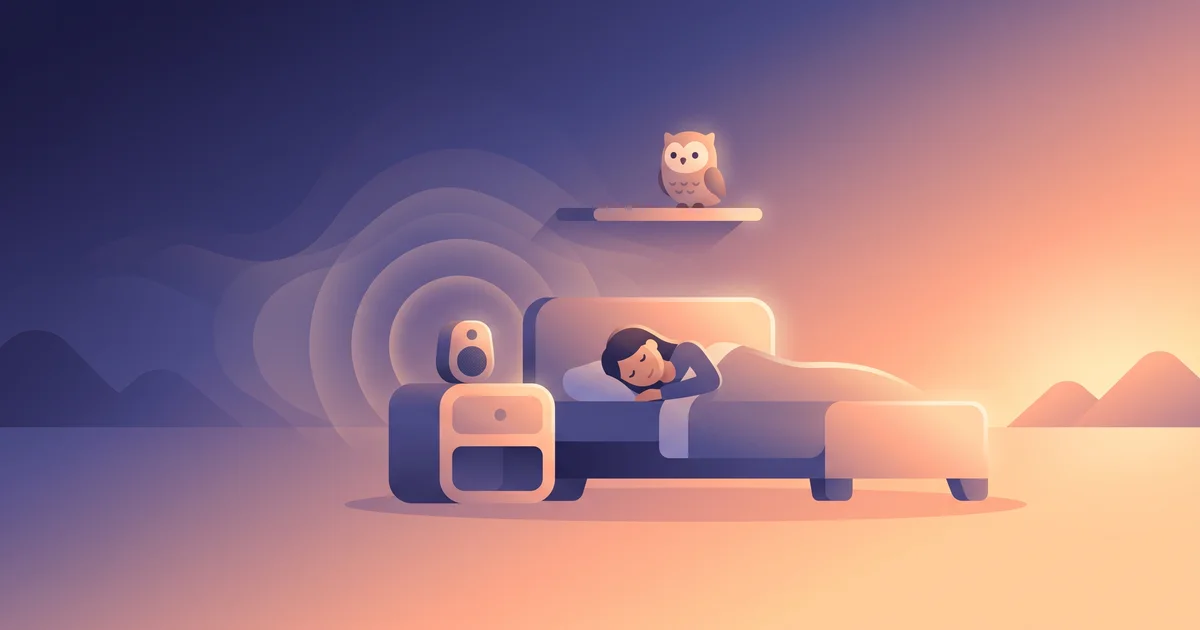
A creaky building, a snoring partner, traffic outside, a neighbor's late-night TV — noise is one of the most common reasons people wake up or can't fall asleep in the first place. White noise and its cousins, pink and brown noise, have become a go-to fix, from dedicated machines to free phone apps. Here's what they actually do and how to use them well.
The short answer
White, pink, and brown noise work mainly by masking sudden or variable sounds with a steady, predictable one, which reduces how often noise wakes you or pulls your attention. They help most in noisy or unpredictable environments and for light sleepers. They're not a sleep aid in the sense of making you drowsy — they simply smooth out the sound environment. Keep the volume moderate (roughly the level of a quiet shower) and place the source away from your ear.
White, pink and brown noise: what's the difference?
All three are "colors" of noise — a mix of frequencies played together — but they differ in balance:
| Type | Sound character | Frequency balance | Common use |
|---|---|---|---|
| White noise | Hissy, like TV static or a fan | Equal energy across all frequencies | General masking, classic "static" sound |
| Pink noise | Softer, more like steady rainfall | More low-frequency energy, less high | Often described as more soothing |
| Brown noise | Deep, rumbly, like a waterfall or distant thunder | Even more low-frequency emphasis | Preferred by people sensitive to higher pitches |
None is objectively "better" — it comes down to personal preference and what kind of noise you're trying to mask. A high-pitched noisy environment (sirens, voices) may be better masked by white or pink noise; a low rumbling environment (traffic, HVAC) sometimes responds better to brown noise.
Who benefits most
- People in noisy environments — apartments, city streets, shared housing, or homes near traffic.
- Light sleepers who wake easily at small sounds.
- People with a snoring partner — steady noise can mask the variability of snoring, which is often more disruptive than snoring's actual volume.
- New parents and caregivers, for the same masking effect, though placement and volume matter even more with a baby in the room.
- Travelers, especially in hotels or hostels with thin walls — pairs well with the jet lag adjustment period when everything already feels unfamiliar.
- Anyone with a busy mind at bedtime — a steady sound can give your attention something neutral to rest on, similar in spirit to the effect described in racing thoughts at night.
People who already sleep in a quiet, consistent environment generally see less benefit — there's less noise to mask in the first place.
Does it actually help you fall asleep, or just mask sound?
Most of the benefit comes from masking: a steady sound reduces the contrast between silence and sudden noise, which is often what jolts you awake or keeps your brain half-alert, scanning for the next disturbance. Consistent, predictable sound is easier for your brain to tune out than silence interrupted by unpredictable noise. It's less about the sound itself being sedating and more about removing a source of disruption — which is exactly why it works best in genuinely noisy environments and does less for someone whose problem is, say, an overactive mind rather than an overactive street outside.
OwlRoutine helps you wind down at night and actually get up in the morning — with a guided wind-down, dismiss missions, and sleep scores. Available on iPhone and Android.


How to use it safely
- Keep volume moderate. A commonly cited guideline is around 50–60 decibels — roughly the level of a quiet conversation or a running shower. Louder isn't better, and higher volumes, especially over many hours, are more of a concern for hearing, particularly in infants and children.
- Keep the source at a distance, not right next to your ear or under a pillow.
- Use a timer if you prefer, though continuous use overnight is common and generally fine at a reasonable volume.
- Test a few types. Try white, pink, and brown to see which masks your specific noise problem and which you find most pleasant — this is genuinely individual.
- Fans work too. A regular fan is a classic, low-tech version of white noise and has the bonus of helping with bedroom temperature.
Noise machine, app, or fan?
| Option | Pros | Cons |
|---|---|---|
| Dedicated noise machine | Consistent sound, no phone needed nearby | Extra device, extra cost |
| Phone app | Free or cheap, many sound options | Tempting to keep the phone in bed, which cuts against good phone habits before bed |
| Fan or air purifier | Already in most homes, dual purpose | Less control over sound "color," fixed volume |
If you use a phone app, consider playing it through a separate speaker or an older device rather than the phone you'll pick up in the morning — that keeps your main phone out of the bedroom, which also helps you avoid the temptation to scroll.
When white noise isn't the fix
If the real issue is a specific, ongoing problem — a partner's snoring that might indicate sleep apnea, a loud roommate, or a fundamentally noisy street — white noise is a mask, not a solution, and it's worth addressing the source where you can. It also won't do much for sleep problems rooted in timing or habits, like an inconsistent schedule; for that, see why sleep consistency matters.
The bottom line
White, pink, and brown noise all work primarily by masking disruptive sound, which helps most if you're a light sleeper or live somewhere noisy. There's no single "best" color — try a few and see which masks your environment and suits your ear. Keep the volume moderate and the source at a reasonable distance, and treat it as one tool alongside a solid wind-down routine, not a replacement for one.
If a noisy environment or a racing mind is what keeps waking you up, OwlRoutine's guided wind-down pairs well with a noise machine or fan running in the background — breathing exercises to settle your mind while steady sound handles the rest. And because the mission alarm needs an actual response to switch off, you don't have to worry about sleeping through it just because you've masked every other sound in the room.
Frequently asked questions
Does white noise actually help you sleep?
It mainly helps by masking disruptive or unpredictable sounds, which reduces how often you're woken or distracted. It's not a sedative — it works best for light sleepers or noisy environments.
What's the difference between white, pink and brown noise?
White noise has equal energy across all frequencies and sounds like static. Pink noise emphasizes lower frequencies and sounds softer, like rainfall. Brown noise emphasizes low frequencies even more and sounds deep and rumbly.
Is it safe to play white noise all night?
Generally yes at a moderate volume, roughly the level of a quiet shower. Keep the source at a distance from your ear, and be extra cautious with volume around infants.
Is a fan the same as a white noise machine?
A fan produces a similar steady masking sound and works for the same reason, with the bonus of helping regulate room temperature, though you have less control over the exact sound.
Wake up for real. Wind down for good.
OwlRoutine is a sleep-cycle alarm that makes mornings actually stick — with a guided wind-down, dismiss missions, sleep scores and rewards. Available on iPhone and Android.