Sleep and Productivity at Work: How Bad Nights Show Up in Your Day

You know the day: coffee isn't quite cutting it, simple decisions take longer than they should, and by 3pm you're re-reading the same paragraph of an email for the third time. Sleep and productivity at work are far more tightly linked than most people treat them — and the effects show up well before you feel exhausted enough to call it a bad night.
The short answer
Poor sleep and accumulated sleep debt reduce focus, working memory, decision-making quality, and emotional regulation at work — often before you consciously feel "tired." The effects compound: a few nights of short sleep can impair performance close to levels seen after a full night of no sleep, even if you don't feel that impaired. Protecting your sleep schedule and catching sleep debt early are more reliable productivity levers than most workplace productivity hacks.
How sleep loss actually shows up at work
- Slower reaction time and processing speed — tasks that should be quick start taking noticeably longer.
- Reduced working memory — holding several things in mind at once (a meeting's discussion points, multi-step instructions) gets harder.
- Worse decision-making, particularly for judgment calls and weighing trade-offs rather than routine tasks.
- Lower emotional regulation — smaller frustrations land harder, and patience with colleagues or clients wears thin faster.
- More errors that go unnoticed — one of the more concerning effects of sleep loss is reduced ability to catch your own mistakes.
- A false sense of "fine" — self-rated alertness often doesn't track actual performance well after a few nights of short sleep; people frequently feel more capable than they are.
Sleep debt compounds quietly
A single rough night is usually recoverable. The bigger productivity problem is sleep debt — the gradual shortfall that builds when you're consistently getting a bit less sleep than you need, night after night, without a clear "bad night" to point to. See sleep debt for how this accumulates and what it takes to recover from it. Several studies on partial sleep restriction (getting, say, 6 hours instead of 7–8 for a week or two) show performance declines that approach the effect of a full night of missed sleep — despite each individual night feeling manageable.
This is part of why "I function fine on 6 hours" is a common but often inaccurate self-assessment; the comparison point (how you'd perform on your actual sleep need) rarely gets tested directly.
OwlRoutine helps you wind down at night and actually get up in the morning — with a guided wind-down, dismiss missions, and sleep scores. Available on iPhone and Android.


Where it hits hardest during the workday
| Work activity | Effect of poor sleep |
|---|---|
| Focused, deep work | Harder to sustain attention; more prone to distraction |
| Meetings and collaboration | Reduced patience, slower processing of discussion |
| Creative or strategic thinking | Noticeably impaired — this is often the first thing to go |
| Routine, well-practiced tasks | Relatively more resilient, but error rates still rise |
| Difficult conversations or negotiations | Emotional regulation is weaker, raising risk of overreaction |
| Afternoon stretch (roughly 1–3pm) | Compounds with the natural afternoon dip in alertness |
Strategic and creative thinking tend to suffer first and most, which is a particular problem since those are often the highest-value parts of many jobs — the ones hardest to just push through on autopilot.
Practical fixes that don't require sleeping more today
You can't retroactively sleep more last night, but you can reduce the compounding effect and protect tomorrow:
- Protect a consistent wake time, even after a bad night — it keeps your body clock anchored and prevents one rough night from sliding into a disrupted week. See why sleep consistency matters.
- Get morning light early, which helps counter some of the grogginess of a short night by reinforcing your circadian rhythm — see morning sunlight.
- Front-load demanding work to whenever your alertness is naturally higher, rather than scheduling your hardest tasks during a known low point.
- Use short, well-timed breaks rather than pushing through a foggy stretch — a 20-minute nap in the early afternoon, if your schedule allows it, can meaningfully restore alertness (see how long should a nap be).
- Be cautious with caffeine as a patch. It can mask sleepiness without restoring actual cognitive performance, and late-day caffeine borrows against tonight's sleep — see caffeine cutoff before bed.
- Build a real morning routine, not just an alarm. A structured start — movement, light, a clear first task — tends to counter sleep-inertia grogginess better than scrolling in bed for twenty minutes. See morning routine for productivity.
The bigger picture: sleep as infrastructure, not a luxury
Workplace culture sometimes still frames short sleep as a sign of dedication. The research points the other way: consistent, adequate sleep is closer to infrastructure for cognitive performance than a nice-to-have. Treating your sleep schedule with the same seriousness as a work deadline — protecting a wind-down window, a wake time, and a realistic bedtime — tends to pay off in exactly the areas (focus, judgment, patience) that most workplace productivity advice is trying to improve from the other direction.
The bottom line
Sleep debt shows up at work in ways that are easy to miss day-to-day — slower thinking, weaker judgment, shorter patience — often before you feel obviously tired. The fix isn't a single all-nighter recovery trick; it's protecting a consistent sleep and wake schedule, catching accumulating sleep debt early, and building a morning routine that counters grogginess instead of fighting it every single day.
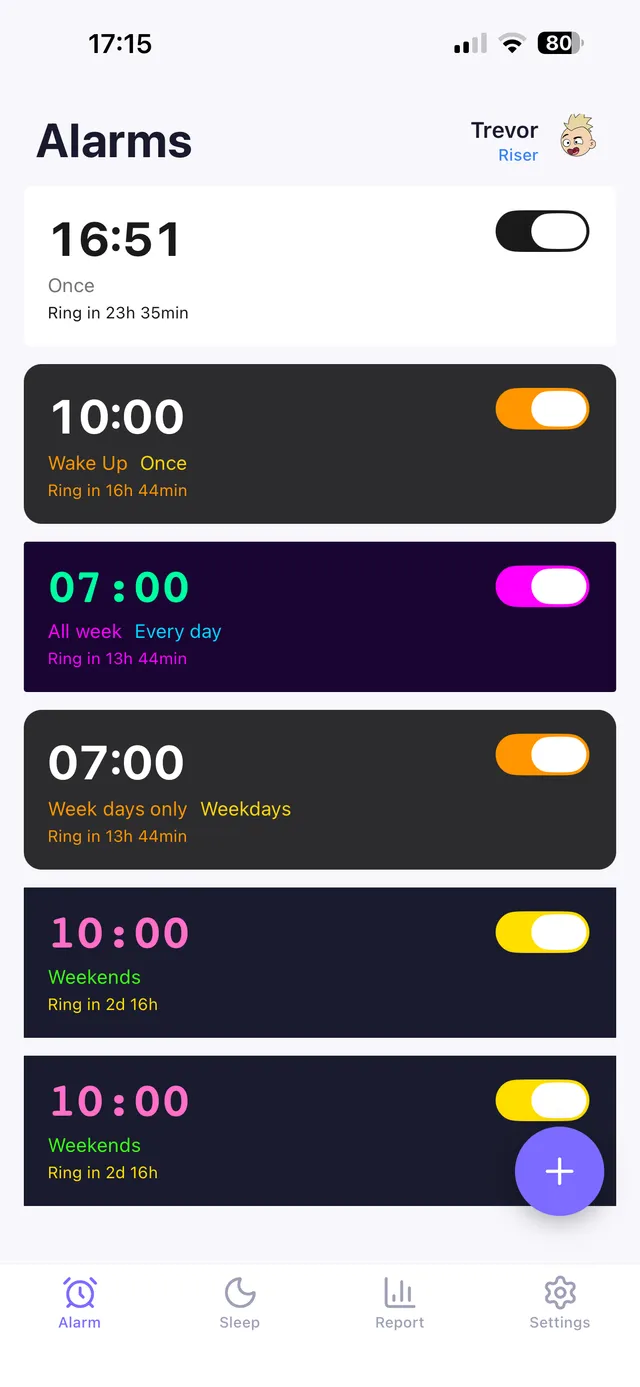
A consistent wake time is one of the highest-leverage habits here, and it's exactly what OwlRoutine's mission alarm is built to protect — a task you actually have to complete means you're not negotiating with yourself every morning about five more minutes. Pair that with the guided wind-down routine in the evening, and you're protecting both ends of the sleep window that your workday performance depends on.
Frequently asked questions
How does lack of sleep affect work performance?
It slows reaction time and processing speed, weakens working memory and decision-making, reduces emotional regulation, and increases errors — often before you consciously feel impaired.
Can you get used to less sleep and still perform well?
People often feel like they've adapted, but studies on partial sleep restriction show performance continues to decline even when self-rated alertness doesn't reflect it.
What part of work suffers most from poor sleep?
Strategic and creative thinking tend to be affected earliest and most, while routine, well-practiced tasks are relatively more resilient, though error rates still rise.
What's the best fix for sleep debt affecting work performance?
Protecting a consistent sleep and wake schedule and catching sleep debt early tends to help more than any single-day fix like extra caffeine or a weekend catch-up sleep.
Wake up for real. Wind down for good.
OwlRoutine is a sleep-cycle alarm that makes mornings actually stick — with a guided wind-down, dismiss missions, sleep scores and rewards. Available on iPhone and Android.