New Year Sleep Resolutions That Actually Stick

"This year I'm going to bed at 10pm every night" is one of the most common — and most quickly abandoned — New Year's resolutions out there. Sleep resolutions fail for the same reason most resolutions fail: they're too big, too sudden, and not built around how habits actually form. Here's how to set ones that survive past the second week of January.
The short answer
Realistic sleep resolutions focus on one or two specific, small, measurable changes — like shifting bedtime by 15 minutes a week, or a fixed wake time seven days a week — rather than a complete overnight overhaul. Build in a plan for the inevitable off day, track progress loosely rather than perfectly, and anchor changes to a routine (a wind-down ritual, a morning trigger) rather than willpower alone.
Why extreme sleep resolutions fail
- The gap is usually too big. Going from a 1am bedtime to a 10pm bedtime overnight asks your body clock to shift hours in a single night, which it physically can't do — similar to the adjustment problem described in how to fix your sleep schedule.
- Motivation fades faster than the goal requires. January 1st enthusiasm rarely survives a genuinely hard adjustment period, and a string of "failed" nights early on often kills the whole resolution.
- They don't survive real life. A resolution that only works if nothing ever comes up (a late meeting, a friend's birthday, a bad night) breaks the first time something comes up — which is always.
- They target the wrong lever. "Go to bed earlier" is a symptom-level fix; the underlying issue is often inconsistency, screen habits, or an unaddressed caffeine cutoff, not bedtime alone.
Resolutions worth setting instead
| Instead of… | Try… |
|---|---|
| "Sleep 8 hours every night starting Jan 1" | "Shift my bedtime 15 minutes earlier each week until I reach my target" |
| "No screens before bed, ever" | "Phone charges outside the bedroom by 10:30pm on weeknights" |
| "Wake up at 6am every day" | "Wake up within the same 30-minute window every day, including weekends" |
| "Cut out caffeine completely" | "No caffeine after 2pm" — see caffeine cutoff before bed |
| "Fix my whole sleep schedule this week" | "Pick one weeknight to start a proper wind-down routine, then add nights gradually" |
The pattern: smaller scope, clearer measurement, and room for a bad day without the whole thing collapsing.
Build the resolution around consistency, not perfection
The single change with the best evidence behind it isn't a specific bedtime — it's keeping your sleep and wake times consistent, including weekends. Wildly different weekday and weekend schedules create a kind of social jet lag that undercuts almost any other sleep resolution you try to layer on top. If you only commit to one thing this year, a steady wake time is the highest-leverage choice — see why sleep consistency matters.
OwlRoutine helps you wind down at night and actually get up in the morning — with a guided wind-down, dismiss missions, and sleep scores. Available on iPhone and Android.


A realistic month-by-month approach
Weeks 1–2: Pick your anchor. Choose one fixed wake time you can realistically hit seven days a week, even if it's later than your "ideal." A consistent 7:30am beats an inconsistent 6am.
Weeks 3–4: Add a wind-down cue. Instead of trying to overhaul your whole evening, add one consistent signal — phone away, lights dimmed, a few minutes of journaling or breathing — at roughly the same time each night. See the perfect wind-down routine for a structure to borrow from rather than build from scratch.
Weeks 5–8: Nudge bedtime gradually, if your target bedtime is meaningfully earlier than where you are now — 15 minutes earlier every few days, not all at once.
Ongoing: Expect and plan for slip-ups. One late night doesn't undo the resolution. The habit is in the average, not in a perfect streak.
Tie the resolution to a system, not willpower
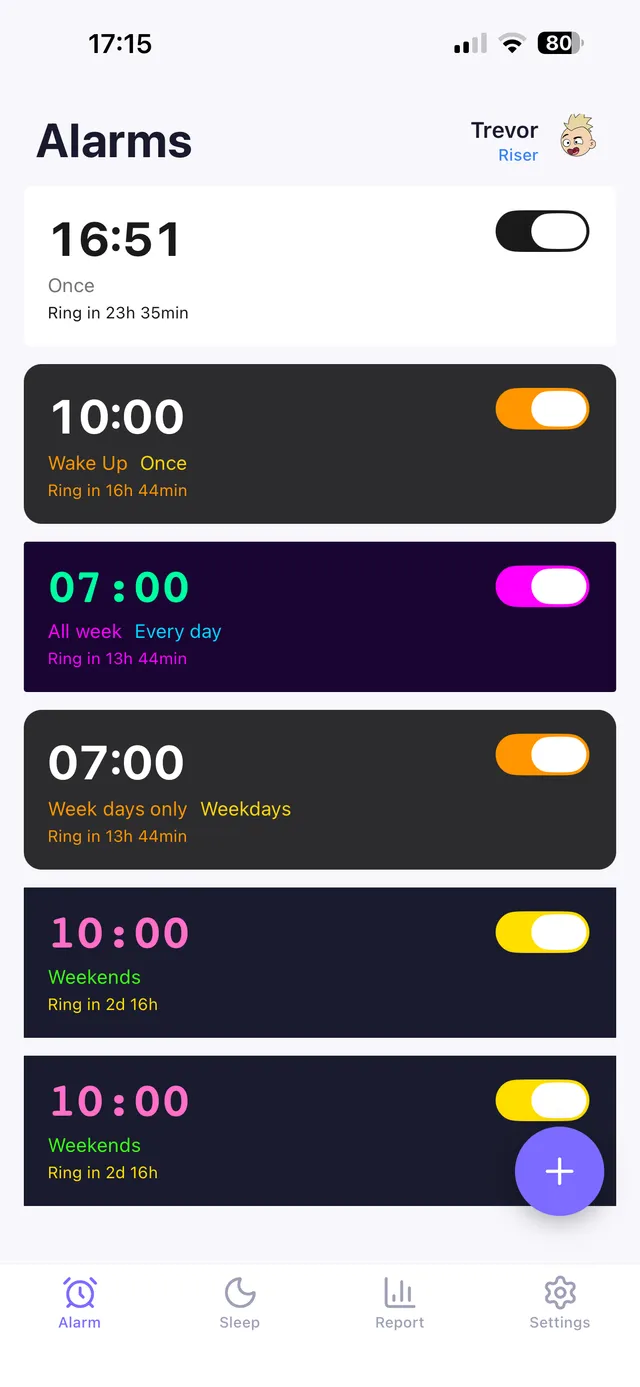
Resolutions that depend purely on remembering and deciding each night tend to erode by February. Ones tied to an actual system — an alarm that enforces a wake time, a routine that walks you through the wind-down steps instead of relying on memory — tend to hold up much longer, because they take some of the daily decision-making off your plate.
- A fixed alarm removes the daily negotiation over what time to actually get up.
- A guided wind-down sequence removes the "what am I supposed to do now" friction that kills evening routines before they start.
- Tracking loosely — a simple note of your wake time, not a perfect log — helps you notice trends without turning the resolution into another chore.
Common resolution mistakes to avoid
- Stacking too many changes at once — bedtime, screens, caffeine, and exercise all in week one is a setup for burnout.
- All-or-nothing thinking — one missed night doesn't mean starting over; consistency over months matters more than any single night.
- Ignoring your chronotype. If you're a genuine night owl, a 9pm bedtime resolution is fighting your biology as much as your habits — see chronotypes explained before picking a target that isn't realistic for you.
- No plan for weekends or travel, which is exactly when most resolutions quietly unravel.
The bottom line
Sleep resolutions succeed when they're small, specific, and built around consistency rather than a dramatic overnight overhaul. Pick one anchor — usually a fixed wake time — build a simple wind-down cue on top of it, and expect (and plan for) the occasional off night. A resolution that survives a bad Tuesday is worth infinitely more than one that only works in a perfect week.
OwlRoutine is built for exactly this kind of realistic resolution: a mission alarm that enforces your wake time without relying on willpower each morning, and a guided wind-down routine that gives your evenings a repeatable structure instead of a vague intention to "go to bed earlier this year."
Frequently asked questions
Why do sleep resolutions usually fail by February?
They're often too big and sudden, relying on willpower alone rather than a system, and they don't account for the occasional off day, which can make the whole resolution feel like it failed.
What's the single best sleep resolution to make?
Keeping a consistent wake time, including weekends, tends to have the biggest effect on sleep quality and is easier to sustain than an ambitious bedtime target.
How fast should I shift my bedtime for a new year's resolution?
Gradually — around 15 minutes earlier every few days to a week tends to be more sustainable and physically realistic than an overnight jump.
Should I set multiple sleep resolutions at once?
It's usually better to start with one anchor habit, like a fixed wake time, and add others gradually rather than overhauling bedtime, screens, and caffeine all at once.
Wake up for real. Wind down for good.
OwlRoutine is a sleep-cycle alarm that makes mornings actually stick — with a guided wind-down, dismiss missions, sleep scores and rewards. Available on iPhone and Android.