How to Become a Morning Person (When You're Genuinely Not One)

"Just go to bed earlier" is the advice everyone gives and almost nobody can follow. If it worked, you'd have done it already. The real reason most people who try to become morning people quit by day four isn't laziness — it's that they attack the wrong variable, expect it to feel good immediately, and have nothing keeping them accountable once the novelty wears off.
Here's what actually works, in the order it actually matters.
You're not a "night person" — you're on the wrong schedule
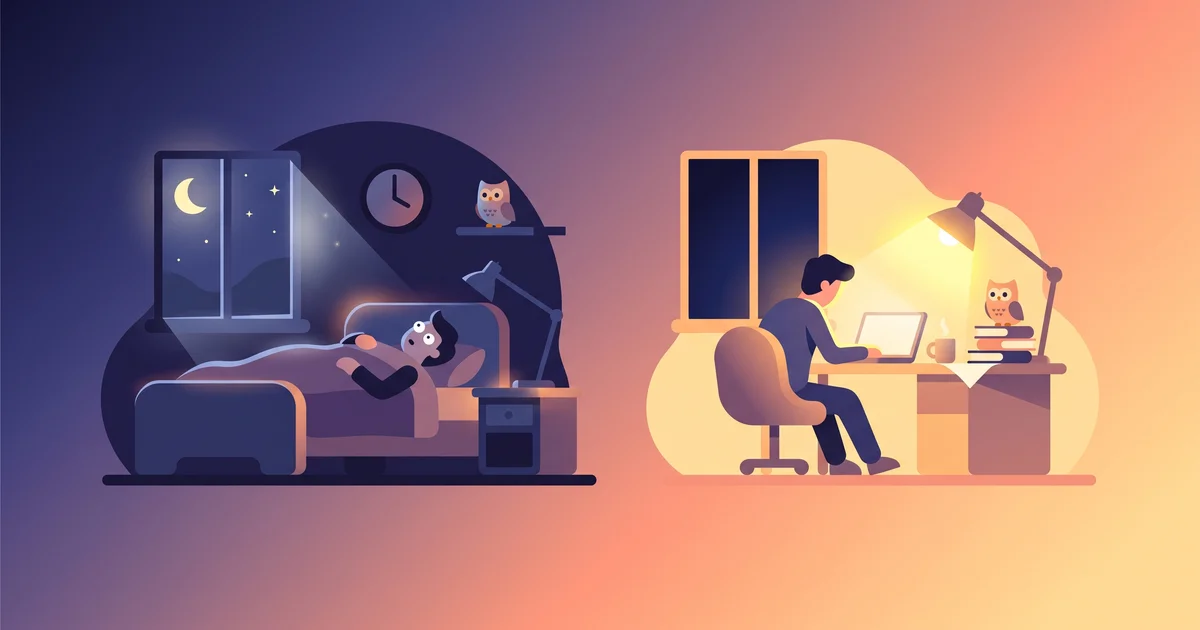
Chronotype (whether you naturally lean toward mornings or nights) is real and partly genetic, but it's a preference, not a hard limit. Most self-described night owls aren't biologically incapable of early mornings — they're running a sleep schedule that's drifted late, usually from screens, inconsistent bedtimes, or a body clock nobody's ever tried to reset. Sleep cycles explain why timing matters more than duration: waking up mid-cycle feels brutal no matter what time it is, early or not.
The fix isn't forcing yourself up at 5am on willpower. It's shifting your whole schedule earlier, gradually, so your body clock actually moves with you instead of fighting you every single morning.
Step 1: fix the night before you touch the morning
This is the step almost everyone skips, and it's the one that actually determines whether waking up early feels possible or feels like torture. You cannot consistently wake up early on a schedule that has you falling asleep at 1am. A proper wind-down routine — dimming lights, cutting screens, doing something calming for 20–30 minutes — is what makes an earlier bedtime actually achievable instead of just aspirational.
Shift your bedtime in small increments, not all at once. Moving from a 1am bedtime to 10pm overnight just gives you insomnia layered on top of sleep deprivation. 15 minutes earlier every 2–3 days is slow enough that your body clock keeps up.
Step 2: wake up at the same time — including weekends
This is the single highest-leverage habit and the one people cheat on most. Sleep consistency beats sleeping longer: a body clock that gets a stable wake-up signal every single day — yes, Saturday too — adjusts far faster than one that resets every weekend. Two nights of sleeping in undoes most of a week of consistent early wake-ups.
If you only take one thing from this article, take this: pick a wake-up time you can hold seven days a week, not just on workdays.
Step 3: get light immediately — it's doing more than you think
Morning light exposure (even just standing near a window for 5–10 minutes) is one of the strongest signals your circadian clock responds to. It suppresses lingering melatonin and tells your body "the day has started," which makes tomorrow's wake-up easier. Darkness does the opposite — waking up and staying in a dim room is part of why the first 20 minutes of an early morning feel so foggy. That grogginess even after enough sleep has a name, and it's not about how many hours you got.
Step 4: don't rely on willpower — rely on friction and reward
Here's the part most "just wake up early" advice ignores completely: willpower is a terrible long-term strategy because it's strongest on day one and weakest exactly when you need it most — day five, in the dark, half-asleep, when snoozing feels completely reasonable. Snoozing itself makes this worse, not better — it fragments the last chunk of sleep into useless, low-quality micro-cycles.
Two things reliably beat willpower:
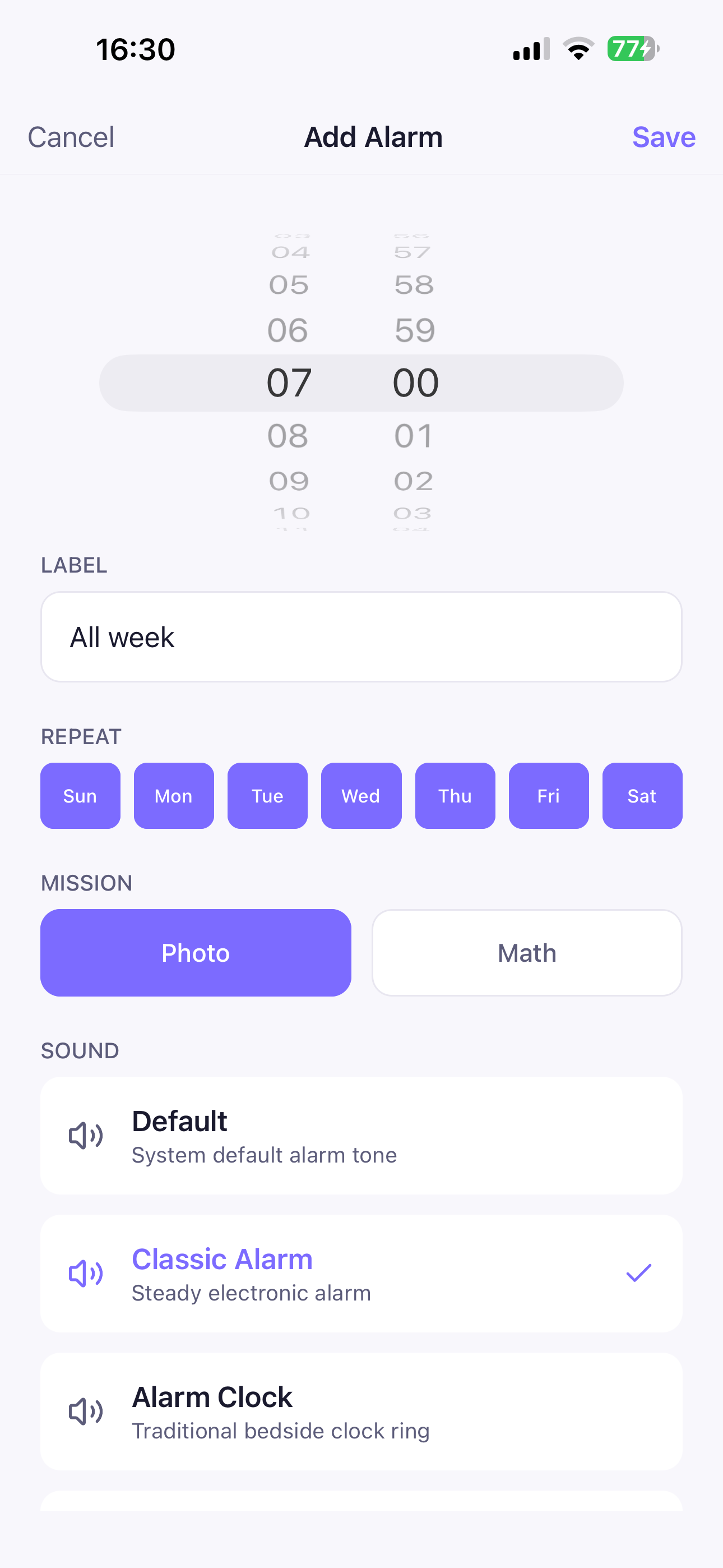
- Friction on the snooze button. A mission you have to physically complete — solve something, move around, prove you're actually up — removes the half-asleep decision point entirely. You can't negotiate with an alarm that won't stop until you've done the thing.
- A visible reason to keep going. Motivation to wake up early is highest in week one and lowest in week three, right when the habit is most fragile. A visible streak, a sleep score trending up, or a small reward for a clean wake-up gives you something to protect on the mornings when motivation alone wouldn't cut it.
OwlRoutine helps you wind down at night and actually get up in the morning — with a guided wind-down, dismiss missions, and sleep scores. Available on iPhone and Android.


Step 5: expect two rough weeks, not two rough days
Circadian rhythm shifts take roughly 1–2 weeks to stabilize fully, even with a consistent schedule. The first few mornings will feel worse before they feel better — that's your body clock actually moving, not a sign it isn't working. Most people quit in this window because nothing seems to be improving yet. It is. Tracking it — a heatmap of clean wake-ups vs. snoozed vs. struggled mornings — is the only way to actually see the trend instead of judging the whole attempt by your worst morning.
The bottom line
Becoming a morning person isn't a personality trait you either have or don't — it's a schedule shift with a predictable, trackable adjustment period. Fix your bedtime first, hold a consistent wake-up time (weekends included), get light early, and put something between you and the snooze button besides willpower. Give it two weeks and track it, because you won't remember day 3 accurately by day 14 — you'll just remember whether you kept the streak.
That's the whole idea behind OwlRoutine: a guided wind-down to get the night right, dismiss missions that make snoozing genuinely harder than getting up, and a heatmap and sleep score so the "is this actually working" question has a real answer instead of a guess.
Frequently asked questions
Can you really train yourself to become a morning person?
Yes — chronotype has a genetic component, but for most people the real issue is a late-drifted schedule, not biology. Shifting bedtime gradually and waking at a consistent time (including weekends) reliably moves your body clock earlier within 1–2 weeks.
How long does it take to become a morning person?
Most people see their circadian rhythm stabilize to a new wake time within 1–2 weeks of consistent effort. The first few days are the hardest and least representative of how it will feel once your schedule settles.
Why do I feel worse the first few days of waking up early?
Your circadian rhythm hasn't caught up yet — it takes about a week or two of consistency to shift. Feeling worse initially is expected and doesn't mean the approach isn't working.
What's the fastest way to wake up early without feeling exhausted?
Fix your bedtime and wind-down routine first — you can't out-alarm a late bedtime. Then keep your wake-up time consistent every day, get light immediately after waking, and use a mission-based alarm so you can't negotiate with yourself in a half-asleep state.
Wake up for real. Wind down for good.
OwlRoutine is a sleep-cycle alarm that makes mornings actually stick — with a guided wind-down, dismiss missions, sleep scores and rewards. Available on iPhone and Android.