The Military Sleep Method: How to Fall Asleep in 2 Minutes (Step by Step)

The military sleep method promises something almost everyone wants: falling asleep in about two minutes, anywhere. It's been shared millions of times, and it genuinely helps a lot of people — though not quite in the "instant knockout" way the headlines suggest. Here's the real origin, the exact steps, and how to practise it so it actually works on a restless night.
The short answer
The military sleep method is a progressive relaxation routine: relax your face, drop your shoulders and arms, breathe out and relax your chest, relax your legs, then clear your mind for 10 seconds using a calm image or a repeated phrase. It isn't instant for most people at first — it's a skill that improves with a few weeks of nightly practice.
Where the military method comes from
The technique is usually traced to Relax and Win: Championship Performance by Lloyd "Bud" Winter, a track coach who worked with the US Navy Pre-Flight School during World War II. The book describes a relaxation programme designed to help pilots rest and perform under stress, and claims that the vast majority of trainees could fall asleep within two minutes after about six weeks of practice.
That claim comes from the book, not from a controlled clinical trial, so treat the "two minutes" as a best-case goal. The underlying ingredients — progressive muscle relaxation, slow breathing and guided imagery — do have research support for reducing pre-sleep arousal.
The military sleep method, step by step
Get into bed in a comfortable position, lights off, phone away.
| Step | What to do | Time |
|---|---|---|
| 1 | Relax your face: forehead, eyes, jaw, tongue | ~20–30 s |
| 2 | Drop your shoulders; let arms go heavy, one side then the other | ~20–30 s |
| 3 | Breathe out slowly; let your chest relax | ~10–20 s |
| 4 | Relax your legs: thighs, calves, feet | ~20–30 s |
| 5 | Clear your mind for 10 seconds with an image or phrase | 10 s+ |
1. Relax your whole face
Close your eyes. Soften your forehead. Let the muscles around your eyes go slack. Unclench your jaw and let your tongue rest loosely. Most of us hold a surprising amount of tension in the face without noticing.
2. Drop your shoulders and arms
Let your shoulders sink as low as they'll go. Then let your dominant arm feel heavy, from upper arm to forearm to hand — then the other arm.
3. Exhale and relax your chest
Breathe out slowly and fully. Feel your chest soften. Keep the breath slow and unforced.
4. Relax your legs
Let your thighs go heavy, then your calves, ankles and feet. Imagine them sinking into the mattress.
5. Clear your mind for 10 seconds
This is the hardest part. The original method suggests picturing one of these:
- Lying in a canoe on a calm lake with a clear blue sky above you.
- Lying in a black velvet hammock in a pitch-dark room.
If an image doesn't work, repeat "don't think, don't think, don't think" for about 10 seconds. The aim is to interrupt the stream of planning and worrying that keeps you awake.
OwlRoutine helps you wind down at night and actually get up in the morning — with a guided wind-down, dismiss missions, and sleep scores. Available on iPhone and Android.


Why it (sometimes) doesn't work
- You're trying too hard. Effort is arousal. If you treat it like a test, you'll stay awake. Go through the steps gently and don't check whether it's "working".
- Your body clock isn't ready. No technique can make you fall asleep at 21:00 if your body thinks it's 18:00. Fixing your timing matters — see how to fix your sleep schedule.
- Caffeine, alcohol or late screens. The method calms your mind, but it can't fully override caffeine from 16:00 or an hour of scrolling. The 10-3-2-1-0 rule covers the basics.
- It's new. The original programme took weeks. Practise nightly for at least two weeks before judging it.
How to practise it properly
- Practise during the day too. Run through it once in a quiet moment so it's familiar at night.
- Pair it with a wind-down. A 20–30 minute calm routine beforehand lowers arousal so the method has less to do. Here's a simple wind-down routine.
- Keep the phone away. Checking "how long have I been lying here?" resets the whole process.
- Don't lie awake for ages. If you're still wide awake after about 20 minutes, get up, do something calm in dim light and try again when sleepy.
Military method vs other sleep techniques
| Technique | How it works | Good for |
|---|---|---|
| Military method | Body scan + mind-clearing image | Physical tension, general restlessness |
| 4-7-8 breathing | Inhale 4, hold 7, exhale 8 | People who find breathing focus calming |
| Cognitive shuffle | Visualise random unrelated objects | Racing, looping thoughts |
| Progressive muscle relaxation | Tense and release muscle groups | Noticeable muscle tension |
| Body scan meditation | Slow attention through the body | Anxiety, busy minds |
It's fine to combine them — for example, a few rounds of slow breathing, then the military body scan.
The bottom line
The military sleep method is a solid, free relaxation technique: relax face, shoulders, chest and legs, then clear your mind for 10 seconds. It's not an instant off-switch for everyone, but with a couple of weeks of practice — and a sensible bedtime, no late caffeine and the phone out of reach — many people fall asleep noticeably faster.
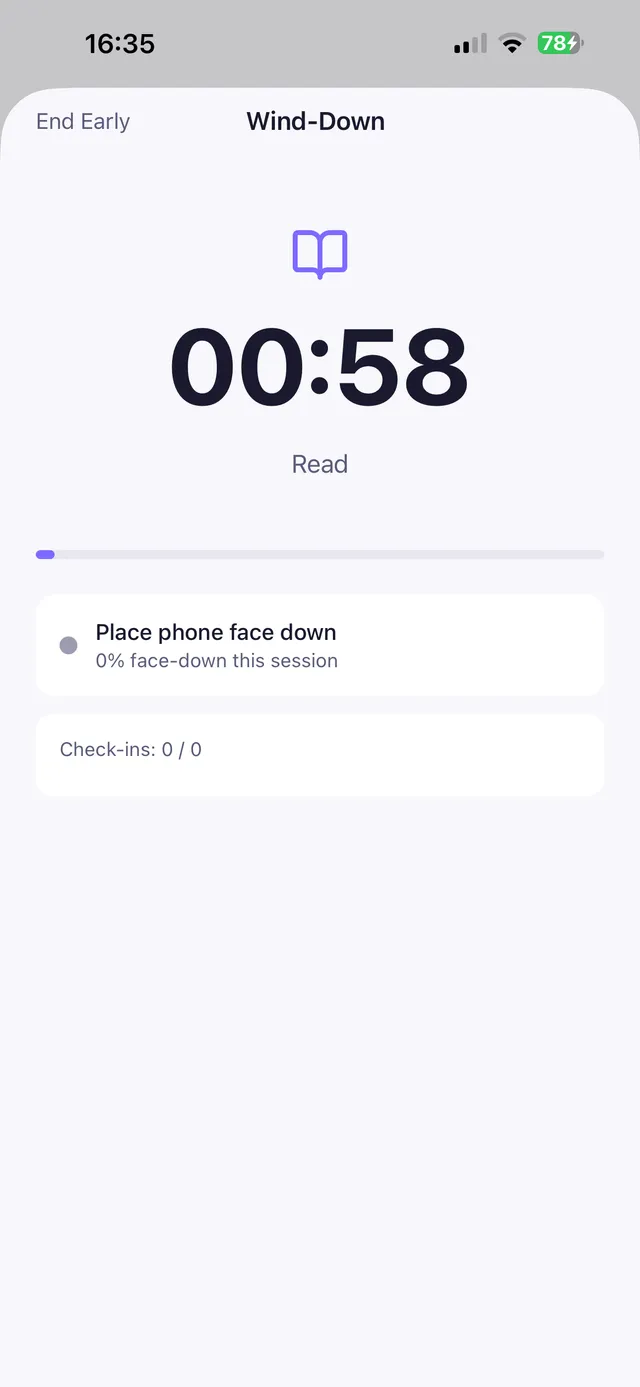
OwlRoutine can help with the part around it: a guided wind-down that keeps your phone face-down before bed, bedtime reminders so you start on time, and a consistent alarm so your body clock is ready to sleep when you lie down.
This article is general information, not medical advice. If you regularly take more than 30 minutes to fall asleep, speak to a doctor — CBT for insomnia is highly effective.
Frequently asked questions
What is the military sleep method?
It's a relaxation technique: relax your face, drop your shoulders and arms, exhale and relax your chest, relax your legs, then clear your mind for about 10 seconds using a calm image or a repeated phrase.
Does the military sleep method really work in 2 minutes?
The two-minute claim comes from a 1981 book about a World War II Navy programme, not a clinical trial. The relaxation techniques it uses do help many people fall asleep faster, especially with a few weeks of practice.
How long does it take to learn the military method?
The original programme reportedly took about six weeks. Practise nightly for at least two weeks before deciding whether it works for you.
What if I still can't fall asleep?
If you're awake after about 20 minutes, get up, do something calm in dim light and return when sleepy. If sleep problems persist, speak to a doctor.
Wake up for real. Wind down for good.
OwlRoutine is a sleep-cycle alarm that makes mornings actually stick — with a guided wind-down, dismiss missions, sleep scores and rewards. Available on iPhone and Android.