Sleep Divorce: Why So Many Couples Sleep Apart (and How to Do It Without Hurting Your Relationship)

Snoring, different bedtimes, a partner who steals the duvet or scrolls at midnight — sharing a bed can be hard on sleep. More and more couples are choosing a sleep divorce: sleeping in separate beds or rooms so both people get better rest. The name sounds dramatic, but for many couples it's a practical decision that makes the relationship better, not worse.
The short answer
A sleep divorce means partners regularly sleep apart — in separate beds or separate rooms — to improve their sleep. A 2025 survey commissioned by the American Academy of Sleep Medicine (AASM) found that 31% of US adults have done so. It can help when one partner's snoring, restlessness or schedule disrupts the other. Try the fixable causes first, and talk openly about it so intimacy and connection are protected.
How common is sleep divorce?
According to the AASM's 2025 survey of just over 2,000 US adults:
- 31% had opted for a sleep divorce at least occasionally.
- 13% slept in a separate bed in the same bedroom.
- 21% slept in another room.
- Adults aged 35–44 were most likely to do it (39%); those 65 and older were least likely (18%).
Why couples sleep apart
| Reason | Fixable first? |
|---|---|
| Snoring | Often — and snoring can be a sign of sleep apnea |
| Different schedules (early bird vs night owl) | Partly |
| Restlessness, kicking, getting up at night | Sometimes |
| Temperature preferences | Usually |
| Phone or TV in bed | Yes |
| Different mattress preferences | Yes |
| A baby, illness or shift work | Temporary arrangement |
Pros and cons
Pros
- Better, less interrupted sleep for both partners.
- Less resentment about snoring or late-night scrolling.
- Freedom to keep your own schedule, temperature and routine.
- Better mood and patience with each other during the day.
Cons
- Less physical closeness and pillow talk if you don't plan for it.
- Feelings of rejection if it isn't discussed well.
- Stigma or worry about what others think.
- Needs space — not every home has a spare room.
OwlRoutine helps you wind down at night and actually get up in the morning — with a guided wind-down, dismiss missions, and sleep scores. Available on iPhone and Android.


Try these before a full sleep divorce
Snoring
Loud, regular snoring — especially with pauses, gasping or daytime sleepiness — can be a sign of obstructive sleep apnea, which needs medical assessment. Treating it can fix the problem for both of you. Don't reach for trends like mouth taping without speaking to a doctor.
Different chronotypes
If one of you is an early bird and the other a night owl, try: the later partner getting into bed quietly with a dim book light, the earlier partner using a quiet vibrating alarm or a phone alarm set to a gentle tone, and keeping phones out of bed. Chronotypes explained.
Temperature and bedding
Separate duvets (a common arrangement in much of Europe) solve a surprising number of arguments. Aim for a cool room. Best temperature for sleep.
Movement
A larger bed, a mattress with good motion isolation, or two single mattresses pushed together can reduce disturbances.
Screens
If one partner scrolls in bed, agree on a phone-down time. What phones do to sleep.
How to talk about sleeping apart
- Lead with sleep, not blame. "I want us both to sleep better" beats "your snoring is ruining my life."
- Make it a trial. Try two weeks and review.
- Plan connection time. Go to bed together and read or talk before one of you moves, or start the morning together.
- Keep it flexible. Some couples sleep apart on work nights and together on weekends.
When a sleep divorce makes sense
It's a reasonable choice when you've tried the fixable causes, one partner has a sleep disorder that's being treated but still disruptive, schedules genuinely don't overlap, or during temporary phases like a new baby or illness. Good sleep is good for relationships, and the right arrangement is whatever lets both of you rest and connect.
The bottom line
A sleep divorce is common — nearly a third of US adults have tried one — and it can improve sleep and relationships. Before moving rooms, rule out treatable problems like snoring and sleep apnea and try simpler fixes like separate duvets and phone-free bedtimes. If you do sleep apart, talk about it openly and plan time together.
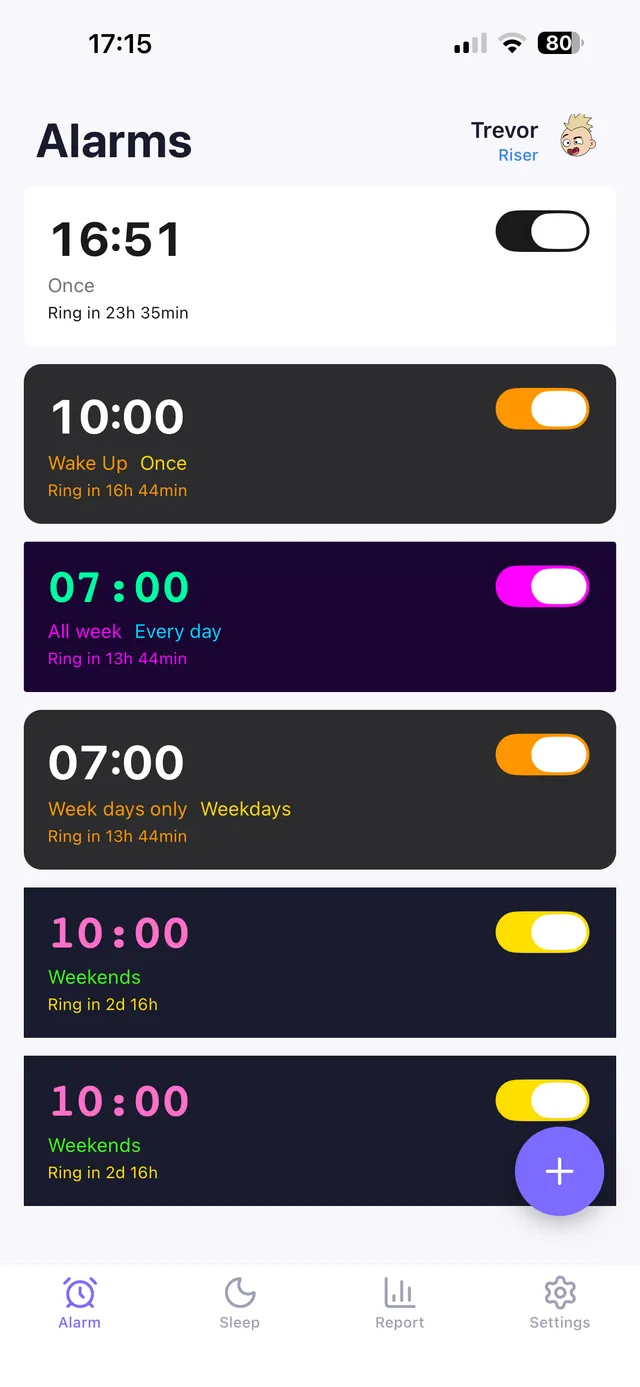
Whether you share a bed or not, OwlRoutine keeps your sleep routine personal: your own wind-down session and bedtime reminders, and your own alarm with a mission — so an early riser can get up without dragging a night owl along.
This article is general information, not medical advice. If snoring or breathing pauses are the problem, talk to a doctor.
Frequently asked questions
What is a sleep divorce?
A sleep divorce is when partners regularly sleep apart — in separate beds or separate rooms — to improve their sleep.
How many couples sleep separately?
A 2025 survey commissioned by the American Academy of Sleep Medicine found that 31% of US adults have opted for a sleep divorce, with 13% sleeping in a separate bed and 21% in another room.
Is sleeping apart bad for a relationship?
Not necessarily. Better sleep can improve mood and patience. The key is to talk about it openly and plan time for closeness.
What should we try before sleeping apart?
Get snoring checked for sleep apnea, try separate duvets, keep the room cool, agree on phone-free bedtimes and consider a bed with better motion isolation.
Wake up for real. Wind down for good.
OwlRoutine is a sleep-cycle alarm that makes mornings actually stick — with a guided wind-down, dismiss missions, sleep scores and rewards. Available on iPhone and Android.