Polyphasic Sleep: What It Is and Why Most People Shouldn't Try It

Somewhere in every productivity forum, someone is trying to hack sleep down to two hours a day using a schedule of scattered 20-minute naps. Polyphasic sleep — splitting your sleep into multiple short segments across 24 hours instead of one consolidated block — has a devoted online following and a real history in some contexts. It also has a much less exciting scientific reality underneath the hype.
The short answer
Polyphasic sleep means sleeping in multiple short segments throughout the day instead of one long nighttime block. Mild versions (like a nap plus a shorter main sleep, called biphasic sleep) are common and not harmful. Extreme versions (like the Uberman schedule of six 20-minute naps and roughly 2–3 total hours of sleep a day) are essentially a structured form of chronic sleep deprivation, and most sleep scientists advise against them — the cognitive and health costs of insufficient total sleep don't disappear just because it's spread differently across the day.
The main polyphasic schedules
| Schedule | Structure | Total sleep |
|---|---|---|
| Biphasic | One core sleep block + one nap (common in many cultures historically) | Normal, ~7-9 hours |
| Everyman | One core sleep block (3-4.5 hrs) + 2-3 short naps | ~4.5-5.5 hours |
| Dymaxion | Four 30-minute naps every 6 hours, no core sleep | ~2 hours |
| Uberman | Six 20-minute naps evenly spaced, no core sleep | ~2 hours |
Biphasic sleep is genuinely mainstream — many cultures historically split sleep into a nighttime block plus an afternoon nap, and there's little evidence it's harmful when the total sleep time stays adequate. Everyman, Dymaxion and Uberman are where things get extreme, because they're explicitly designed to minimize total sleep time.
Does polyphasic sleep actually work?
Anecdotal reports from Uberman practitioners are mixed at best — many report initial euphoria (a known effect of sleep deprivation) followed by worsening cognition, mood instability, and difficulty maintaining the schedule around normal work and social obligations. Very few people sustain extreme polyphasic schedules for more than a few months.
The scientific case for it is thin. There's no strong evidence that splitting sleep into many short segments lets the brain "compress" the restorative functions of a full night into 2 hours total. In particular:
- Deep sleep is concentrated in the first part of a long sleep block — 20-minute naps aren't long enough to reliably reach it. See how to get more deep sleep.
- REM sleep builds up in longer, later cycles across the night — extreme polyphasic schedules chronically starve REM too. See REM sleep explained.
- Total sleep need doesn't change based on how it's distributed. Adults generally need around 7-9 hours in 24 hours; splitting that total into pieces is very different from cutting the total down to 2-3 hours.
The honest risk profile
Extreme polyphasic schedules are, functionally, chronic partial sleep deprivation with extra scheduling complexity. The research on sleep deprivation is clear about the downsides, and they apply here too:
- Impaired attention, reaction time, and decision-making — comparable to being legally intoxicated in some studies of sustained sleep restriction.
- Mood disturbances, including increased irritability and anxiety.
- Weakened immune function over time.
- Increased long-term cardiovascular and metabolic risk associated with chronic short sleep.
- Real safety risk if you drive or operate machinery while adapting.
There's also a practical problem nobody markets: extreme polyphasic schedules are almost impossible to maintain around a job, family, or any obligation that doesn't bend to a nap every four hours. Most people who try Uberman abandon it within weeks.
OwlRoutine helps you wind down at night and actually get up in the morning — with a guided wind-down, dismiss missions, and sleep scores. Available on iPhone and Android.


Is any version of "sleeping in pieces" reasonable?
Yes — with important caveats. Biphasic sleep (a shorter main sleep plus a genuine nap) can work well for some people, especially those with a natural midday energy dip, shift workers, or cultures where an afternoon rest is normal. The difference from extreme polyphasic schedules is that biphasic sleep still adds up to a normal total sleep amount, just split into two blocks instead of one. If you're curious about napping well rather than sleep-hacking, how long should a nap be is the practical starting point.
What about the military sleep method or other "sleep hacks"?
It's worth distinguishing sleep-onset tricks from sleep-restriction schedules. The military sleep method, for example, is a relaxation technique to fall asleep faster — it doesn't reduce how much sleep you need, it just helps you get to sleep more efficiently within a normal-length night. That's a fundamentally different (and much better supported) idea than trying to survive on 2 hours split across six naps.
Who might reasonably consider mild polyphasic patterns
- People with genuinely flexible schedules who want to experiment with biphasic sleep (main sleep + nap), keeping total sleep time normal.
- Some shift workers, for whom a split-sleep pattern is a practical necessity rather than a choice — though this comes with its own real health tradeoffs and deserves its own planning.
- Short-term, extreme sleep restriction is sometimes used in research settings under controlled conditions — not something to replicate at home indefinitely.
For almost everyone else, especially long-term, extreme schedules like Uberman are not recommended by sleep medicine professionals.
The bottom line
Polyphasic sleep ranges from the mundane (a solid nap plus a shorter core sleep, which is fine) to the extreme (2-3 total hours a day split into tiny naps, which is not). The extreme versions are essentially chronic sleep deprivation with a productivity-hack rebrand, and the research on sleep deprivation's costs — cognitive, emotional, and physical — applies just as much when sleep is scattered as when it's simply cut short. If you're looking for more functional hours in your day, a consistent, adequate sleep schedule plus a well-timed nap will get you further with far less risk.
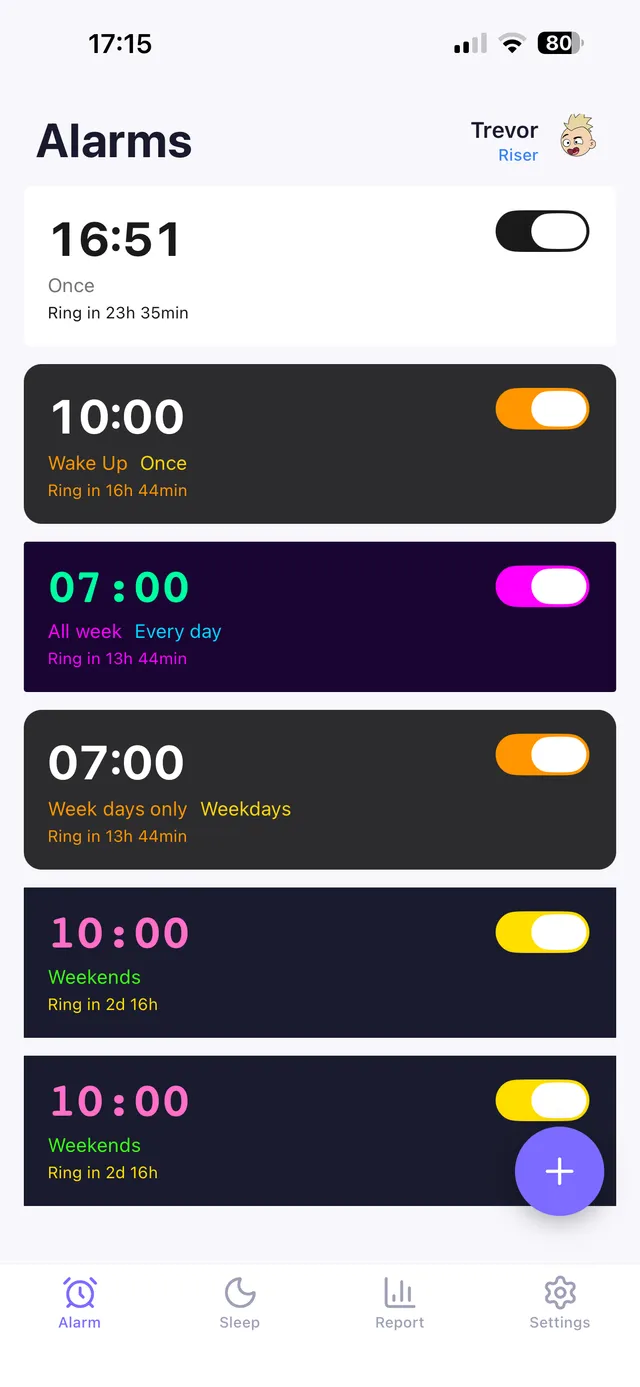
If your goal behind polyphasic sleep was really "get more out of my mornings," OwlRoutine's mission alarm and structured wind-down routine are built to help you use a normal, full night of sleep more efficiently — getting genuinely, reliably out of bed on time rather than trying to engineer your way around needing sleep at all.
This article is general information, not medical advice. Extreme sleep restriction carries real health risks — talk to a doctor before attempting a major change to your sleep schedule.
Frequently asked questions
What is polyphasic sleep?
Polyphasic sleep means splitting sleep into multiple segments across 24 hours instead of one consolidated nighttime block. It ranges from mild (biphasic: a main sleep plus a nap) to extreme (Uberman: six 20-minute naps and no core sleep).
Does the Uberman sleep schedule work?
There's little scientific support for it. Most practitioners report worsening cognition and mood over time, and very few sustain it long-term. It functions as a form of chronic sleep deprivation.
Is any form of polyphasic sleep safe?
Biphasic sleep, where total sleep time stays normal but is split into a main block plus a nap, is common and generally fine. Extreme schedules that cut total sleep to 2-3 hours a day are not recommended by sleep medicine professionals.
Is polyphasic sleep the same as the military sleep method?
No. The military sleep method is a relaxation technique for falling asleep faster within a normal night. Polyphasic sleep schedules restructure or reduce total sleep time, which is a different and riskier proposition.
Wake up for real. Wind down for good.
OwlRoutine is a sleep-cycle alarm that makes mornings actually stick — with a guided wind-down, dismiss missions, sleep scores and rewards. Available on iPhone and Android.