Reading Before Bed: Benefits for Sleep, Paper vs E-Reader, and How to Make It a Habit

For generations, reading before bed was just what people did. Then phones arrived, and for many of us the bedtime book became a bedtime scroll. Bringing back reading before bed is one of the simplest, most pleasant changes you can make for your sleep — as long as you choose the right format and the right kind of book.
The short answer
Reading before bed can help you sleep by replacing stimulating screen time with a calm, absorbing activity that signals the end of the day. Paper books or e-ink e-readers with no or warm front light are better than phones and tablets. Choose something enjoyable but not so gripping that you stay up for "one more chapter", and read in dim, warm light for 15–30 minutes.
Why reading helps you wind down
- It replaces your phone. The biggest benefit is often what reading isn't: it isn't an endless feed, notifications or messages. What phones do to your sleep.
- It shifts attention away from worries. An absorbing story pulls your mind out of the day's loops — especially useful if you get racing thoughts at night.
- It becomes a cue. Read at the same time every night and your brain learns that the book means sleep is coming.
- It has a natural end. Chapters give you stopping points; feeds don't.
Paper vs e-reader vs phone
| Format | Light | Distractions | Verdict for bedtime |
|---|---|---|---|
| Paper book | Uses your lamp | None | Best |
| E-ink e-reader (no/warm light) | Low, adjustable | Minimal | Very good |
| Tablet | Bright, backlit | Some (apps, notifications) | Okay with night mode and low brightness |
| Phone | Bright, backlit | Many | Worst |
A 2015 study published in PNAS compared reading a light-emitting e-reader (an iPad) with reading a printed book in the hours before bed. Participants took longer to fall asleep after reading on the light-emitting device, had lower evening melatonin, delayed circadian timing and felt less alert the next morning. The effect came from reading for several hours on consecutive nights at full brightness — a stronger dose than most people get — but it's a clear signal that paper or e-ink is the safer choice.
OwlRoutine helps you wind down at night and actually get up in the morning — with a guided wind-down, dismiss missions, and sleep scores. Available on iPhone and Android.


What to read before bed
- Choose something enjoyable but calm. Novels, essays, nature writing, biographies, poetry.
- Avoid work material. Reports, emails printed out or study notes keep your mind in "work mode".
- Be careful with page-turners. A cliffhanger thriller can keep you reading past your bedtime. Save it for weekends or daytime.
- Re-reading is great. Familiar books are comforting and easy to put down.
How to build a bedtime reading habit
- Choose a start time. Begin 20–30 minutes before lights out.
- Put your phone away first. Charge it outside the bedroom or face-down across the room.
- Keep the book where your phone used to be. Make it the easy default.
- Use a warm, dim lamp. Bright overhead lights work against melatonin.
- Read in a comfortable spot, ideally the same one every night.
- Stop when you feel sleepy, even mid-chapter.
- Don't turn it into a goal. "20 pages a night" can make it a chore. The aim is relaxation.
Reading fits perfectly into a 20–30 minute wind-down routine, along with a shower, stretching or journaling.
Common problems (and fixes)
- "I read and then pick up my phone anyway." Charge the phone outside the bedroom. Out of reach beats willpower.
- "I can't stop reading." Switch to short stories, essays or non-fiction you can put down, and set a lights-out time.
- "I fall asleep after two pages." That's fine — it's working. If it happens every night, you may simply need an earlier bedtime.
- "My partner wants the light off." Use a small, warm clip-on book light instead of the main lamp.
Should you read in bed or elsewhere?
Most people are fine reading in bed. If you have insomnia and your bed has become a place of lying awake, CBT for insomnia often suggests doing wind-down activities like reading outside the bed, then getting into bed only when sleepy. Try both and see what works.
What about audiobooks?
Audiobooks and podcasts can be a good alternative if your eyes are tired or you prefer listening. Use a sleep timer, turn the phone face-down, and choose calm narration rather than dramatic content.
The bottom line
Reading before bed is a simple, proven way to wind down — mostly because it replaces your phone with something calm, absorbing and naturally finite. Choose paper or e-ink, read in dim warm light, avoid gripping page-turners on work nights and stop when you're sleepy.
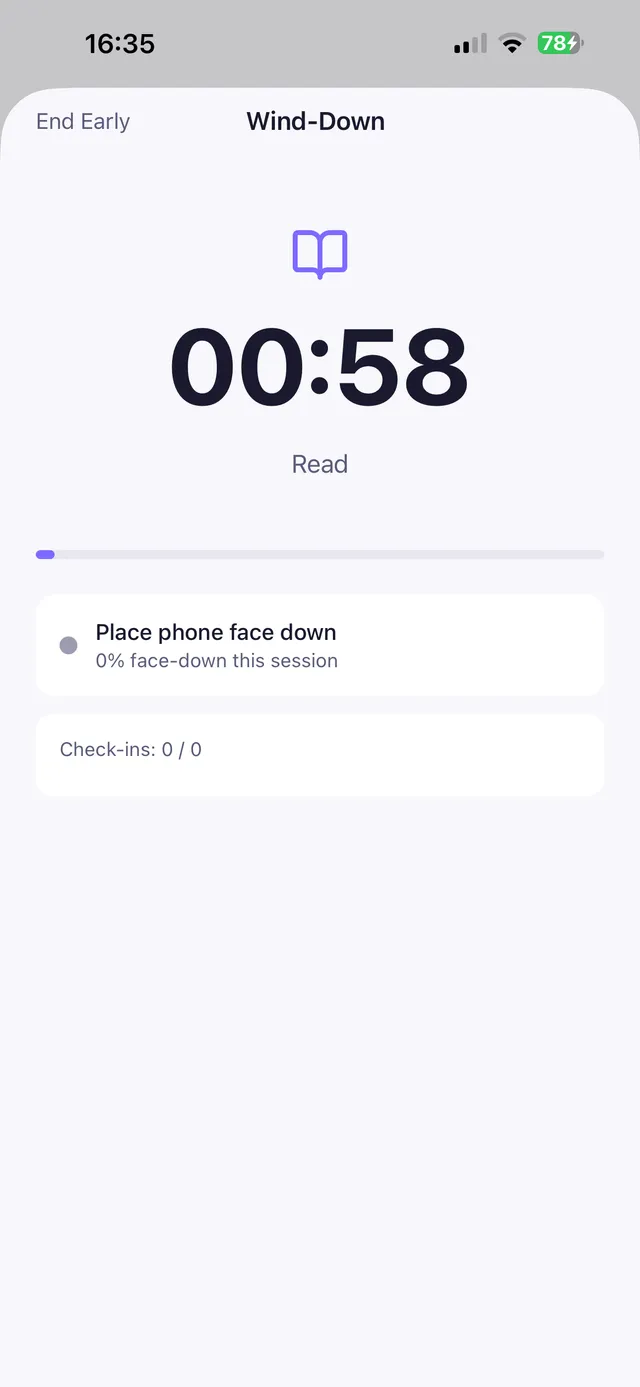
OwlRoutine includes Read as one of the activities in its guided wind-down. Start a session, put your phone face-down (the app checks with the motion sensor), and read until the timer ends. Complete the wind-down and you'll face an easier mission on tomorrow's alarm.
This article is general information, not medical advice.
Frequently asked questions
Is reading before bed good for sleep?
Yes, for most people. It replaces stimulating screen time with a calm activity and becomes a cue that sleep is coming.
Is it better to read a paper book or an e-reader before bed?
Paper books and e-ink e-readers without bright backlighting are best. A 2015 study found that reading on a light-emitting tablet delayed sleep and melatonin compared with a printed book.
How long should I read before bed?
Around 15–30 minutes in dim, warm light is a good target. Stop when you start to feel sleepy.
What should I read before bed?
Something enjoyable but calm, like a novel, essays, nature writing or poetry. Avoid work material and very gripping thrillers on work nights.
Wake up for real. Wind down for good.
OwlRoutine is a sleep-cycle alarm that makes mornings actually stick — with a guided wind-down, dismiss missions, sleep scores and rewards. Available on iPhone and Android.