Best Ways to Track Sleep Without Wearing Anything to Bed

Plenty of people want sleep data without wearing a device to get it — maybe a watch feels bulky, a ring won't stay sized right, or you simply don't want one more gadget touching your skin all night. The good news is that "no wearable" doesn't mean "no data." Here are the real options, and what each one is actually good at.
The short answer
The main ways to track sleep without wearing anything are phone-based apps (using your phone's microphone and accelerometer on the nightstand), under-mattress sensors (thin strips placed beneath your mattress that detect movement, heart rate and breathing through pressure changes), and smart mattress pads or covers (built-in sensors across the whole sleep surface). Each trades some precision for comfort and convenience compared to a wearable — see wearable vs phone sleep tracking for that direct comparison.
Option 1: Phone-based apps
Your phone, placed on the nightstand or under the sheet near the mattress edge, can track sleep using:
- The microphone — detecting snoring, coughing, sleep talking and environmental noise.
- The accelerometer — picking up vibrations transmitted through the bed when you move.
Pros: Free or cheap, no extra device to buy, works with a phone you already own, genuinely good at catching sound-based disturbances like snoring.
Cons: No heart-rate data, sensitive to a partner or pet moving nearby, needs the phone near the bed all night (which some people prefer to avoid for screen-habit reasons), and drains phone battery if it's actively recording audio.
Option 2: Under-mattress sensors
These are thin sensor strips or pads placed under your mattress, usually near chest height, that use pressure and vibration sensing (a technique called ballistocardiography in more advanced versions) to estimate heart rate, breathing rate and movement without any contact with your skin.
Pros: Nothing touches your body at all, works automatically once installed (no need to remember to wear or charge anything on your person), can track breathing and heart rate despite being contactless.
Cons: Higher upfront cost than a phone app, needs to be positioned correctly to get a good reading, can be affected by mattress type or a partner sharing the bed (some models separate two sleepers' data, others don't).
OwlRoutine helps you wind down at night and actually get up in the morning — with a guided wind-down, dismiss missions, and sleep scores. Available on iPhone and Android.


Option 3: Smart mattress pads and covers
These go a layer further than under-mattress sensors — they're built into a pad or cover that sits on top of the mattress (under your sheet), often adding features like temperature regulation alongside sleep tracking.
Pros: Combines sleep tracking with comfort features like cooling or warming, generally covers the whole sleep surface rather than a single sensor point, no wearable needed.
Cons: Among the most expensive non-wearable options, requires replacing or retrofitting your existing bedding setup, and like other contactless methods, accuracy depends on correct placement and can be affected by a shared bed.
Comparing the options
| Method | Cost | Heart rate data | Setup effort | Best for |
|---|---|---|---|---|
| Phone app | Free–low | No | None (use existing phone) | Casual trend tracking, snoring detection |
| Under-mattress sensor | Moderate–high | Yes (via pressure sensing) | Low (place once) | Contactless tracking with more detail than a phone |
| Smart mattress pad | High | Often yes | Moderate (fits to mattress) | Combining sleep tracking with temperature control |
What none of these methods do well
None of the contactless options can match a wearable's direct heart-rate signal quality, and none of them — wearable or not — measure brain activity, so exact sleep-stage boundaries are still estimates rather than certainties. See how fitness trackers estimate sleep stages for why that's true even for devices touching your skin, and do sleep trackers actually work for the wider accuracy picture across all tracking methods.
Who benefits most from a no-wearable approach
- People who find watches or rings uncomfortable overnight — a genuinely common reason people abandon wearable tracking within weeks.
- Couples sharing a bed who want data without two people wearing gadgets.
- Anyone who just wants rough trends (total sleep time, consistency, snoring frequency) without the cost or hassle of a dedicated wearable.
- People prone to orthosomnia or tracking-related anxiety, who may do better with a lighter-touch, lower-visibility approach.
A simple decision guide
- Want it free and are okay with rougher data? Phone app.
- Want contactless heart-rate and breathing data? Under-mattress sensor.
- Want tracking bundled with temperature control and don't mind the cost? Smart mattress pad.
- Want the most precise heart-rate-based data and don't mind wearing something? Consider a sleep tracker ring instead — wearables still have a real edge in direct signal quality.
The bottom line
You don't need to wear anything to get useful sleep data. Phone apps, under-mattress sensors and smart mattress pads all offer real, contactless ways to track trends in sleep duration, movement and (for the more advanced options) heart rate and breathing — each with its own tradeoffs in cost, precision and setup effort.
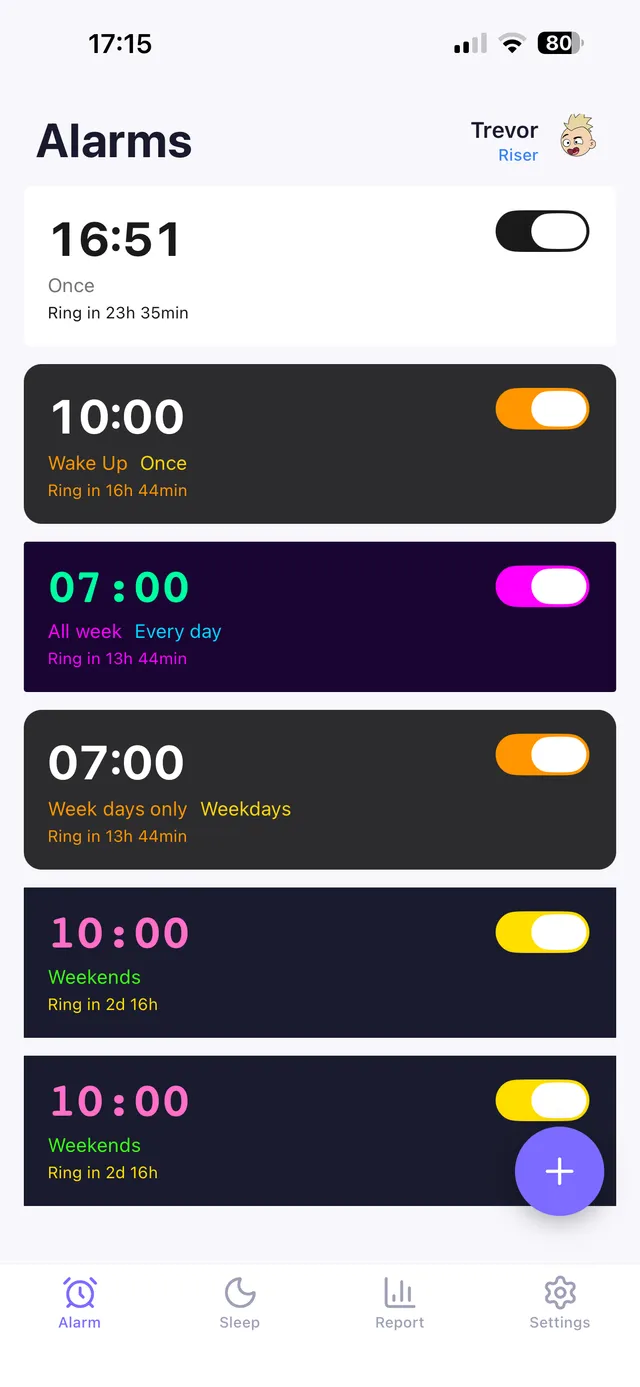
OwlRoutine is built around this same no-wearable philosophy: it doesn't need a ring, a watch or a mattress sensor to help you sleep better. A guided wind-down routine settles your mind before bed, and a mission-based alarm — solving a math problem, snapping a photo, scanning a code — makes sure you're actually up in the morning, no device on your body required.
Frequently asked questions
Can I track my sleep without wearing anything?
Yes. Phone apps, under-mattress sensors and smart mattress pads can all track sleep trends without anything touching your skin, though each has different tradeoffs in precision and cost.
Are under-mattress sleep sensors accurate?
They can estimate heart rate and breathing through pressure and vibration sensing reasonably well, though like all consumer sleep trackers they're estimates rather than clinical-grade measurements.
What's the cheapest way to track sleep without a wearable?
A phone-based sleep app is generally the cheapest option, since most people already own a phone and many apps are free or low-cost.
Do non-wearable sleep trackers measure heart rate?
Phone apps generally don't. Under-mattress sensors and some smart mattress pads can estimate heart rate and breathing through pressure sensing, despite not touching your body directly.
Wake up for real. Wind down for good.
OwlRoutine is a sleep-cycle alarm that makes mornings actually stick — with a guided wind-down, dismiss missions, sleep scores and rewards. Available on iPhone and Android.