Sleep Tracker Rings: A Buying Guide for Smart Rings That Monitor Your Sleep

Smart rings have quietly become one of the most popular ways to track sleep, and it's easy to see why: no screen, no band, nothing that feels like a gadget once it's on your finger. But a sleep tracker ring isn't automatically the right choice for everyone. Here's what these rings actually do, who they suit, and what to check before you buy one.
The short answer
A sleep tracker ring uses sensors on the underside of the ring — usually heart rate, heart-rate variability, skin temperature and movement — to estimate how long you slept, how restless you were, and roughly which sleep stages you passed through. Rings tend to be more comfortable overnight than watches or bands, but they're a similar underlying technology (heart rate plus motion, not brain activity), so accuracy for exact sleep stages is comparable to other wearables, not superior.
How sleep rings actually work
Most sleep rings sit on the base of a finger, close to arteries that give a clean pulse signal. From there they combine a few data streams:
- Heart rate and HRV — resting heart rate typically drops during deep sleep, and heart-rate variability shifts across sleep stages.
- Movement (accelerometer) — stillness suggests sleep, restlessness suggests lighter stages or wake.
- Skin temperature — nightly temperature trends can flag illness, cycle-related changes or poor sleep quality.
- Blood oxygen (SpO2) on some models — used mainly for general wellness trends, not medical diagnosis.
This combination is processed by an algorithm to estimate sleep stages — the same general approach smartwatches use. See how fitness trackers estimate sleep stages for the technical detail on why this is an estimate, not a direct measurement.
Who a sleep ring is a good fit for
| You... | Ring | Watch | Phone app |
|---|---|---|---|
| Hate wearing anything bulky to bed | Best fit | Okay | Best fit |
| Also want a screen for notifications at a glance | Poor fit | Best fit | N/A |
| Want the longest battery life without daily charging | Good (multi-day) | Varies | Not applicable |
| Are on a tight budget | Often pricier upfront | Wide price range | Usually free/cheap |
| Want minimal, screen-free design | Best fit | Poor fit | N/A |
If you already know you dislike wearing devices to bed at all, a ring may still be one too many — see wearable vs phone sleep tracking and sleep trackers without a wearable for no-wearable options.
What to look for before buying
Comfort and sizing
Rings need an accurate size fit — too loose and the sensor loses contact with skin (worse data), too tight and it's uncomfortable to sleep in. Most brands sell sizing kits before you commit to the actual ring; use them. Finger swelling changes overnight too, so a ring that fits perfectly at noon can feel different at 3am.
Battery life
This is a genuine strength of rings: because they have no screen and a small display isn't lighting up all night, most sleep rings last several days per charge, some closer to a week. Compare this to some smartwatches that need nightly charging, which can create gaps in your sleep data exactly when you need it.
OwlRoutine helps you wind down at night and actually get up in the morning — with a guided wind-down, dismiss missions, and sleep scores. Available on iPhone and Android.


Subscription costs
Many sleep rings — Oura being the best-known example — gate full sleep insights behind a monthly membership on top of the hardware price. Factor this ongoing cost into your decision, not just the sticker price of the ring itself.
Waterproofing and durability
Since you're expected to wear a sleep ring continuously (many people don't take it off even for showers), check the water-resistance rating and whether the brand recommends removing it for swimming, hot tubs or heavy gym sessions.
What the app actually shows you
Some ring apps present a single overall sleep score with limited detail; others break down time in each sleep stage, restfulness, and night-to-night trends. If you're the type who wants to understand why a score changed, look for an app with trend graphs and context, not just a number — read what a sleep score actually measures before you get too attached to chasing one.
Common frustrations with sleep rings
- False readings after falling asleep watching TV or reading — the ring may register lying-still time as sleep before you've actually dozed off.
- Data lag — most rings sync and process overnight data in the morning, so you don't get real-time feedback (which is arguably a feature, not a bug, since checking your phone mid-night is its own sleep disruptor).
- Orthosomnia — becoming anxious about your sleep because of the score. If tracking is making your sleep worse, not better, it's worth reading do sleep trackers actually work on this exact trap.
The bottom line
A sleep tracker ring is a comfortable, low-friction way to get night-over-night sleep trends, and for many people it's the most wearable-friendly option available. It won't outperform a watch on raw accuracy — the sensors and algorithms behind both are similar — but it wins on comfort and battery life, at the cost of a screen and, often, a subscription fee.
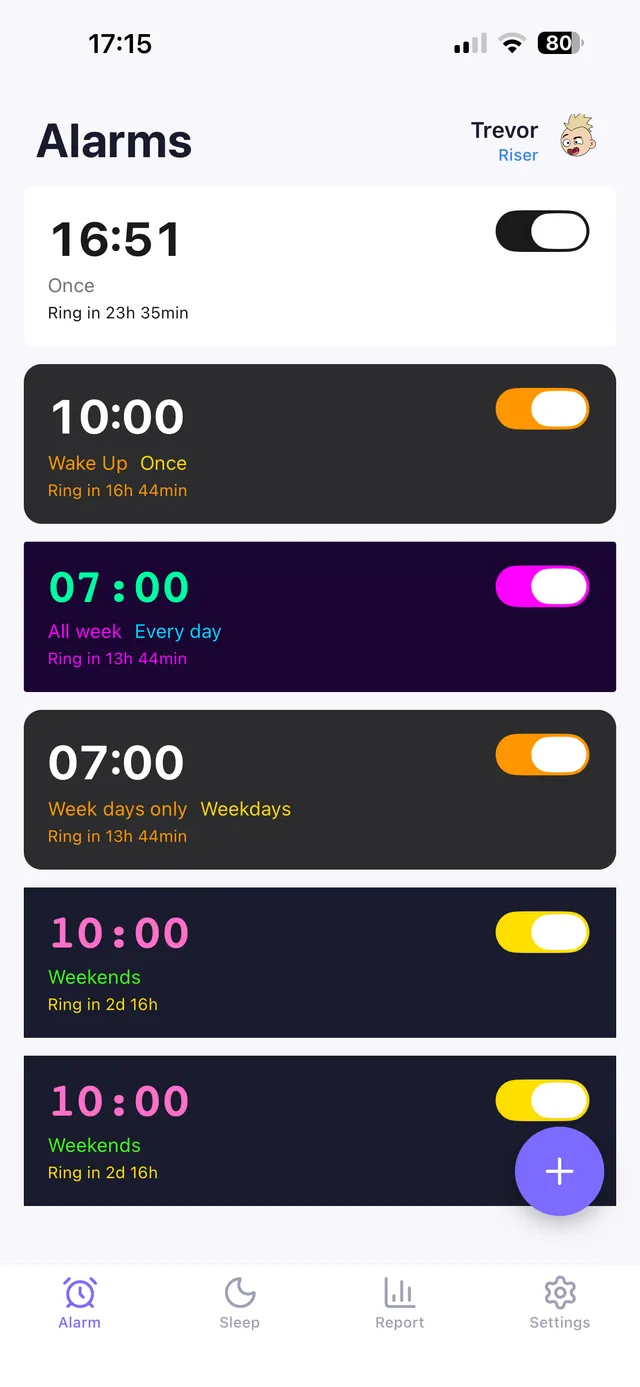
Whether or not you wear a ring, OwlRoutine handles the two moments a ring can't: it walks you through a calming wind-down before the data even starts recording, and its mission-based alarm makes sure that whatever your sleep score says, you actually get out of bed on time.
Frequently asked questions
How accurate are sleep tracker rings?
They're good at estimating total sleep time and general trends, using heart rate and movement, but like all consumer wearables they're less precise at exact sleep-stage boundaries since they don't measure brain activity directly.
Do sleep rings need a subscription?
Some do, particularly for full sleep insight features — check this before buying, since it's an ongoing cost on top of the ring itself.
Is a sleep ring better than a smartwatch for tracking sleep?
Neither is objectively more accurate; rings tend to be more comfortable overnight and last longer between charges, while watches offer a screen and often broader fitness features.
How long does a sleep ring battery last?
Most sleep rings last several days to about a week per charge, since they lack a power-hungry screen, though this varies by brand and model.
Wake up for real. Wind down for good.
OwlRoutine is a sleep-cycle alarm that makes mornings actually stick — with a guided wind-down, dismiss missions, sleep scores and rewards. Available on iPhone and Android.