How Fitness Trackers Actually Detect Sleep Stages (and Where They Get It Wrong)

Your wearable shows you a tidy graph — light blue for light sleep, dark blue for deep, purple blocks for REM — and it looks precise. It isn't, not in the way it appears. Fitness trackers don't watch your brain; they watch your body, and then make an educated guess about what your brain was probably doing. Understanding that gap changes how much weight you should put on the graph.
The short answer
Fitness trackers estimate sleep stages using actigraphy (movement patterns) combined with heart rate and heart-rate variability, not brainwave monitoring. This makes them reasonably reliable for total sleep time and rough sleep/wake detection, but less reliable at pinpointing the exact timing and boundaries of light, deep and REM sleep — the only way to measure those precisely is a clinical sleep study (polysomnography) using EEG.
What "actigraphy" actually means
Actigraphy is the use of a motion sensor (accelerometer) to infer sleep and wake based on movement. The logic is simple: lots of movement usually means wake or light sleep, stillness usually means deeper sleep. This method predates smartwatches by decades — researchers have used wrist actigraphy devices in sleep studies since the 1990s, originally as a lower-cost alternative to full lab monitoring.
On its own, actigraphy is decent at telling asleep from awake, but poor at distinguishing between sleep stages — after all, you can lie still while awake, and you do move somewhat during REM sleep (rapid eye movement itself is a clue, but wrist devices can't see your eyes).
Adding heart rate to the picture
Modern trackers improve on plain actigraphy by adding heart rate and HRV data:
- Resting heart rate typically dips during deep sleep.
- Heart-rate variability shifts in patterns that roughly correlate with different sleep stages.
- Combined with movement, this gives the algorithm more signal to estimate transitions between stages.
This is a real improvement over movement alone, which is why most modern wearables (rings, watches, bands) now report stage breakdowns rather than just "asleep" vs "awake." But it's still inference, run through a proprietary algorithm, not a direct read of brain activity.
What the gold standard actually measures
Clinical sleep studies use polysomnography, which records:
- EEG (brainwaves) — the actual basis for defining sleep stages.
- EOG (eye movement) — key for identifying REM sleep specifically.
- EMG (muscle activity) — helps detect the muscle atonia (temporary paralysis) that occurs in REM.
- Plus heart rate, breathing and blood oxygen.
This is the reference standard sleep researchers use to define what light, deep and REM sleep actually are. Consumer wearables are validated against polysomnography in research studies, and generally perform reasonably well on total sleep time and overall sleep/wake detection, with more disagreement on exact stage percentages and transition timing.
OwlRoutine helps you wind down at night and actually get up in the morning — with a guided wind-down, dismiss missions, and sleep scores. Available on iPhone and Android.


Where trackers tend to be more reliable vs less reliable
| Metric | Reliability |
|---|---|
| Total sleep time | Generally good |
| Sleep vs wake detection | Generally good |
| Number of overnight awakenings | Moderate — can miss brief awakenings or over-count restless movement |
| Deep sleep percentage | Moderate — varies notably by brand/algorithm |
| REM sleep timing | Lower — hardest stage to estimate without eye-movement data |
| Exact stage transition times | Lower — algorithms smooth and approximate |
This is worth knowing before you treat a graph showing "42 minutes of REM starting at 3:12am" as a precise fact rather than a reasonable estimate.
Why this still matters, even if it's imperfect
None of this means trackers are useless — it means they're best used for trends, not single-night precision. If your deep sleep percentage is consistently low across a month, that's meaningful information worth acting on, even if any single night's exact numbers are fuzzy. See do sleep trackers actually work for the broader accuracy conversation, and what a sleep score actually measures for how these stage estimates feed into the single number most apps show you.
REM sleep specifically
REM is the stage most associated with dreaming and often gets the most attention in tracker apps, but it's also the stage wearables are worst at pinpointing precisely, since the defining signal (rapid eye movement) isn't something a wrist or finger sensor can detect. Trackers infer probable REM periods from heart-rate patterns and movement instead — useful as a rough estimate, not a certainty. For more on what REM sleep actually does for you, see REM sleep explained and sleep cycles explained.
How to use stage data sensibly
- Look at weekly or monthly trends, not individual nights.
- Don't panic over a single night showing "low deep sleep" — normal night-to-night variation is expected.
- Use stage data as one input among several (how you feel, your energy, your focus) rather than the deciding factor.
- If a tracker's numbers are making you anxious rather than informed, it's fine to check less often, or not at all.
The bottom line
Fitness trackers estimate sleep stages using movement and heart-rate patterns, not brainwaves — a method that's fairly reliable for total sleep time and reasonably good for overall trends, but not precise enough to trust down to the exact minute for deep or REM sleep. That's not a flaw to be angry about; it's just what wrist and finger sensors are physically capable of measuring.
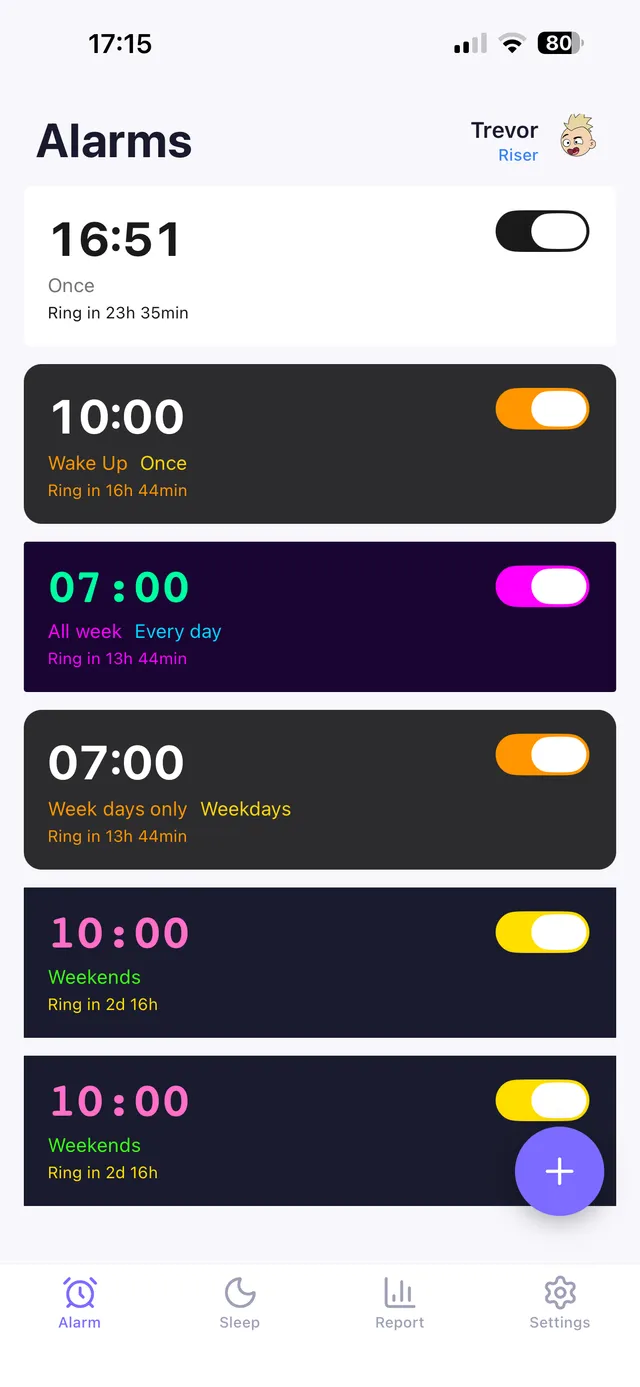
OwlRoutine doesn't try to compete with clinical-grade sleep staging — instead it focuses on the two moments that matter regardless of how precisely your night was measured: a guided wind-down that helps you actually fall asleep well, and a mission-based alarm that makes sure you get up, whatever the graph says happened at 3am.
Frequently asked questions
How do fitness trackers know what sleep stage you're in?
They combine movement data (actigraphy) with heart rate and heart-rate variability, then run it through an algorithm to estimate probable sleep stages — they don't measure brain activity directly.
Are fitness trackers accurate for REM sleep?
They're less reliable at REM specifically than other stages, since the defining signal (rapid eye movement) can't be detected by a wrist or finger sensor. Trackers infer probable REM periods from heart rate and movement instead.
What is actigraphy?
Actigraphy is the use of a motion sensor to infer sleep and wake based on movement patterns. It's been used in sleep research for decades and is the base technology behind most wearable sleep tracking.
Is a fitness tracker as accurate as a sleep study?
No. A clinical sleep study (polysomnography) measures brainwaves, eye movement and muscle activity directly, which is the actual basis for defining sleep stages. Wearables are a reasonable estimate, not a replacement.
Wake up for real. Wind down for good.
OwlRoutine is a sleep-cycle alarm that makes mornings actually stick — with a guided wind-down, dismiss missions, sleep scores and rewards. Available on iPhone and Android.