Weighted Blanket Benefits: What They Do and How to Choose One
Weighted blankets went from occupational-therapy tool to mainstream bedroom fixture in a few short years, promising calmer nights and less tossing and turning. The idea behind a weighted blanket is simple — gentle, even pressure across the body — but does it actually change how you sleep, and how do you pick one that fits?
The short answer
Weighted blankets apply deep pressure stimulation, gentle, distributed weight that some people find calming and that's associated with reduced restlessness and lower reported anxiety at bedtime in several studies. Evidence is encouraging but still limited in size and quality, especially for sleep specifically rather than anxiety generally. A common guideline is choosing a blanket around 10% of your body weight. They're not suitable for everyone — young children, and people with certain respiratory, circulatory or mobility conditions should check with a doctor first.
What is deep pressure stimulation?
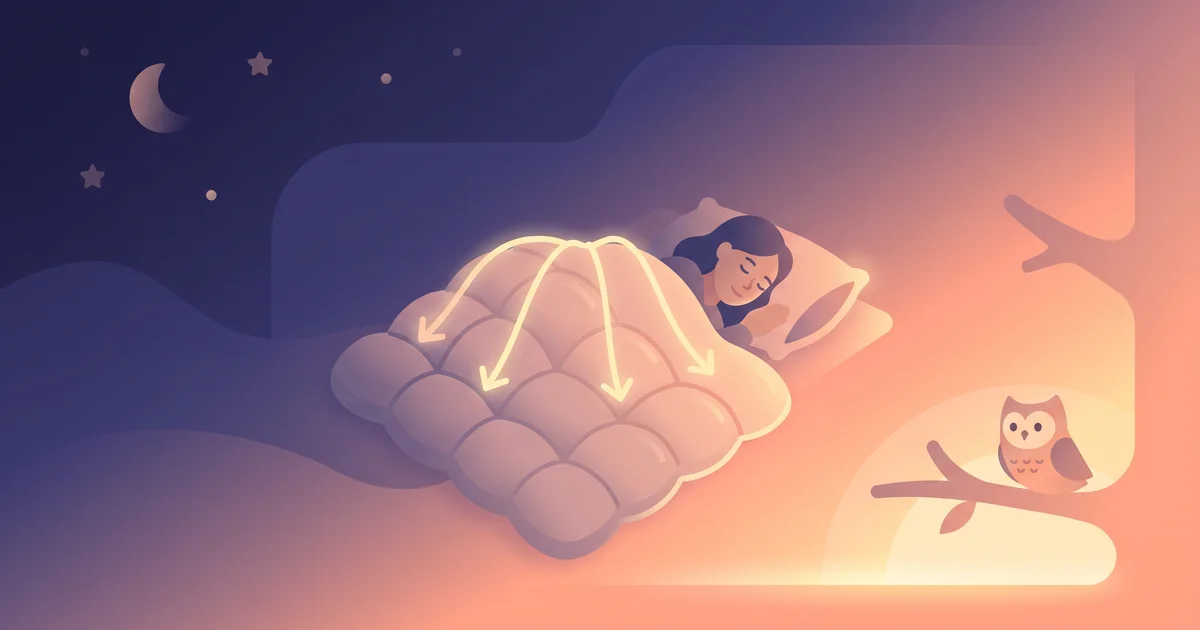
Deep pressure stimulation (DPS) refers to firm, evenly distributed pressure on the body, similar to the effect of a firm hug, swaddling, or being held. It's thought to influence the nervous system in a way that reduces the body's stress response — some research points to changes in cortisol and increases in feel-good neurotransmitters like serotonin, though study sizes are often small. The concept isn't new: DPS has long been used in occupational therapy for sensory processing differences, particularly in children, before it became a mainstream sleep product.
What the evidence generally supports
- Reduced restlessness. Some studies, including small trials in adults with insomnia, report less movement during sleep and a subjective feeling of being more settled.
- Lower self-reported anxiety. Several studies on anxiety (not always sleep-specific) show weighted blankets can reduce subjective anxiety scores during use.
- Faster perceived sleep onset for some users. Anecdotal and self-report evidence is strong here, though rigorous, large-scale sleep-lab studies are still limited.
- Mixed results for measurable sleep quality. Some studies find no significant change in objective sleep metrics (like time spent in deep sleep) even when people report feeling like their sleep improved — the subjective comfort may be the main driver.
In short: the calming, anxiety-reducing effect has reasonably consistent support; claims about dramatically improving deep sleep or fixing insomnia outright are less well established. It's a comfort and relaxation tool more than a clinical treatment.
Who tends to benefit most
- People who describe themselves as feeling "unsettled" or restless at bedtime.
- People with mild to moderate anxiety around sleep or in general.
- People who like the feeling of being hugged, swaddled, or under a heavy comforter.
- Some autistic people and people with ADHD or sensory processing differences report a calming effect, consistent with DPS's occupational-therapy origins.
People who already sleep hot, or who dislike the feeling of restriction, tend to benefit less — a heavy blanket can work against you if it makes you too warm. See best bedroom temperature for sleep for how to balance the two.
OwlRoutine helps you wind down at night and actually get up in the morning — with a guided wind-down, dismiss missions, and sleep scores. Available on iPhone and Android.


How to choose a weight
The most common starting guideline is around 10% of your body weight, though personal preference varies a fair amount.
| Body weight | Suggested blanket weight (approx.) |
|---|---|
| 100–130 lb (45–59 kg) | 10–13 lb (4.5–6 kg) |
| 130–160 lb (59–73 kg) | 13–16 lb (6–7 kg) |
| 160–200 lb (73–91 kg) | 16–20 lb (7–9 kg) |
| 200+ lb (91+ kg) | 20–25 lb (9–11 kg), rarely heavier |
A few practical notes:
- Rounding down is usually safer than rounding up if you're between sizes — you can always add another layer, but a too-heavy blanket is harder to adjust for.
- Couples generally need two separate blankets rather than one large one at a shared weight, since the right weight differs by body size.
- Material matters for temperature. Glass bead or plastic pellet fillings distributed in fabric pockets are common; breathable outer fabric (cotton, bamboo, certain cooling blends) helps if you sleep warm.
- Children need a different approach entirely — weight should be sized to the child, generally with professional guidance, not simply a smaller version of the adult calculation.
Who should be cautious or check with a doctor first
- Young children, especially toddlers and infants — weighted blankets are not recommended for very young children due to suffocation and restriction risk.
- People with respiratory conditions (like certain forms of sleep apnea, asthma, or COPD) where added chest weight could be uncomfortable or risky.
- People with circulatory issues, low blood pressure, or conditions affecting mobility that would make it hard to move or remove the blanket if needed.
- People who are pregnant — comfort and positioning needs change, so check what's appropriate.
None of this means weighted blankets are dangerous for the general population — they're used safely by a great many people — but if you fall into one of these groups, a quick conversation with a doctor first is the sensible move.
Weighted blanket vs. other calming tools
A weighted blanket is a passive tool — it does its job just by being there. It pairs naturally with active calming habits rather than replacing them: breathing exercises and meditation before bed, a consistent wind-down routine, or journaling to offload a busy mind. None of these compete with each other; a heavy blanket plus five minutes of slow breathing tends to work better than either alone.
The bottom line
Weighted blankets use deep pressure stimulation to create a calming, hug-like sensation, with reasonably consistent evidence for reduced anxiety and restlessness, though the evidence for dramatically changing objective sleep quality is thinner. Choose a weight around 10% of your body weight as a starting point, prioritize breathable materials if you sleep warm, and check with a doctor first if you're pregnant, have a respiratory or circulatory condition, or are considering one for a young child.
If part of your bedtime struggle is a mind that won't quiet down rather than just physical restlessness, OwlRoutine's guided wind-down routine — breathing exercises and journaling prompts — pairs naturally with the calming effect of a weighted blanket, giving both body and mind a consistent signal that it's time to settle.
This article is general information, not medical advice. Talk to a doctor before using a weighted blanket if you're pregnant, have a respiratory or circulatory condition, or are considering one for a child.
Frequently asked questions
Do weighted blankets actually work?
Evidence reasonably supports reduced anxiety and restlessness from deep pressure stimulation. Evidence for major improvements in measurable sleep quality is more limited, though many people report feeling calmer and more settled.
How heavy should a weighted blanket be?
A common guideline is around 10% of your body weight, though personal preference matters. If you're between sizes, rounding down is usually the safer choice.
Are weighted blankets safe for kids?
Not for young children or infants without professional guidance, due to suffocation and restriction risk. Sizing for older children should be done carefully and separately from the adult calculation.
Can a weighted blanket make you too hot?
Yes, if the outer fabric isn't breathable. Choosing cotton, bamboo, or a cooling blend helps, especially if you already sleep warm.
Wake up for real. Wind down for good.
OwlRoutine is a sleep-cycle alarm that makes mornings actually stick — with a guided wind-down, dismiss missions, sleep scores and rewards. Available on iPhone and Android.