Clocks Go Back 2026: How to Adjust Your Sleep When Daylight Saving Time Ends
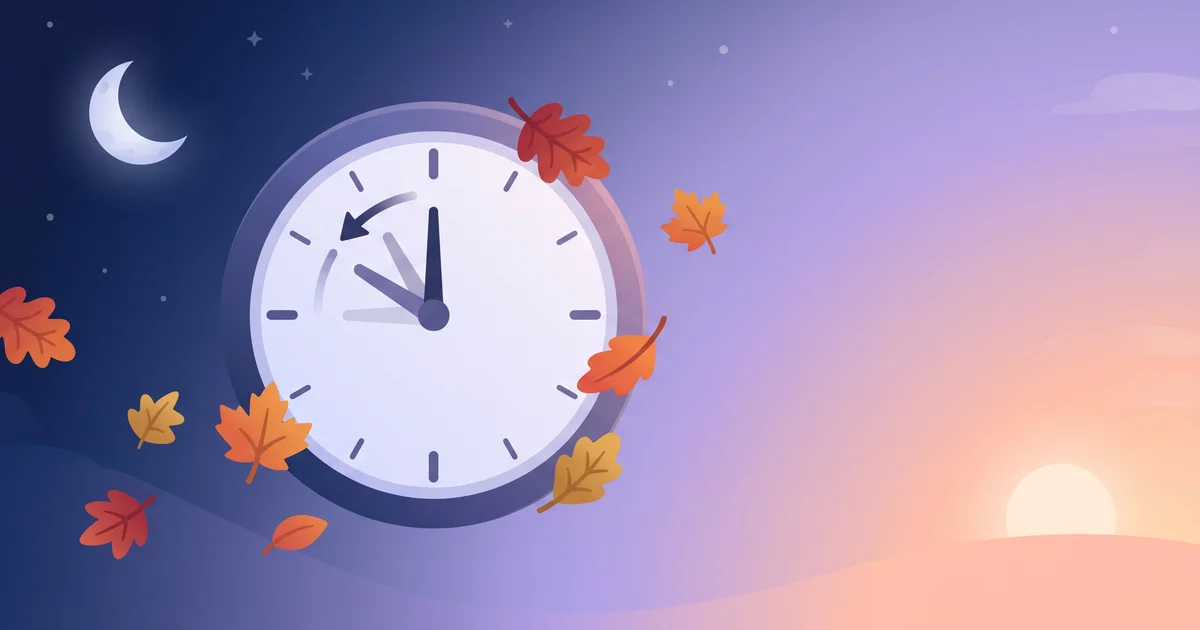
It's the one time change people look forward to: the clocks go back and you "get an extra hour in bed". But plenty of people find the week after daylight saving time ends surprisingly rough — waking at 5am, feeling sleepy by 9pm, and dealing with dark evenings that arrive what feels like overnight. Here's when the clocks go back in 2026, what actually happens to your sleep, and how to adjust smoothly.
The short answer
In 2026, the clocks go back one hour at 2:00am on Sunday 25 October in the UK and most of Europe, and at 2:00am on Sunday 1 November in the US and Canada. To adjust, keep your wake time steady against the new clock, get bright light in the morning, and — if you're sensitive to change — shift your bedtime 15 minutes later on each of the few nights beforehand.
When do the clocks go back in 2026?
| Region | Date | Time of change |
|---|---|---|
| UK and Ireland | Sunday 25 October 2026 | 02:00 → 01:00 |
| Most of Europe (EU) | Sunday 25 October 2026 | 03:00 → 02:00 local (01:00 UTC) |
| US and Canada (most areas) | Sunday 1 November 2026 | 02:00 → 01:00 |
Some places don't observe daylight saving time at all — for example, most of Arizona and Hawaii in the US — so check your local rules. Phones and connected devices update automatically; ovens, car clocks and some alarm clocks don't.
What the clocks going back does to your body clock
When the clocks go back, your body clock stays where it was — for a few days, it's running one hour "ahead" of the new time. That means:
- You feel sleepy earlier. 22:00 on the new clock feels like 23:00 to your body.
- You wake earlier. Your usual 07:00 wake-up now happens at 06:00 on the clock.
- Mornings get lighter, evenings get dark sooner. The extra morning light is actually helpful; the sudden dark evenings can hit mood and energy.
For most adults, the shift in autumn is easier than the spring change, when you lose an hour. But early risers, young children, older adults and anyone already short on sleep can find the week afterwards disruptive. Most people adapt within a few days to a week.
A simple plan to adjust
Option 1: The "do nothing clever" approach (fine for most people)
- On Saturday night, go to bed at your normal time on the old clock and enjoy the extra hour.
- From Sunday, wake up at your normal time on the new clock. Don't lie in for hours.
- Get outside in the morning for 10–20 minutes. Morning light helps your clock settle.
- Keep evenings dim and screens down before bed, so you're not wide awake at your usual bedtime.
Option 2: The gradual shift (for light sleepers, early risers and parents)
Starting three or four nights before the change, push bedtime and wake time 15 minutes later each day:
| Night | Bedtime (old clock) | Wake time (old clock) |
|---|---|---|
| Wednesday | 23:15 | 07:15 |
| Thursday | 23:30 | 07:30 |
| Friday | 23:45 | 07:45 |
| Saturday | 00:00 → clocks go back | 08:00 old = 07:00 new |
By Sunday, you're already aligned with the new time.
OwlRoutine helps you wind down at night and actually get up in the morning — with a guided wind-down, dismiss missions, and sleep scores. Available on iPhone and Android.


How to handle the dark evenings
The clocks going back also means sunset suddenly arrives an hour earlier. For some people that triggers low energy and low mood through the winter.
- Get daylight early. A morning walk is the single best habit for winter mood and sleep.
- Keep indoor lighting bright during the day and dim in the evening.
- Move your exercise earlier if you can.
- If low mood lingers for weeks with loss of interest, oversleeping or changes in appetite, talk to a doctor — seasonal affective disorder is common and treatable.
Clocks going back with kids
Young children tend to wake early after the change — a 6:30 riser suddenly wakes at 5:30. The gradual shift helps a lot: move naps, meals and bedtime 15 minutes later a few days beforehand. After the change, keep curtains closed in the early morning so bright light doesn't cue an even earlier wake-up.
Common mistakes
- Using the extra hour for a very late night. You'll still wake early by your body clock and end Sunday short on sleep.
- Sleeping in on Sunday. It delays your adjustment.
- Forgetting non-connected clocks, including standalone alarm clocks.
- Napping late on Sunday afternoon to compensate.
A consistent wake time is the anchor here, just as it is for fixing your sleep schedule at any time of year.
The bottom line
The clocks go back on 25 October 2026 in the UK and Europe and on 1 November in the US and Canada. You don't need an elaborate plan: keep your wake time steady on the new clock, get morning light, dim your evenings and skip the Sunday lie-in. If you're sensitive to change, shift 15 minutes a day for a few days beforehand.
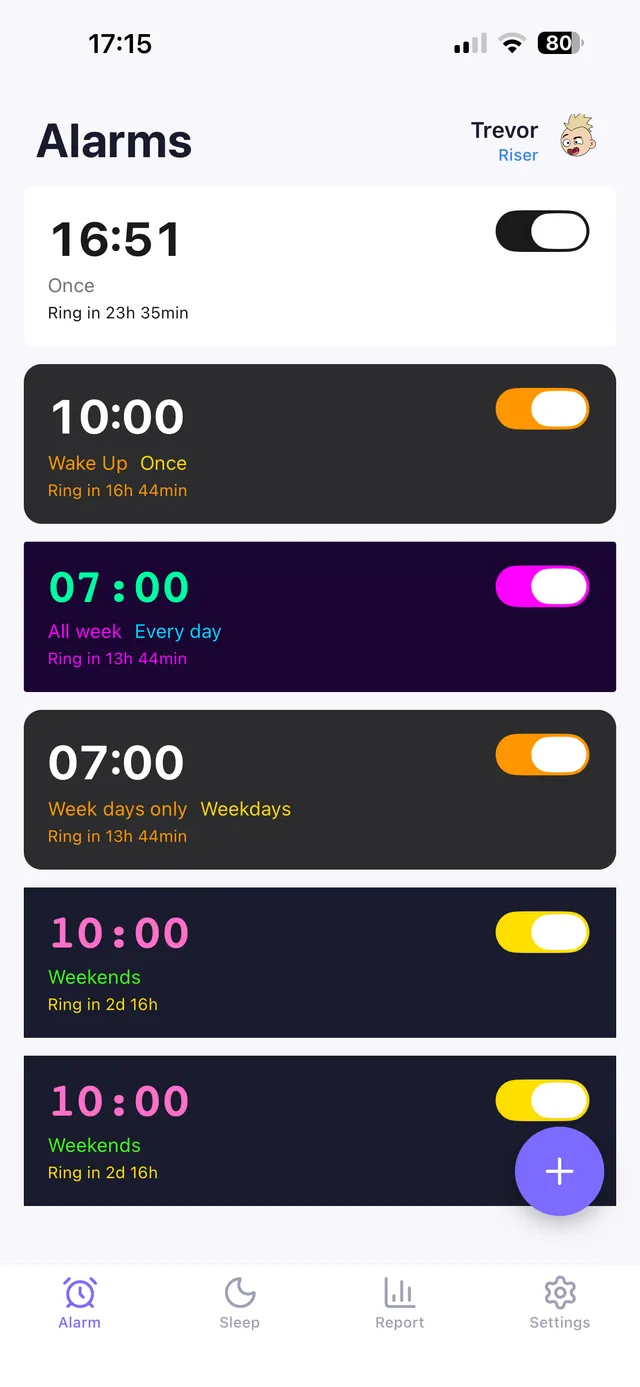
OwlRoutine helps you hold that anchor. Alarms follow your phone's clock automatically, a mission makes sure the first alarm is the one you get up for, and the guided wind-down with bedtime reminders keeps your evenings on track while your body catches up.
Frequently asked questions
When do the clocks go back in 2026?
In the UK and most of Europe, on Sunday 25 October 2026. In the US and Canada, on Sunday 1 November 2026. In both cases the clocks go back one hour.
Do I get an extra hour of sleep when the clocks go back?
On the night of the change, yes — if you go to bed at your usual time. But your body clock will wake you an hour earlier than usual on the new clock for a few days.
How long does it take to adjust to the clocks going back?
Most people adjust within a few days to a week. Keeping your wake time steady and getting morning light speeds it up.
How do I help my child adjust to the clock change?
Shift naps, meals and bedtime about 15 minutes later each day for three or four days before the change, and keep the room dark in the early morning afterwards.
Wake up for real. Wind down for good.
OwlRoutine is a sleep-cycle alarm that makes mornings actually stick — with a guided wind-down, dismiss missions, sleep scores and rewards. Available on iPhone and Android.